It’s hard to believe that these pictures actually show existing houses and landscapes from different parts of the world, and are not from some twisted horror movie set.
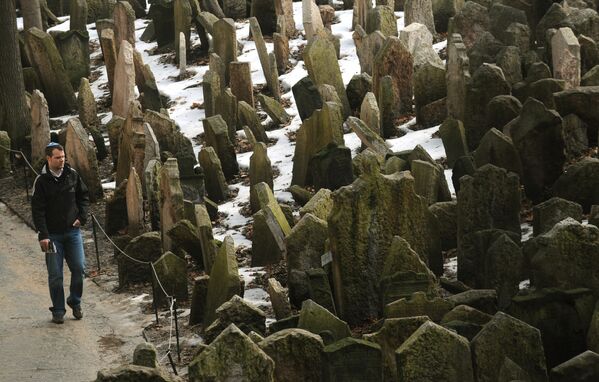
Old Jewish Cemetery in Prague, Czech Republic.
Over almost four centuries (1439 – 1787) more than 100,000 of the dead have been buried in this narrow cemetery; there are about 12,000 headstones. Grave-diggers covered older burials with soil to make room for newer ones. There are places where as many as twelve layers now exist. As the time passed and earth sank, old gravestones began to uncover and push away new graves. Now the cemetery looks spooky, as if headstones are densely growing up from the soil there.
Over almost four centuries (1439 – 1787) more than 100,000 of the dead have been buried in this narrow cemetery; there are about 12,000 headstones. Grave-diggers covered older burials with soil to make room for newer ones. There are places where as many as twelve layers now exist. As the time passed and earth sank, old gravestones began to uncover and push away new graves. Now the cemetery looks spooky, as if headstones are densely growing up from the soil there.
2/11
© AP Photo / Dario Lopez-Mills
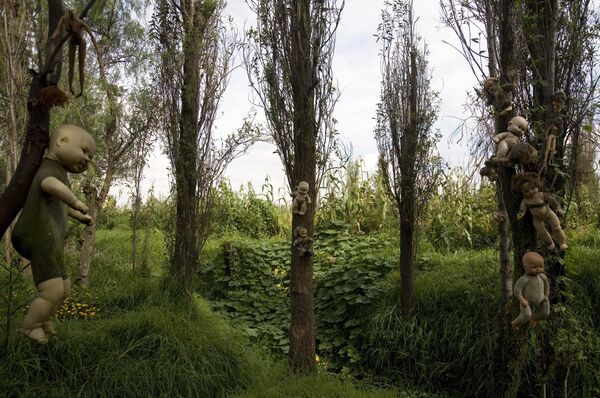
Island of Dolls in Mexico.
Hundreds of photographers and thrill-seekers travel to the haunted Island of the Dolls every year, but it was never meant to be a tourist attraction. They were put there by a reclusive Mexican man, Julian Santana Barrera, who believed they would appease the troubled ghost of a small girl who died there over 50 years ago - and still haunts the woods today.
Hundreds of photographers and thrill-seekers travel to the haunted Island of the Dolls every year, but it was never meant to be a tourist attraction. They were put there by a reclusive Mexican man, Julian Santana Barrera, who believed they would appease the troubled ghost of a small girl who died there over 50 years ago - and still haunts the woods today.
3/11
© AP Photo / Eugene Hoshiko
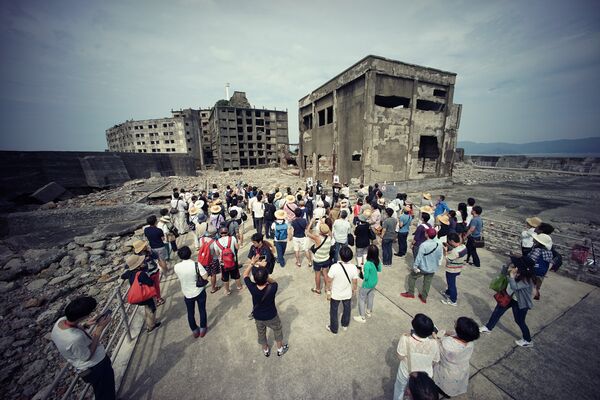
The Hashima Island, Japan.
Hashima is an abandoned miners’ city that was settled in 1887 when the Japanese discovered coal deposits beneath the island. Manufacturing company Mitsubishi bought the island three years later, erecting towering concrete apartments in 1916. By 1959, with 5,259 residents squeezed onto the island’s meager 16 acres, it represented one of the most densely populated places in the world. As coal levels dropped, Mitsubishi was forced to shut down the mines in 1974.
The island's most notable features are its abandoned concrete buildings undisturbed except by nature, and the surrounding sea wall. While the island is a symbol of the rapid industrialization of Japan, it is also a reminder of its dark history as a site of forced labor prior to and during the Second World War.
Hashima is an abandoned miners’ city that was settled in 1887 when the Japanese discovered coal deposits beneath the island. Manufacturing company Mitsubishi bought the island three years later, erecting towering concrete apartments in 1916. By 1959, with 5,259 residents squeezed onto the island’s meager 16 acres, it represented one of the most densely populated places in the world. As coal levels dropped, Mitsubishi was forced to shut down the mines in 1974.
The island's most notable features are its abandoned concrete buildings undisturbed except by nature, and the surrounding sea wall. While the island is a symbol of the rapid industrialization of Japan, it is also a reminder of its dark history as a site of forced labor prior to and during the Second World War.
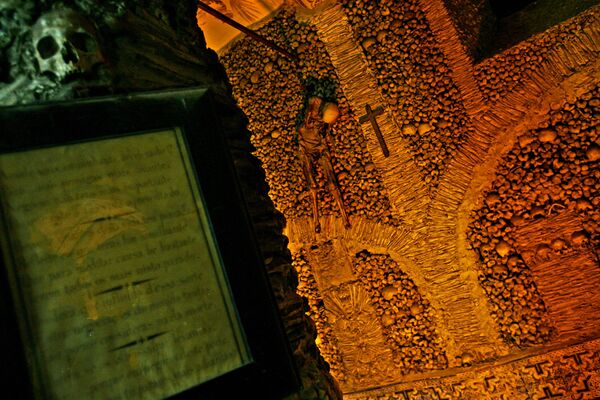
Chapel of Bones in Évora, Portugal.
The Capela dos Ossos (or Chapel of Bones) is a small interior chapel of the Church of St. Francis in Évora. It got its name because the interior walls are covered and decorated with human skulls and bones. The Chapel was built in the 16th century by a Franciscan monk who, transmit the message of life being transitory. This is clearly shown in the famous warning at the entrance: “We bones that here are, for yours await.”
The Capela dos Ossos (or Chapel of Bones) is a small interior chapel of the Church of St. Francis in Évora. It got its name because the interior walls are covered and decorated with human skulls and bones. The Chapel was built in the 16th century by a Franciscan monk who, transmit the message of life being transitory. This is clearly shown in the famous warning at the entrance: “We bones that here are, for yours await.”
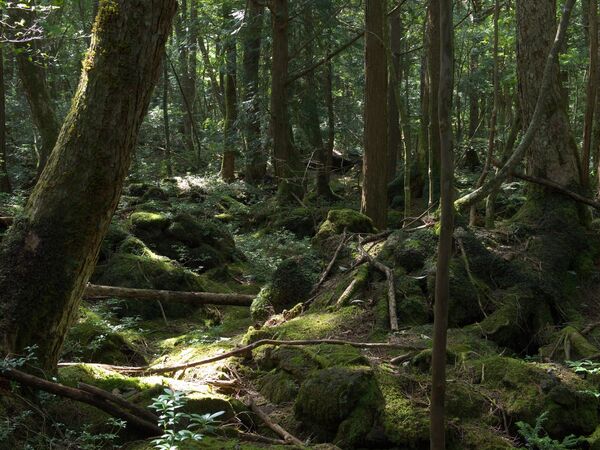
Suicide Forest in Japan.
Aokigahara is also known as the Sea of Trees (translated from Japanese), of Suicide Forest. It is a 35-square-kilometer (14 sq mi) forest that is located at the northwest base of Mount Fuji on Hoshu mail island of Japan. Aokigahara forest is very dense, shutting out all but the natural sounds of the forest itself. The forest has a historic association with "yūrei" or ghosts of the dead in Japanese mythology, and it is a notoriously common suicide site. In 2003, 105 bodies were found in the forest, exceeding the previous record of 78 in 2002.[6] In 2010, it was estimated that more than 200 people had attempted suicide in the forest, of whom 54 completed the act.
Aokigahara is also known as the Sea of Trees (translated from Japanese), of Suicide Forest. It is a 35-square-kilometer (14 sq mi) forest that is located at the northwest base of Mount Fuji on Hoshu mail island of Japan. Aokigahara forest is very dense, shutting out all but the natural sounds of the forest itself. The forest has a historic association with "yūrei" or ghosts of the dead in Japanese mythology, and it is a notoriously common suicide site. In 2003, 105 bodies were found in the forest, exceeding the previous record of 78 in 2002.[6] In 2010, it was estimated that more than 200 people had attempted suicide in the forest, of whom 54 completed the act.
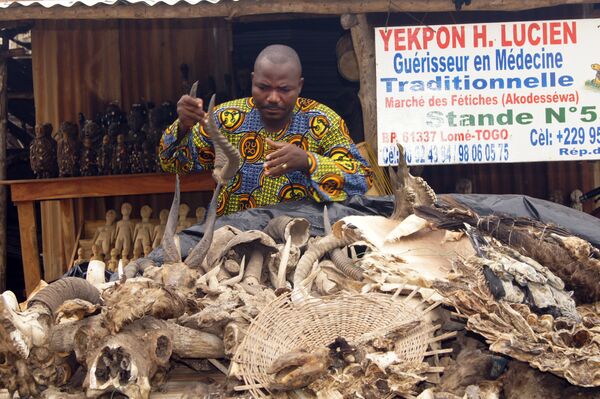
Voodoo Market in Akodessewa, Togo.
The Akodessawa Fetish Market, located in the Lomé, the capital of Togo in West Africa, is the world’s largest voodoo market featuring secret herb, monkey heads, skulls, dead birds, crocodiles, skins and other products of dead animals. There voodoo practitioners and tourists alike can, with the help of a fetish priest, consult the gods directly to discuss whatever is ailing them. Voodoo is an animist religion indigenous to West Africa that spread across the Atlantic to Haiti and Brazil with the slave trade.
The Akodessawa Fetish Market, located in the Lomé, the capital of Togo in West Africa, is the world’s largest voodoo market featuring secret herb, monkey heads, skulls, dead birds, crocodiles, skins and other products of dead animals. There voodoo practitioners and tourists alike can, with the help of a fetish priest, consult the gods directly to discuss whatever is ailing them. Voodoo is an animist religion indigenous to West Africa that spread across the Atlantic to Haiti and Brazil with the slave trade.
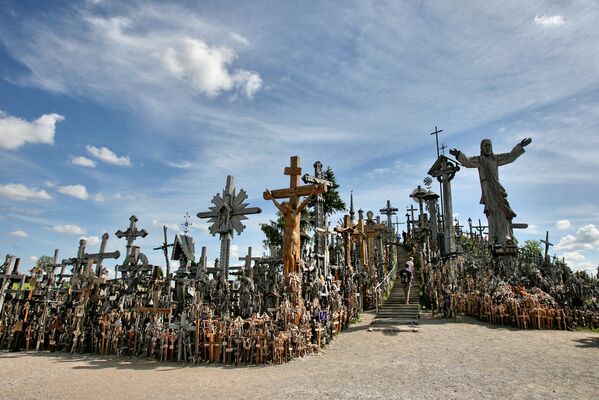
The Hill of Crosses in Lithuania.
Despite its looks, the Hill of Crosses is not a cemetery. It is an historical and architectural monument. It has about 100,000 crosses today. It is said that the first crosses were erected here by the next-of-kin of the rebels that fell in the 1831 uprising. Over the generations, not only crosses and crucifixes, but statues of the Virgin Mary, carvings of Lithuanian patriots and thousands of tiny effigies and rosaries have been brought here by Catholic pilgrims. The Hill of Crosses became a place of vows in Lithuania. In the beginning of the 20th century, the hill was already quite well known. It was being visited by a lot of people, and services and feasts were taking place here.
Despite its looks, the Hill of Crosses is not a cemetery. It is an historical and architectural monument. It has about 100,000 crosses today. It is said that the first crosses were erected here by the next-of-kin of the rebels that fell in the 1831 uprising. Over the generations, not only crosses and crucifixes, but statues of the Virgin Mary, carvings of Lithuanian patriots and thousands of tiny effigies and rosaries have been brought here by Catholic pilgrims. The Hill of Crosses became a place of vows in Lithuania. In the beginning of the 20th century, the hill was already quite well known. It was being visited by a lot of people, and services and feasts were taking place here.
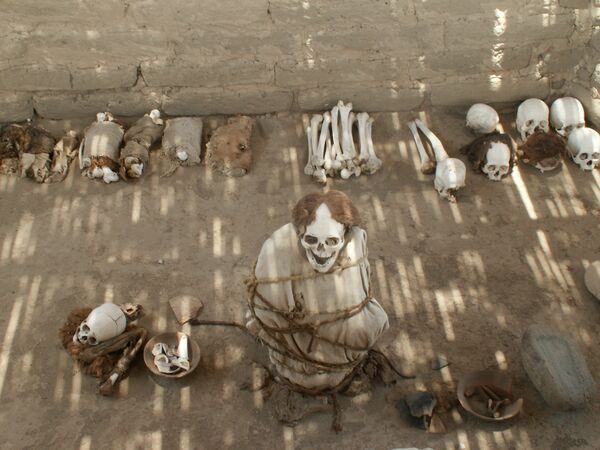
Chauchilla Cemetery in Peru.
Haunting Chauchilla Cemetery is 30 kilometers (19 miles) south of the city of Nazca in Peru contains prehispanic mummified human remains and archeological arti is a prehistoric burial ground where mummified corpses were laid to rest until the ninth century. Prior to 1997, it was ravaged mercilessly by Peruvian grave robbers. For many of these ancient corpses, it was the second time they lost their heads.
Haunting Chauchilla Cemetery is 30 kilometers (19 miles) south of the city of Nazca in Peru contains prehispanic mummified human remains and archeological arti is a prehistoric burial ground where mummified corpses were laid to rest until the ninth century. Prior to 1997, it was ravaged mercilessly by Peruvian grave robbers. For many of these ancient corpses, it was the second time they lost their heads.
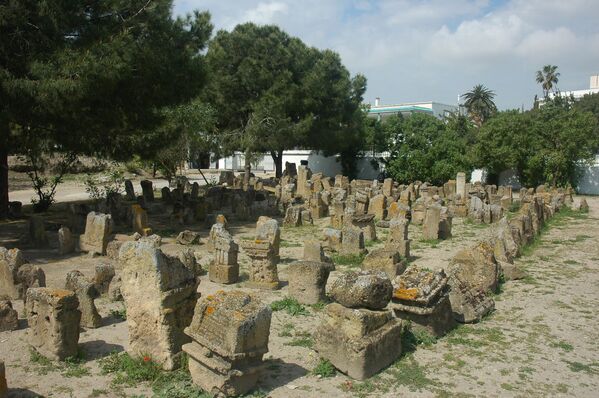
Sanctuary of Tophet in Tunis.
The chilling Sanctuary of Tophet in Carthage was first excavated in 1921. French archaeologists uncovered a sacrificial site and burial ground, where it's believed Carthaginian children were sacrificed to the deities Baal Hammon and Tanit. The very parents themselves were in the habit of offering their children and keeping the little ones pleased on the occasion, because they might not die in tears. It's an extraordinary, haunting place, with a mass of stubby stele engraved with simple geometric shapes and symbols under shady trees.
The chilling Sanctuary of Tophet in Carthage was first excavated in 1921. French archaeologists uncovered a sacrificial site and burial ground, where it's believed Carthaginian children were sacrificed to the deities Baal Hammon and Tanit. The very parents themselves were in the habit of offering their children and keeping the little ones pleased on the occasion, because they might not die in tears. It's an extraordinary, haunting place, with a mass of stubby stele engraved with simple geometric shapes and symbols under shady trees.
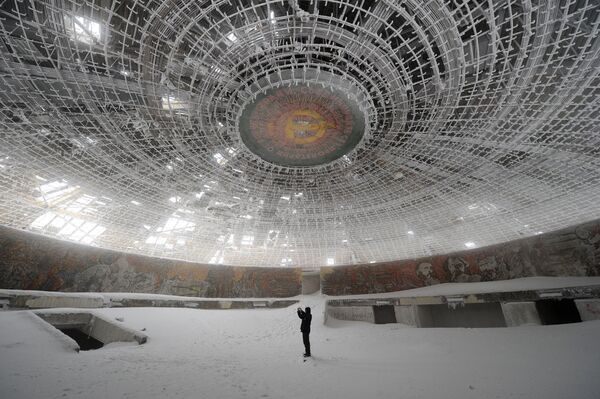
Buzludzha Monument in Bulgaria.
Buzludzha Monument (or the House-Monument of the Bulgarian Communist Party) was built on the peak of Buzludzha in the Central Balkan Mountains in 1981 and looks like an abandoned UFO. The construction took 5 years and $35 million by today's rates. After the fall of the Iron Curtain in 1989, the building fell into a state disrepair and the Bulgarian government has neither the funds to renovate or destroy the structure.
Buzludzha Monument (or the House-Monument of the Bulgarian Communist Party) was built on the peak of Buzludzha in the Central Balkan Mountains in 1981 and looks like an abandoned UFO. The construction took 5 years and $35 million by today's rates. After the fall of the Iron Curtain in 1989, the building fell into a state disrepair and the Bulgarian government has neither the funds to renovate or destroy the structure.
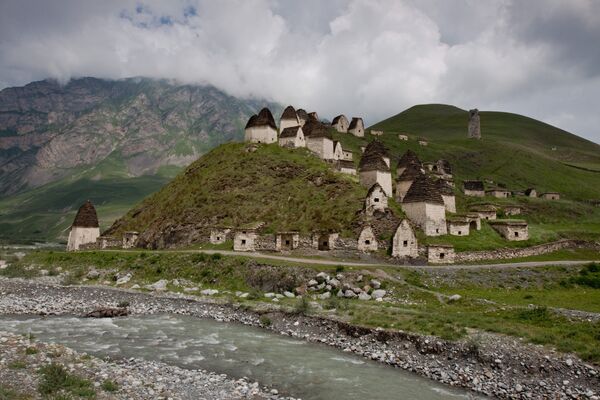
City of the dead in the Caucasus, Russia.
Dargavs in the Republic of North Ossetia – Alania in Russia look like a neat village, but actually it is a big necropolis called the City of the dead. There people were buried by Alanian traditions with all their clothes and personal g. It comprises 99 different tombs and crypts. Some sources say the oldest of the crypts dates back to the 12th century.
Dargavs in the Republic of North Ossetia – Alania in Russia look like a neat village, but actually it is a big necropolis called the City of the dead. There people were buried by Alanian traditions with all their clothes and personal g. It comprises 99 different tombs and crypts. Some sources say the oldest of the crypts dates back to the 12th century.