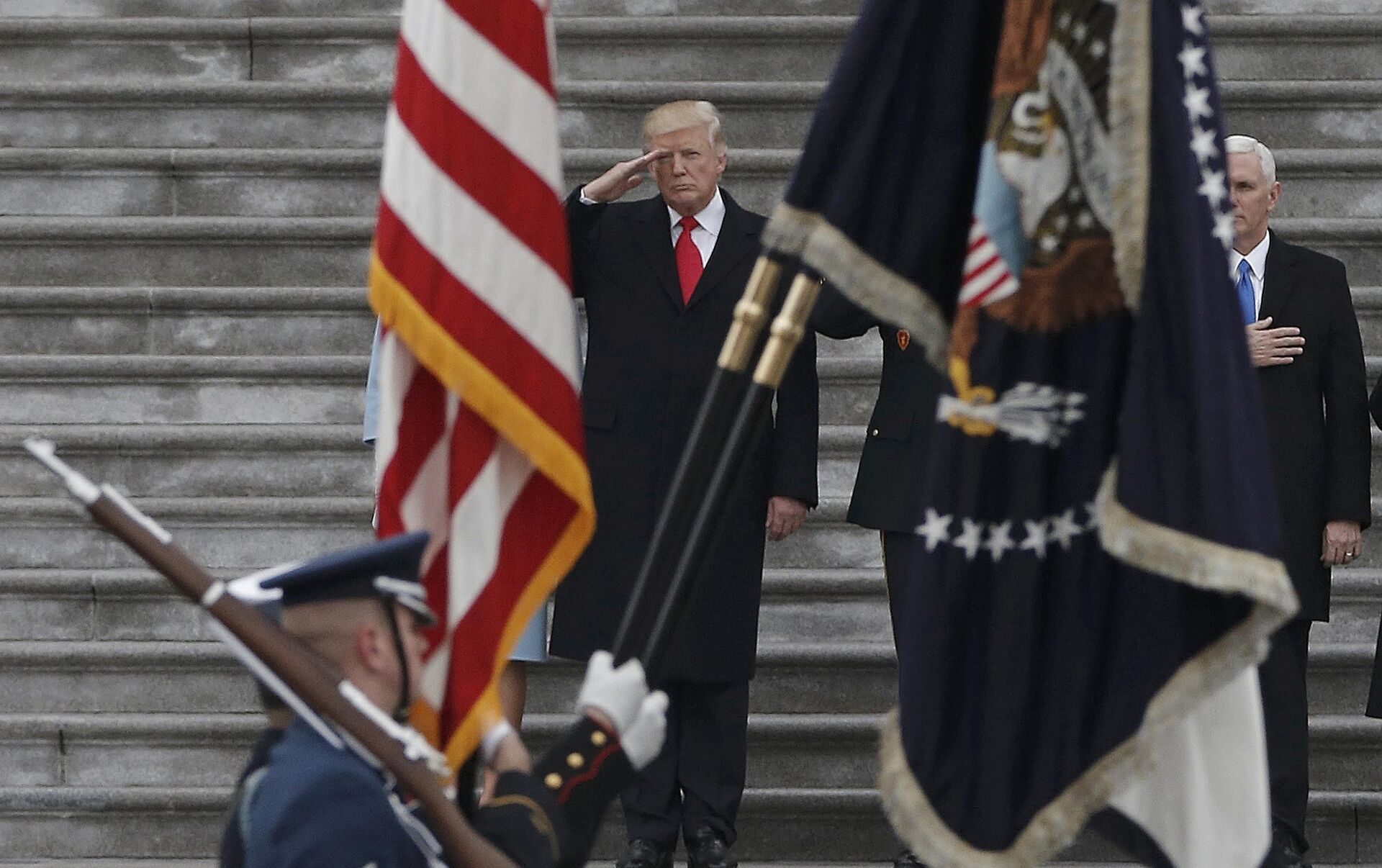
Trump has made it clear that he sees the threat from Daesh as his major security challenge. In his inauguration speech, he said:
"We will reinforce old alliances and form new ones — and unite the civilized world against radical Islamic terrorism, which we will eradicate completely from the face of the Earth. We will make America safe again."
Busy week planned with a heavy focus on jobs and national security. Top executives coming in at 9:00 A.M. to talk manufacturing in America.
— Donald J. Trump (@realDonaldTrump) 23 January 2017
However, Trump's travel clampdown plans have been received with some skepticism within the security world.
"He is so unpredictable that it is difficult to say what he means. His use of Twitter to announce policy makes it really difficult to know what will really happen. The simple answer is: wait and see," Professor Paul Rogers, professor in the department of peace studies at Bradford University, UK, told Sputnik.
The US president believes that the chaos caused by the migrant crisis in Europe — exposing the failure to protect its external borders — has led to thousands of people entering Europe with no passports. In Germany alone, the authorities have struggled to deal with more than a million migrants who made their way into the country in 2015, initially being overwhelmed by the sheer volume of people.
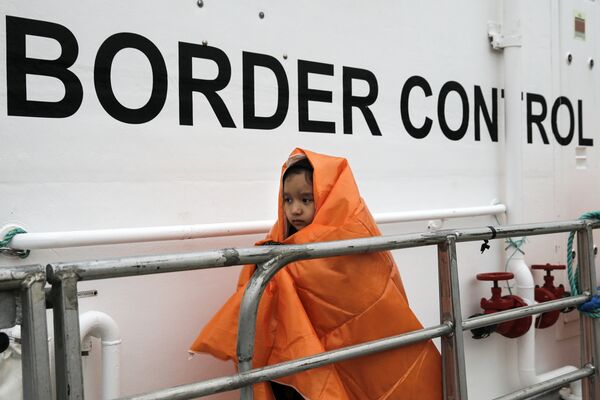
Many had not been "processed" in their original country of arrival — in breach of the Dublin rules under the Schengen agreement. Moreover, thousands of the migrants have been found to have given the authorities false ID papers, exacerbating the situation.

Trump is believed to fear a second 9/11 attack perpetrated by radicalized Islamists in Europe who see the breakdown in security an easy way to gain passage to the United States.
Following the November 13 attacks in Paris, there were calls for Europol to beef up its intelligence capacity and in January 2016, it opened the new European Counter Terrorism Center to act as an enhanced central information hub by which the Member States can increase information sharing and operational coordination.