The program was immediately supported by a group of US Congressmen including Ted Cruz, Lamar Smith and Brian Babin.
According to them, the implementation of this plan will allow the United States to make a leap forward in space exploration, and put an end to transport dependence on the Russian Federal Space Agency Roscosmos.
The US lawmakers insisted that by 2018 NASA astronauts would be sent to the International Space Station (ISS) from American territory and from US launch pads, and that US rockets would send American satellites into orbit.
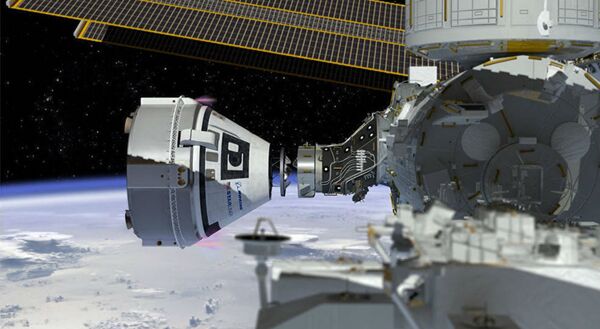
In an interview with RT, Viktor Savinykh, editor-in-chief of the Russian magazine Rossiysky Kosmos, described congressional demands to launch a US-manned spacecraft as early as next year as "unrealistic."
"NASA has yet to conduct a test manned flight of a booster," Savinykh said, adding that "American spacecraft are not yet ready to transport people" and that "the accident rate of US spaceships remains too high."
He was echoed by Alexander Zheleznyakov of the Russian Academy of Cosmonautics, who said that "if we talk about next year, then the proposal to abandon Roskosmos services will be a big exaggeration."
"No changes will occur during this time. The US Congressmen have more than once made similar calls to NASA, and this campaign has been going on for about five years," Zheleznyakov said.
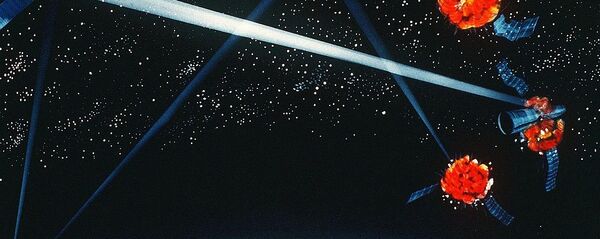
Sooner or later, RT reports, American companies will start to produce their own products related to the space industry, including rocket engines.
However, even after this, the cooperation between NASA and Roskosmos will continue, experts say, adding that speculation about a total halt of bilateral space collaboration is nothing but populism.
According to Zheleznyakov, "few people know that the beginning of cooperation in the space sector between Moscow and Washington dates back to 1960; the two countries' space agencies cooperated even during the most stressful years of the Cold War."
"I think that even after the ISS project is completed, there will be some new forms of teamwork. This is profitable because astronautics is a very expensive and complex sphere where it is quite difficult to work alone," Zheleznyakov concluded.
As far as the rocket engines are concerned, the US's Atlas III and Atlas V rockets have used liquid-fueled Russian RD-180 engines since the early 2000s.
But US officials soon calculated that the development, testing and certification of the new rockets would require about five years. In June 2016, the Senate caved to pressure from the Pentagon, and agreed to resume the purchase of the RD-180s.
Never miss a story again — sign up to our Telegram channel and we'll keep you up to speed!