Take a look into the past with Sputnik's photo gallery to find out what happened in the first days of the Great Patriotic War and see how people observe memorial events to honor those who lost their lives.
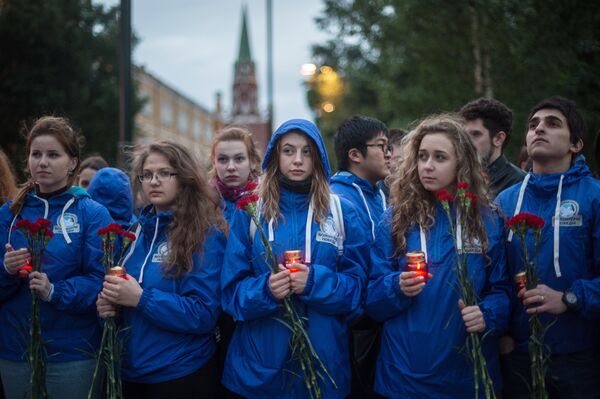
On the Day of Memory and Grief, thousands of volunteers from all over the country organized the ‘Memory Candle’, a nation-wide campaign in honor of the fallen in the Great Patriotic War.
In accordance with tradition, the campaign started in the Far East: volunteers in Kamchatka were the first to light their candles. Then the action took place in Siberia and the Urals and finished in Moscow.
3/33
© Sputnik / Yevgeny Khaldei
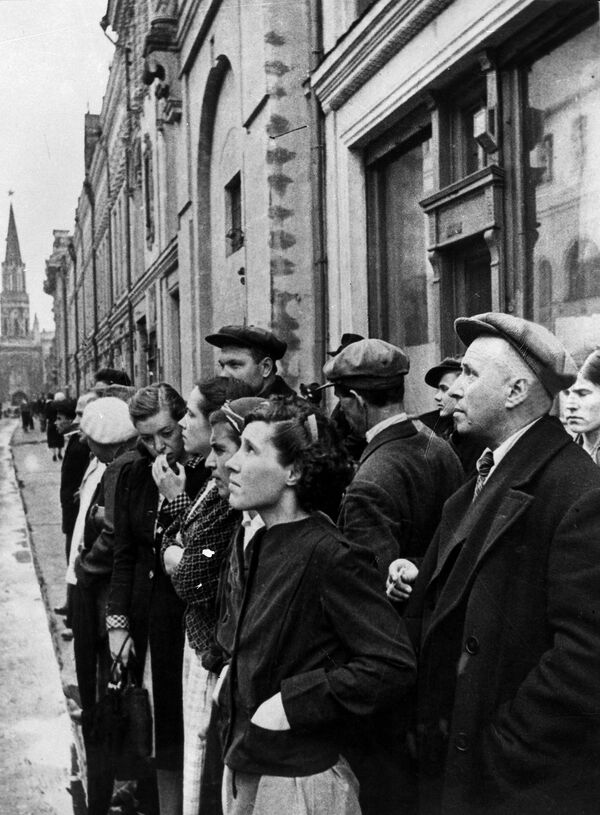
At noon on June 22, 1941, everyone was listening to a radio speech given by USSR Commissar of Foreign Affairs Vyacheslav Molotov, who announced that Nazi Germany had attacked the country. “Our cause is right, the enemy will be defeated, victory will be ours,” Molotov said, concluding his address to the Soviet people.
4/33
© Sputnik / Kazimir Lishko
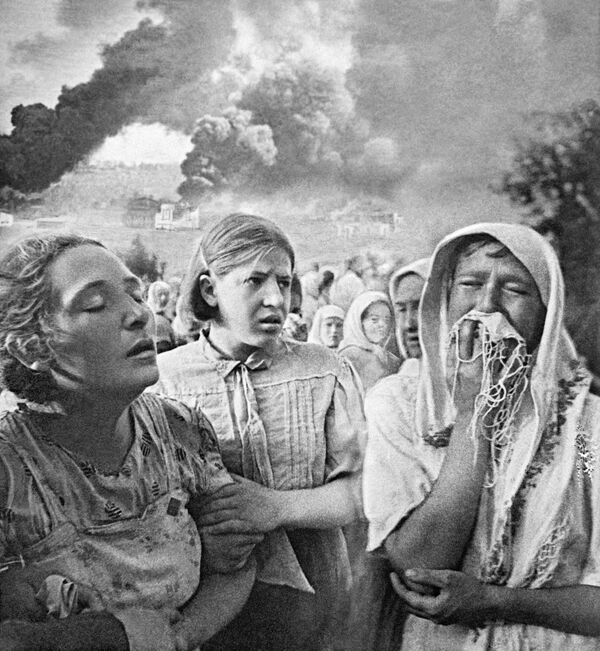
During the first eight hours of the war, the Soviet army lost 1,200 aircraft, about 900 of which were destroyed on the ground. Photo: the Grushki district in Kiev, Ukraine, June 23, 1941.
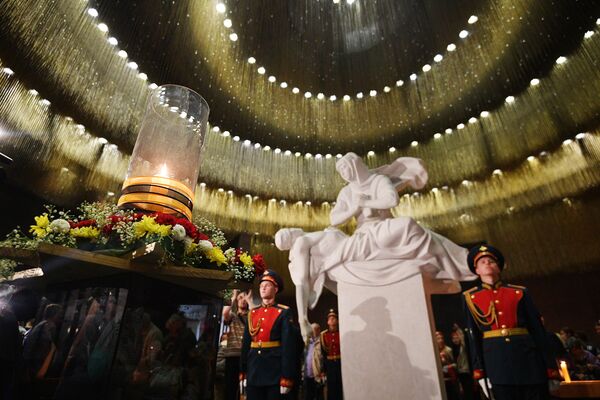
One of the main memorial events of the Russian capital took place at the Museum of the Great Patriotic War at Poklonnaya Gora, where people lit memorial candles to honor the defenders of the Motherland.
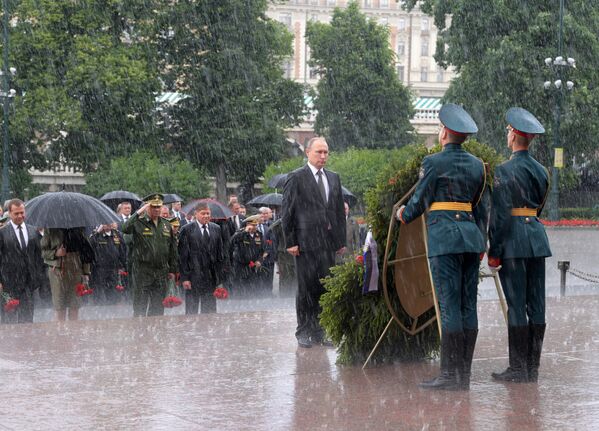
Russian President Vladimir Putin and Prime Minister Dmitry Medvedev, as well as members of the government and representatives of veterans' organizations took part in a wreath-laying ceremony at the Tomb of the Unknown Soldier in the Alexander Garden in Moscow.
7/33
© Sputnik
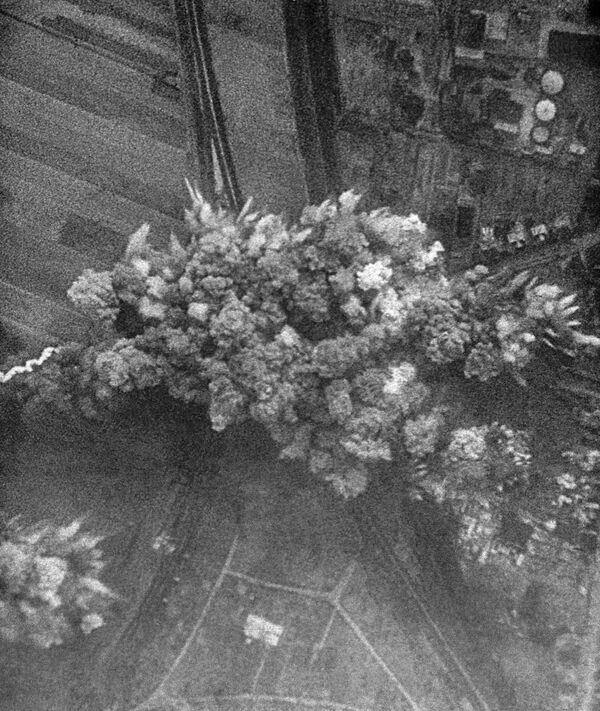
In 1941, Nazi Germany hoped to use a blitzkrieg strategy. Their invasion plan, called "Operation Barbarossa," was intended to defeat the USSR and finish the war by the autumn. Photo: a German aircraft bombs Soviet cities, June 22, 1941.
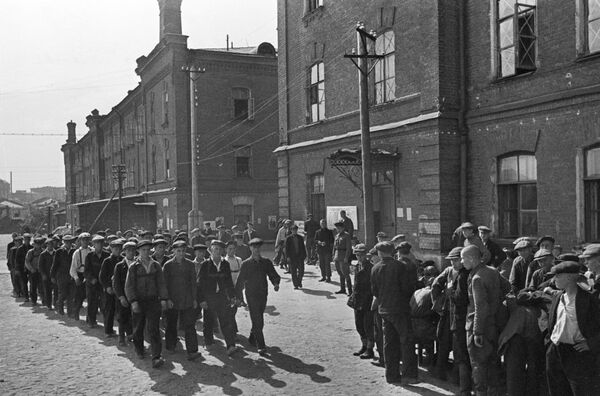
The day after the war began, military mobilization was declared across the country. Photo: new recruits in Moscow, June 23, 1941.
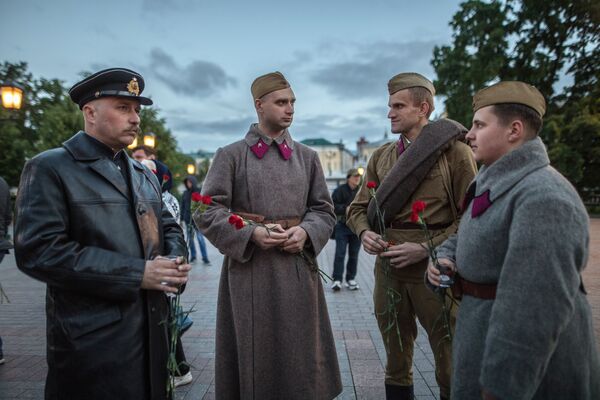
The ‘Memory Candle’ vigil took place in 5,000 cities and more than 20,000 settlements in Russia and was supported by people from 82 countries. Volunteers in Syria, Serbia, Bulgaria, the Baltic countries, Central Asia and the Caucasus joined the campaign in 2017.
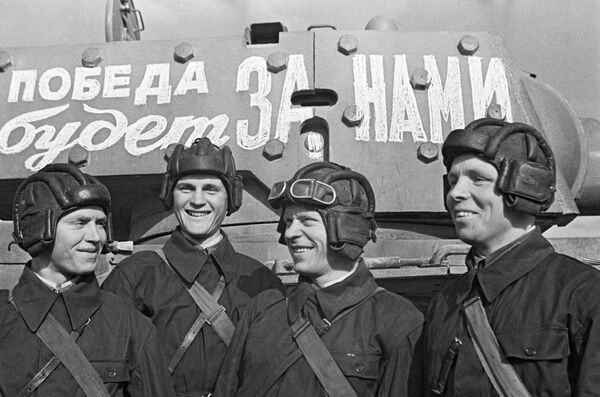
Italy and Romania declared war on the Soviet Union together with Germany; a day later, Slovakia joined them. Photo: Soviet tank regiment before being sent to the front. Moscow, June 1941.
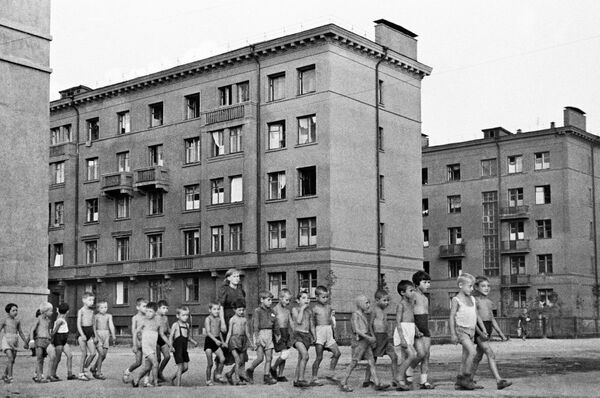
On June 22, 1941, 666 frontier posts guarded the USSR state border from the Barents Sea to the Black Sea; 485 of them were suddenly attacked on the first day of the war. Photo: children on the streets in Moscow, June 23, 1941.
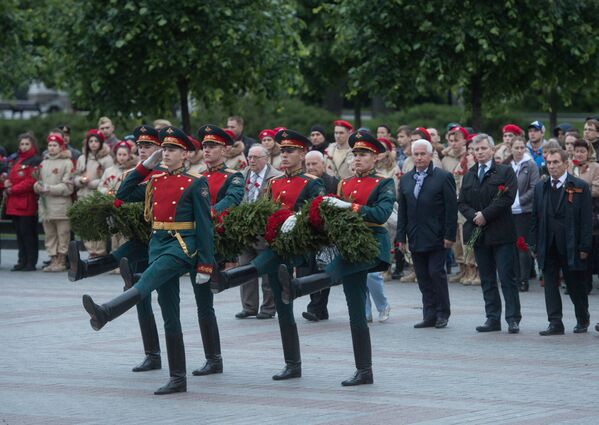
For the 26th time, the ‘Memory Vigil. Eternal Flame’ patriotic campaign was held at the Tomb of the Unknown Soldier in Moscow's Alexander Garden to commemorate the beginning of the Great Patriotic War. At 4.00 a.m., youth associations and patriotic clubs, together with war veterans, laid flowers at the Tomb of the Unknown Soldier.
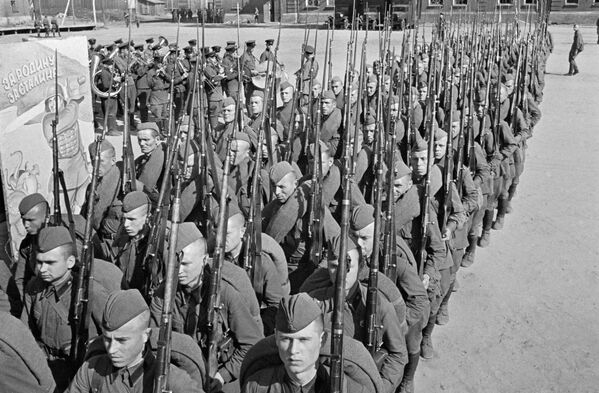
Columns of soldiers head to the frontline. Moscow, June 23, 1941.
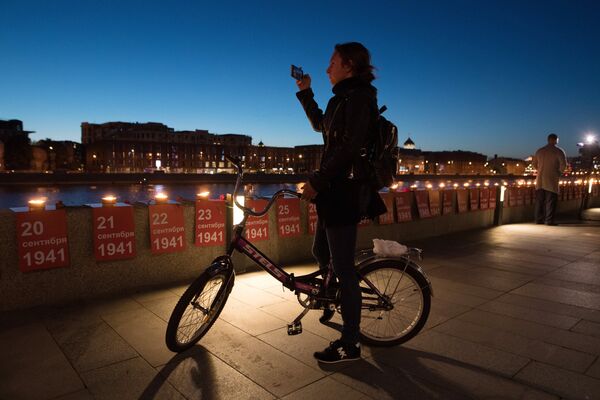
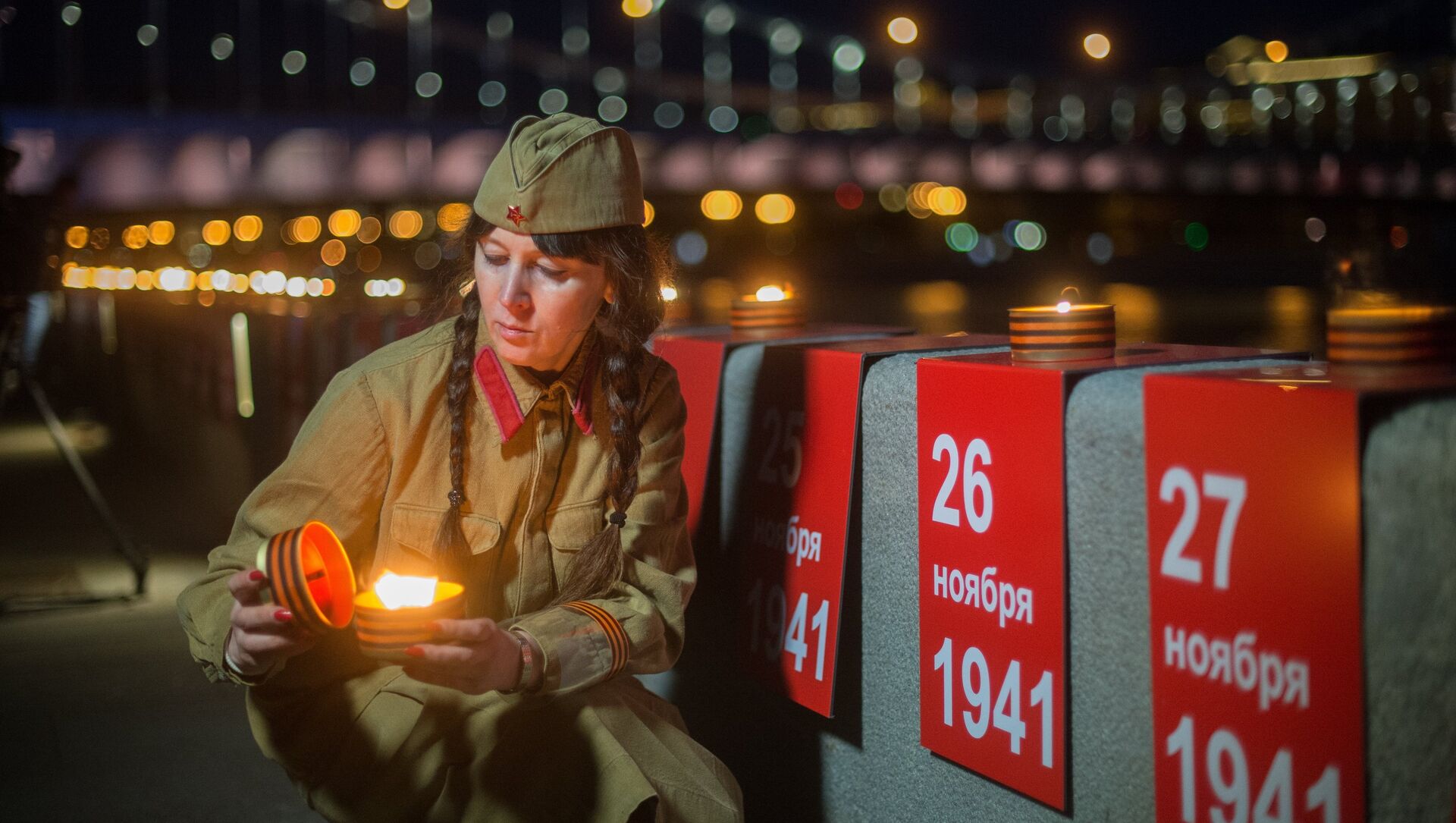
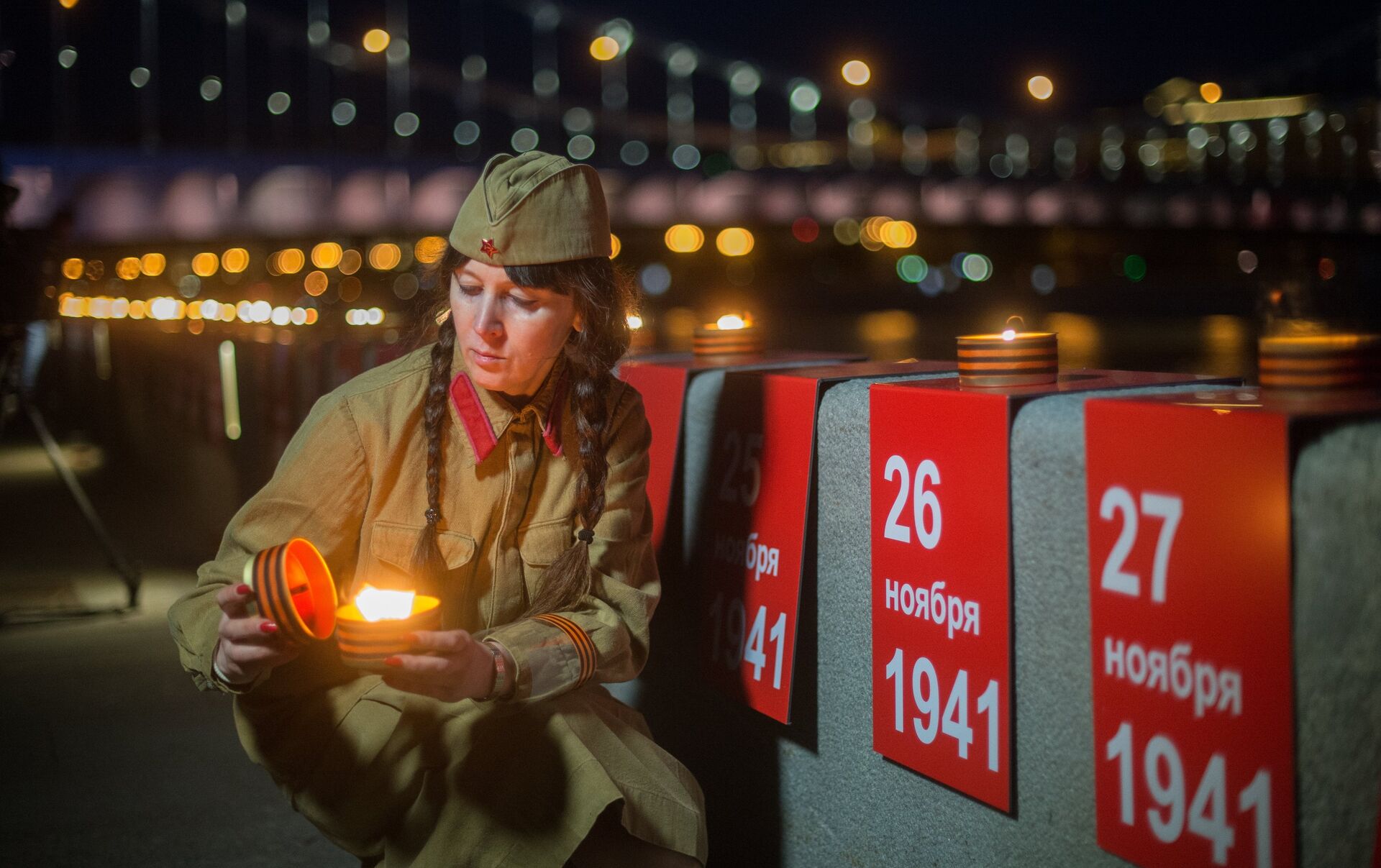
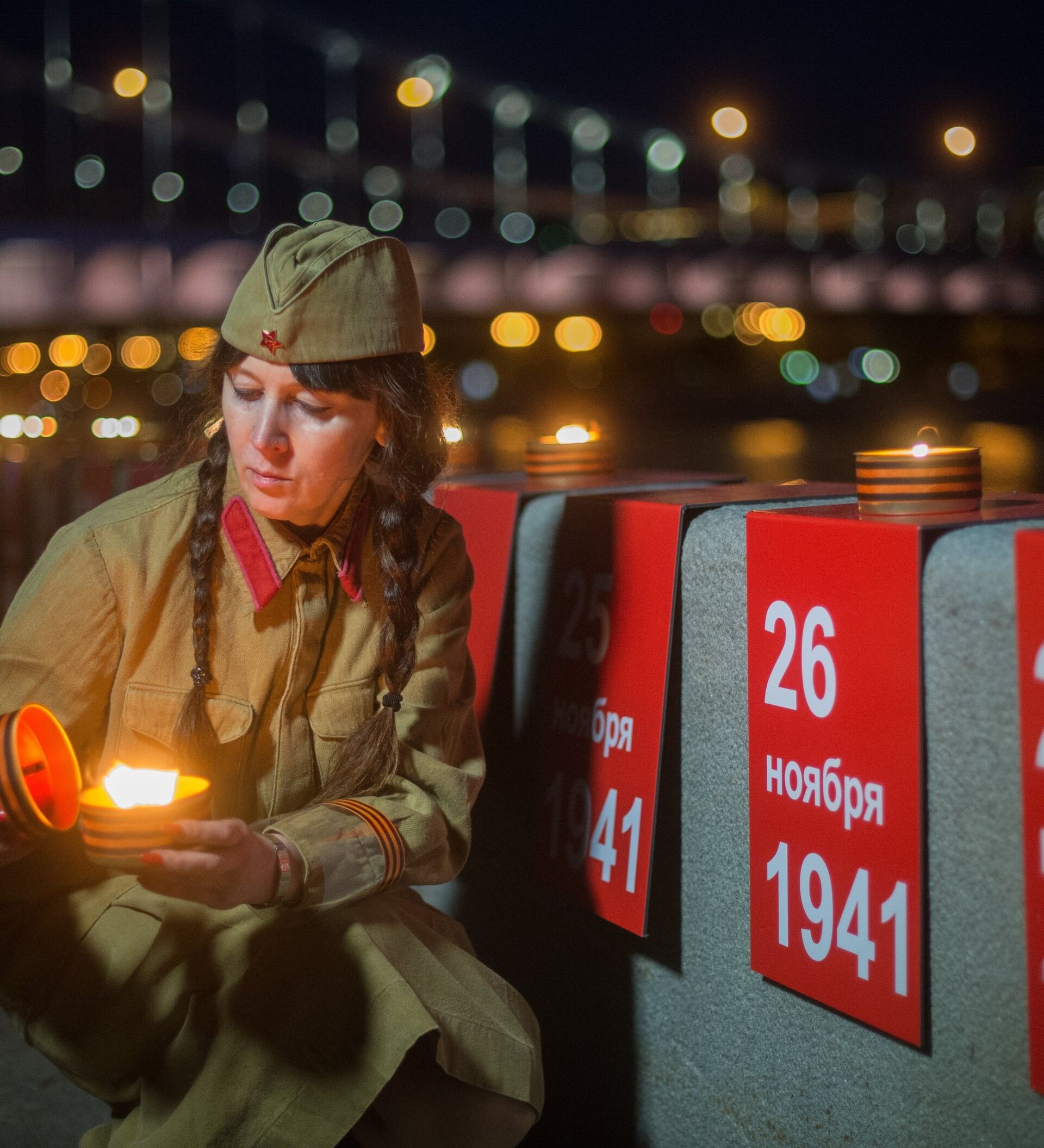
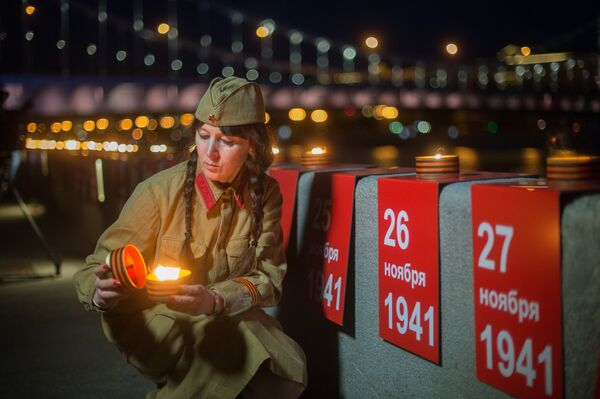
Participants of another patriotic event, ‘Memory Line,’ made an installation from 1,418 lit candles, each symbolizing one day of the war, on Krymskaya Embankment along the Moskva River at night on June 21.
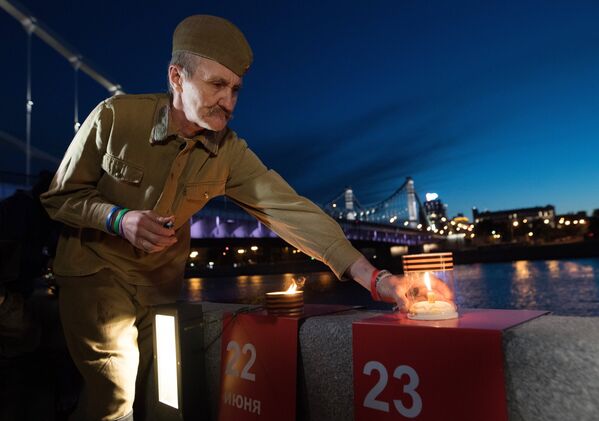
Anyone can light a candle in memory of one of the most important war days for his family. Candles of the ‘Memory Line’ will stay lit until midnight on June 23.
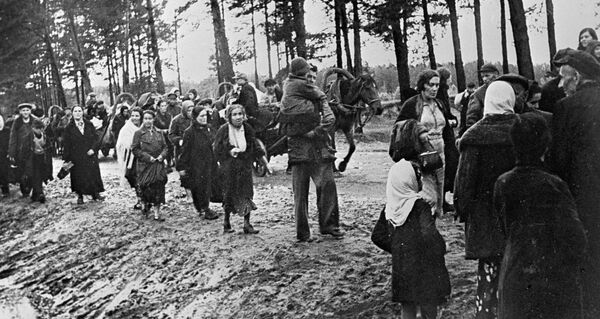
Of the 19,600 border guards who faced the Nazis on June 22, more than 16,000 were killed in the first days of the war. Photo: refugees, June 23, 1941.
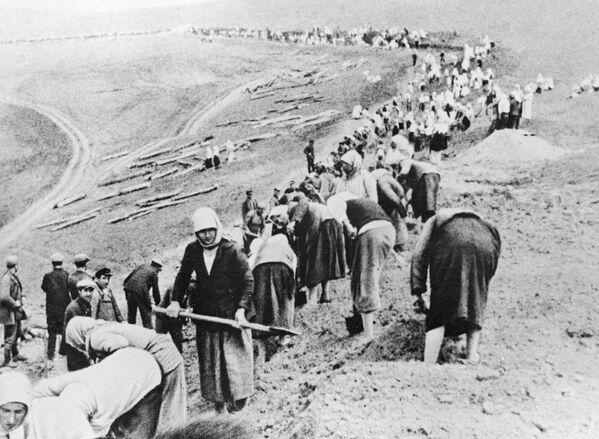
At the beginning of the war, three German Army Groups (North, Center and South) were concentrated and deployed at the Soviet border. Air support was carried out by three air fleets. Photo: farmers build defensive positions on the frontline, July 1, 1941.
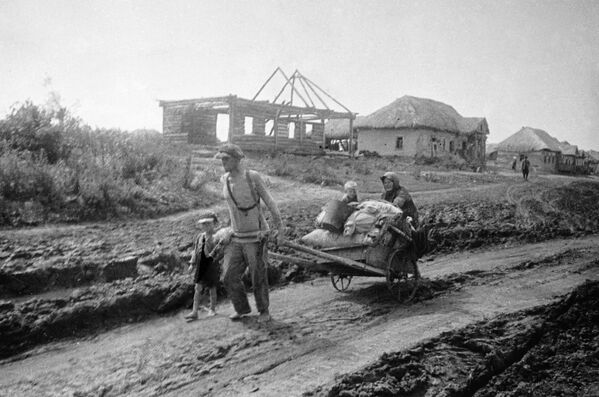
Nazis’ Army Group North was aimed to destroy the Soviet forces in the Baltic States and seize Leningrad and Kronstadt, depriving the Soviet fleet of its bases in the Baltic Sea. Group Center provided the offensive in Belarus and the capture of Smolensk, while Group South was responsible for the attack in the west of Ukraine. Photo: family leaves their home in Kirovograd, Ukraine, August 1, 1941.
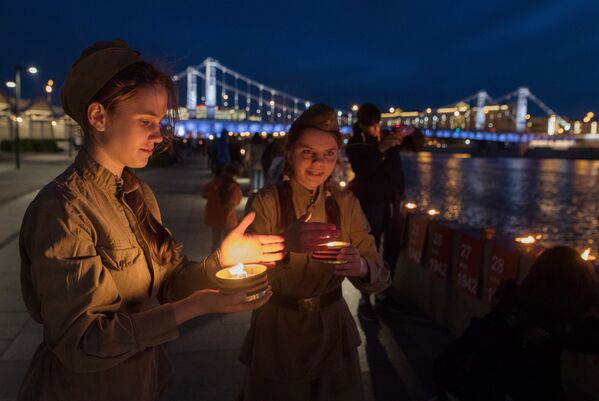
Participants of the ‘Memory Line’ patriotic campaign light candles on the Day of Memory and Grief in Moscow.
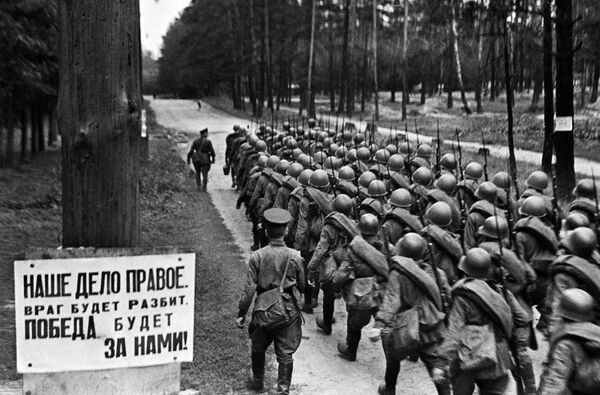
In addition, the Wehrmacht had another army on the territories of occupied Norway and northern Finland. These forces aimed to seize Murmansk, the main naval base of the Northern Fleet and the Kirov railroad north of Belomorsk. Photo: columns of fighters move to the front. Moscow, June 23, 1941.
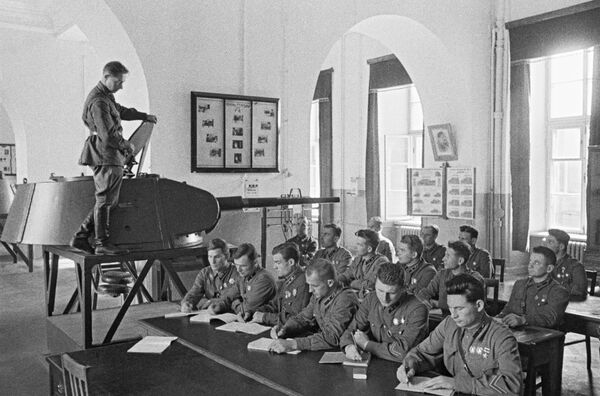
Finland did not allow Germany to attack the Soviet Union from its territory, but was ordered to get their own forces ready for the operation. The Soviet command preceded with their attack and conducted a massive air strike on 18 Finnish airfields in the morning of 25 June. After that, Finland announced the war with the USSR. Photo: graduates of the Stalin Military Academy. Moscow, June 1941.
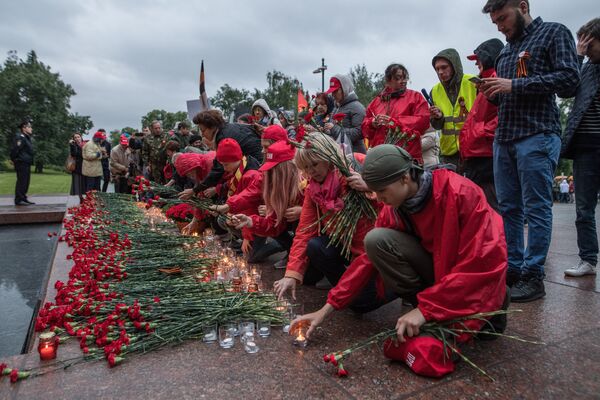
Participants of the ‘Memory Vigil: Eternal Flame 2017’ patriotic campaign lay flowers at the Tomb of the Unknown Soldier in Moscow's Alexander Garden to honor the memory of those killed in the 1941-1945 Great Patriotic War.
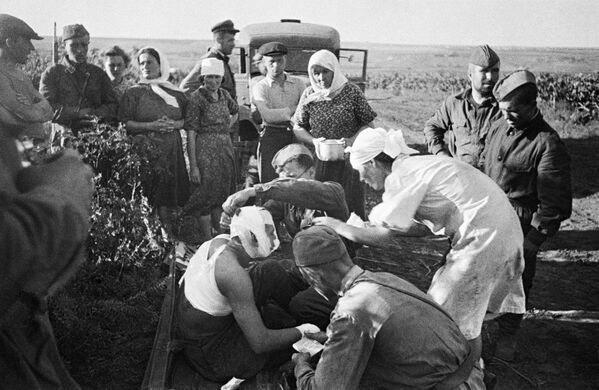
Hungary declared war on the USSR on June 27. At Germany's behest, the Hungarian Carpathian troops attacked the Soviet Union's 12th Army on July 1. Photo: nurses perform first aid on wounded soldiers after the first Nazi air raid near Chisinau, Moldova, June 22, 1941.
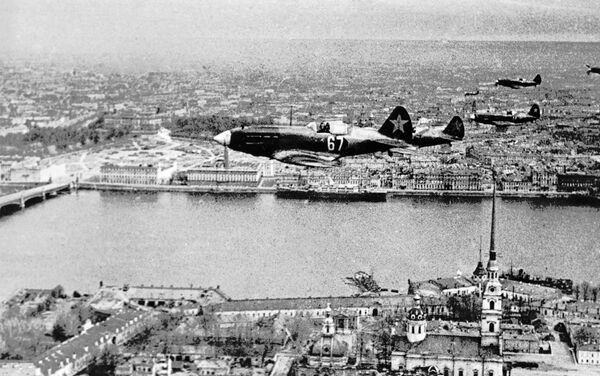
From July 1 to September 30, 1941, the Red Army and Soviet Navy conducted the Leningrad strategic operation. According to the Nazi Operation Barbarossa, capturing Leningrad and Kronstadt were among their intermediate goals, which had to be followed with a major operation to capture Moscow. Photo: Soviet fighters fly over Peter and Paul Fortress in Leningrad. August 1, 1941.
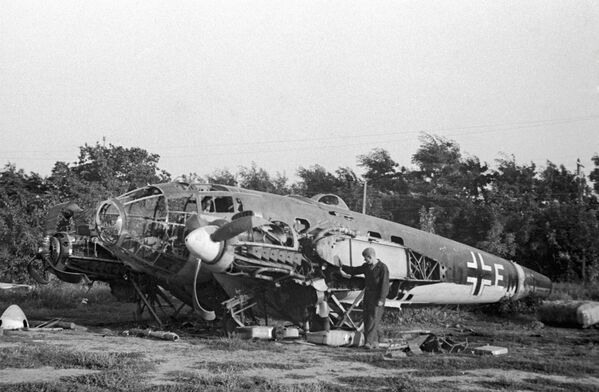
The defense of Odessa was one of the largest Soviet operations of the first months of the war. Photo: One of the first German aircraft shot down near Odessa. July 1, 1941.
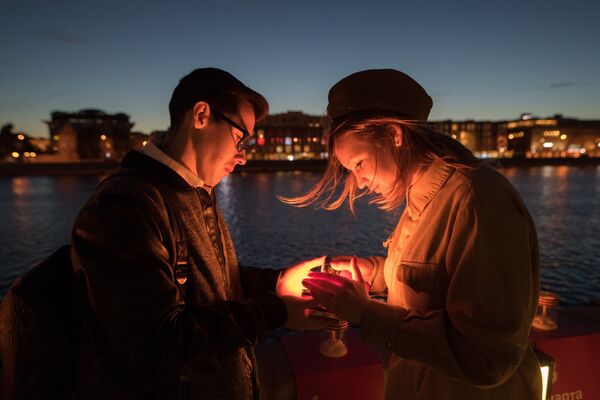
Participants of the ‘Memory Line’ patriotic campaign light candles on the Day of Memory and Grief in Moscow.
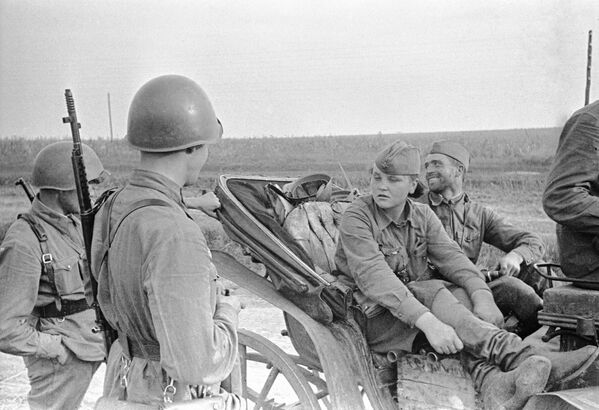
The defense of Odessa deferred the advance of Germany's Army Group South for 73 days. During this time, the German-Romanian forces lost over 160,000 troops, 200 aircraft and 100 tanks. Photo: Female reconnaissance scout Katya (in a carriage) talks to soldiers. District Krasny Dalnik, Odessa. August 1, 1941.
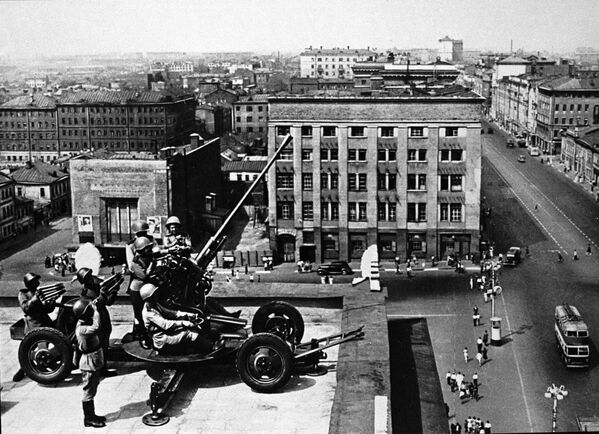
The original Operation Barbarossa plan aimed to defeat Moscow within the first three to four months of the war. However, the resistance of the Soviet troops prevented its implementation. Photo: Anti-aircraft gunners defend the sky above the Russian capital. August 1, 1941.
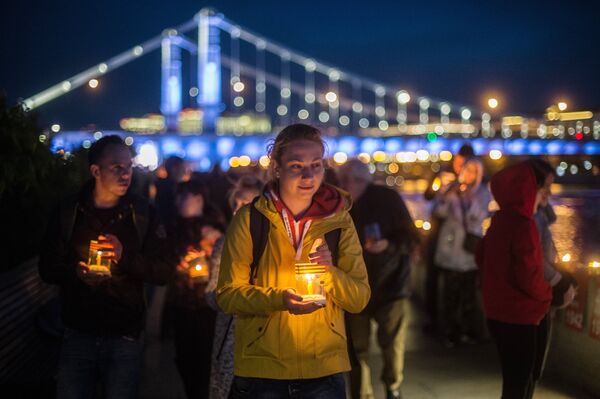
Participants of the ‘Memory Line’ patriotic campaign light candles on the Day of Memory and Grief in Moscow.
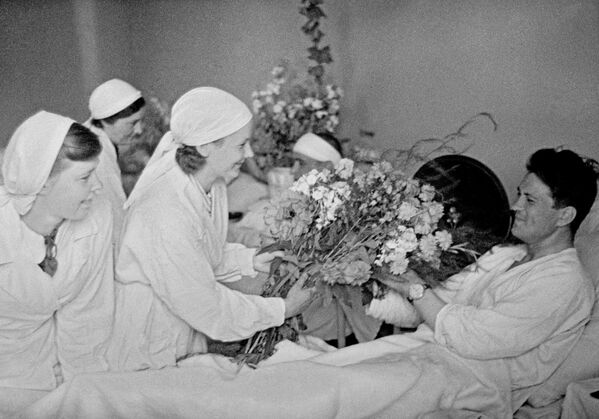
Nurses give flowers to wounded soldiers in a Moscow hospital. June 30, 1941.
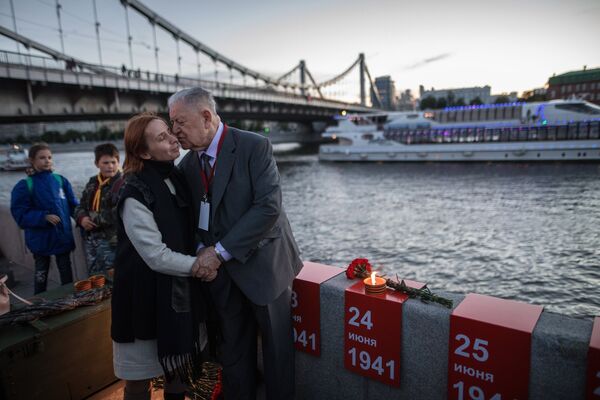
Participants of the ‘Memory Line’ patriotic campaign are seen on the Day of Memory and Grief in Moscow.
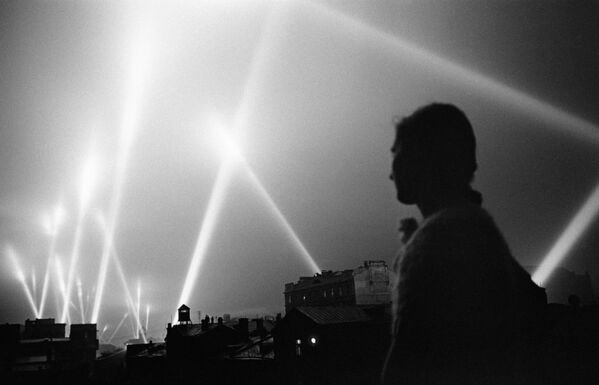
The defensive stage of the Moscow operation was conducted until December 1941. At the beginning of the 1942, the Red Army switched to the offensive, pushing the German troops 100-250 kilometers back. Photo: The rays of air defense troops’ spotlights illuminate the sky above Moscow. June 1941.
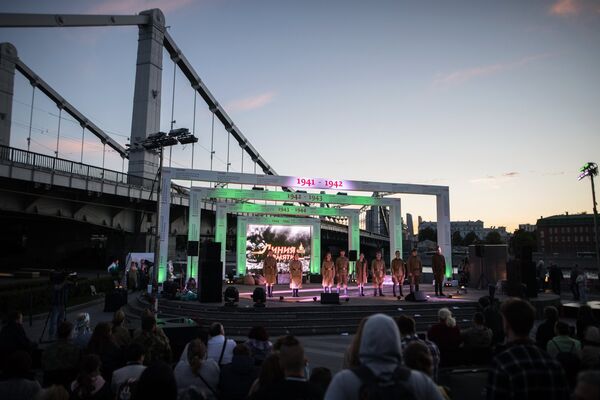
The ‘Memory Line’ patriotic campaign light candles on the Day of Memory and Grief in Moscow.