
UK Defense Minister Michael Fallon and his Australian counterpart Julie Bishop met Thursday in Sydney to discuss the North Korean nuclear issue.
"With international influence comes responsibility. It is now for Beijing to use the influence it has over the North Korean regime to get it to abandon its program," Fallon was quoted as saying by Reuters.
According to Bishop, the current uncertainty over the North Korean nuclear problem is at a level the world "has not witnessed in a very long time."
Earlier, Bishop said in an interview with Australian Broadcasting Corp's Radio National that China "has much more leverage over North Korea than it claims."

In turn, Fallon said that Pyongyang continues to receive help is developing its nuclear and missile program.
China has denied the claims, calling them the "China responsibility theory." According to Chinese Foreign Ministry spokesman Lu Kang, Beijing has already been actively involved in cooperation efforts with the international community to defuse the tensions on the Korean Peninsula.
According to Konstantin Asmolov, an expert at the Institute for Far Eastern Studies, the Russian Academy of Sciences, the United States and its allies continue their pressure over China, but such an approach will not be productive.
"If they go over the top [pressuring China] their efforts will backfire," Asmolov said in an interview with Sputnik China.

"This is an attempt to blatantly interfere in China’s domestic affairs," Asmolov said, adding that Washington’s view of the situation is wrong.
"US media misinterpreted the results of the talks between [US President Donald] Trump and [Chinese President] Xi Jinping. The Americans translated China’s politesse as a signal of its weakness and readiness to give in. Moreover, US media distributed Japanese misinformation that the Chinese president allegedly asked Trump to give him 100 days to resolve the issue in order to avoid new sanctions. But now we can see that was wrong," the expert pointed out.
Asmolov underscored that Beijing implements an independent approach towards the North Korean issue.
"Beijing cooperates with Washington, but will not play by American rules," he said.
The expert also added the claims that Pyongyang receives foreign support for its nuclear and missile program are groundless.

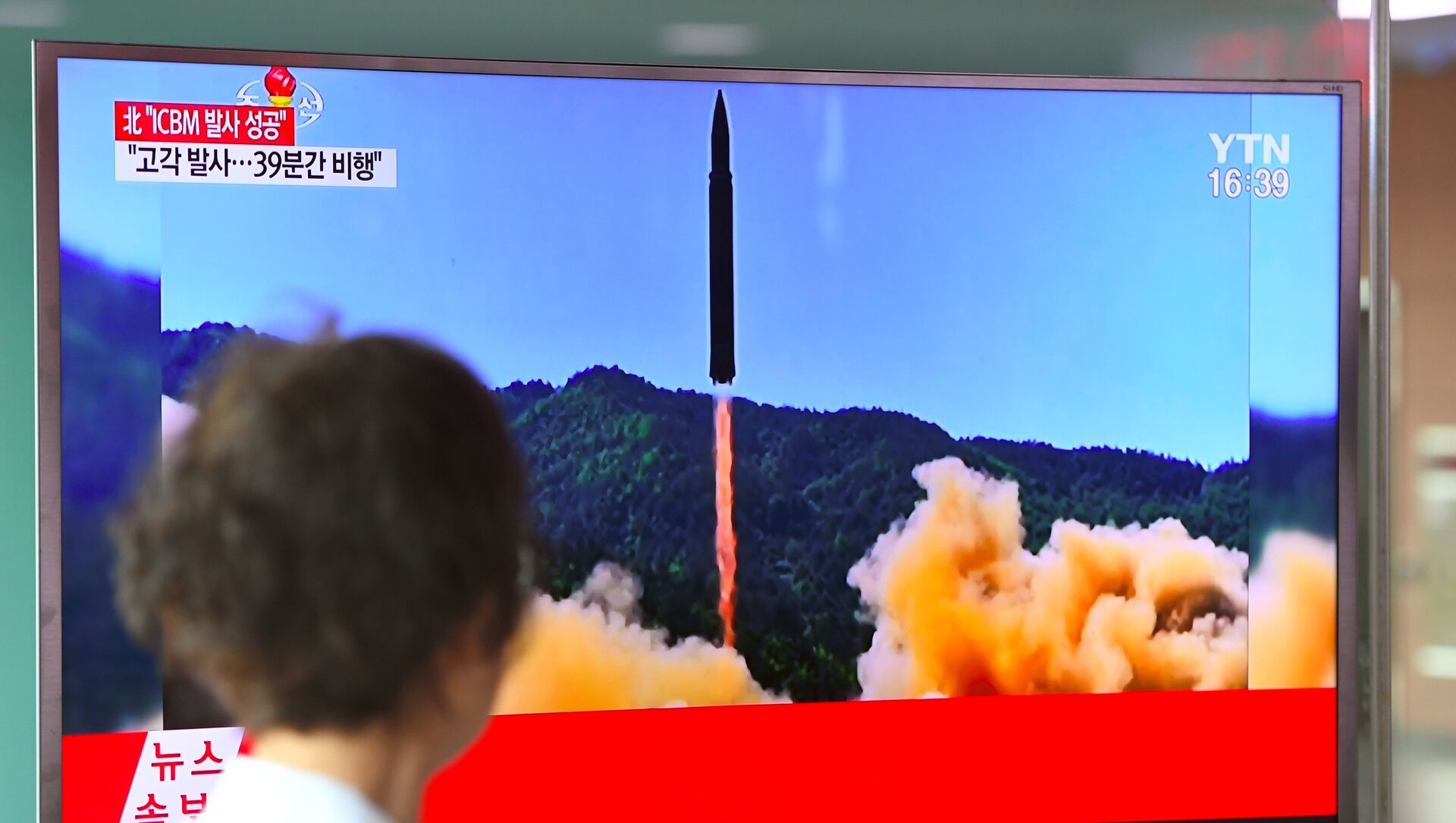
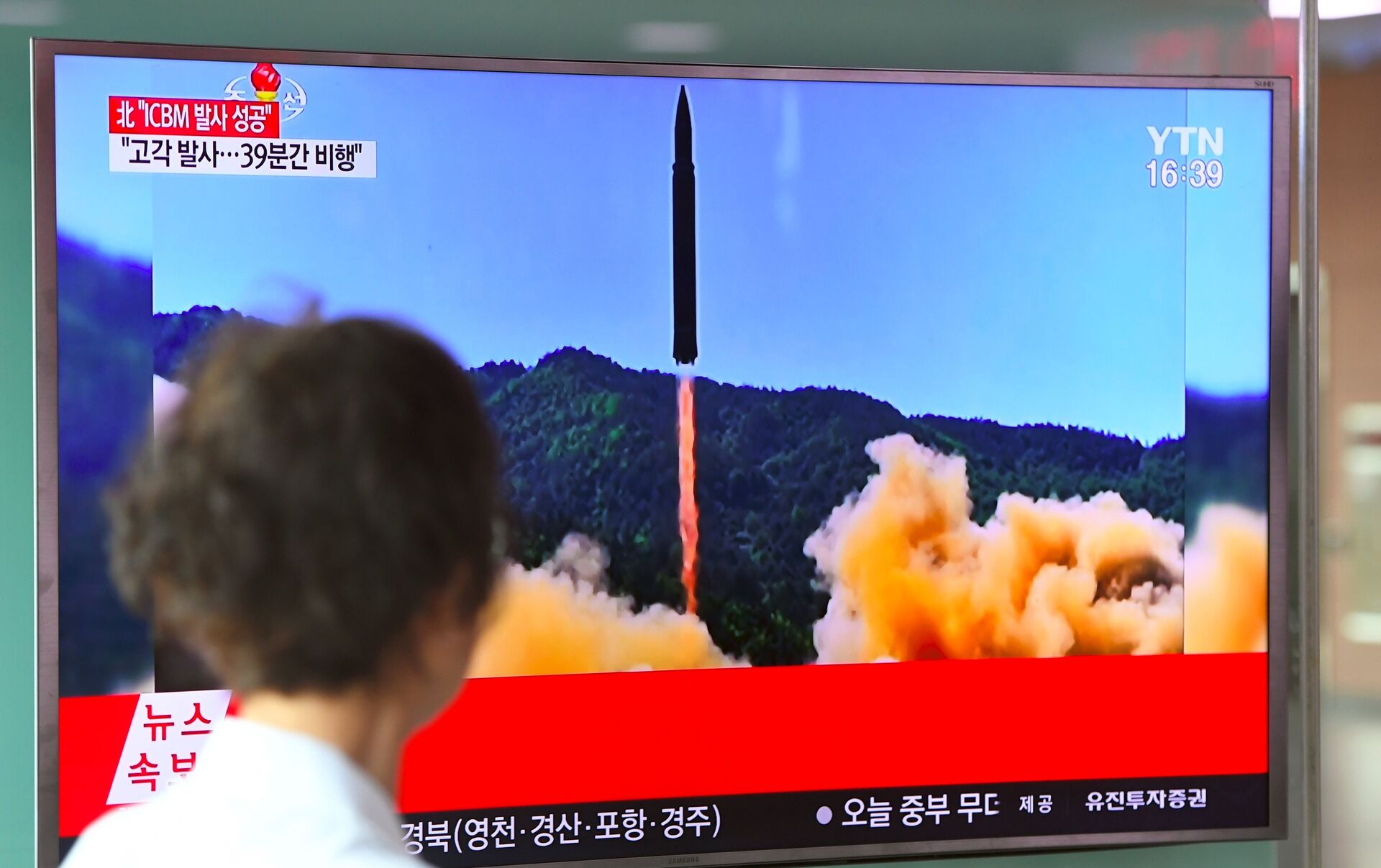
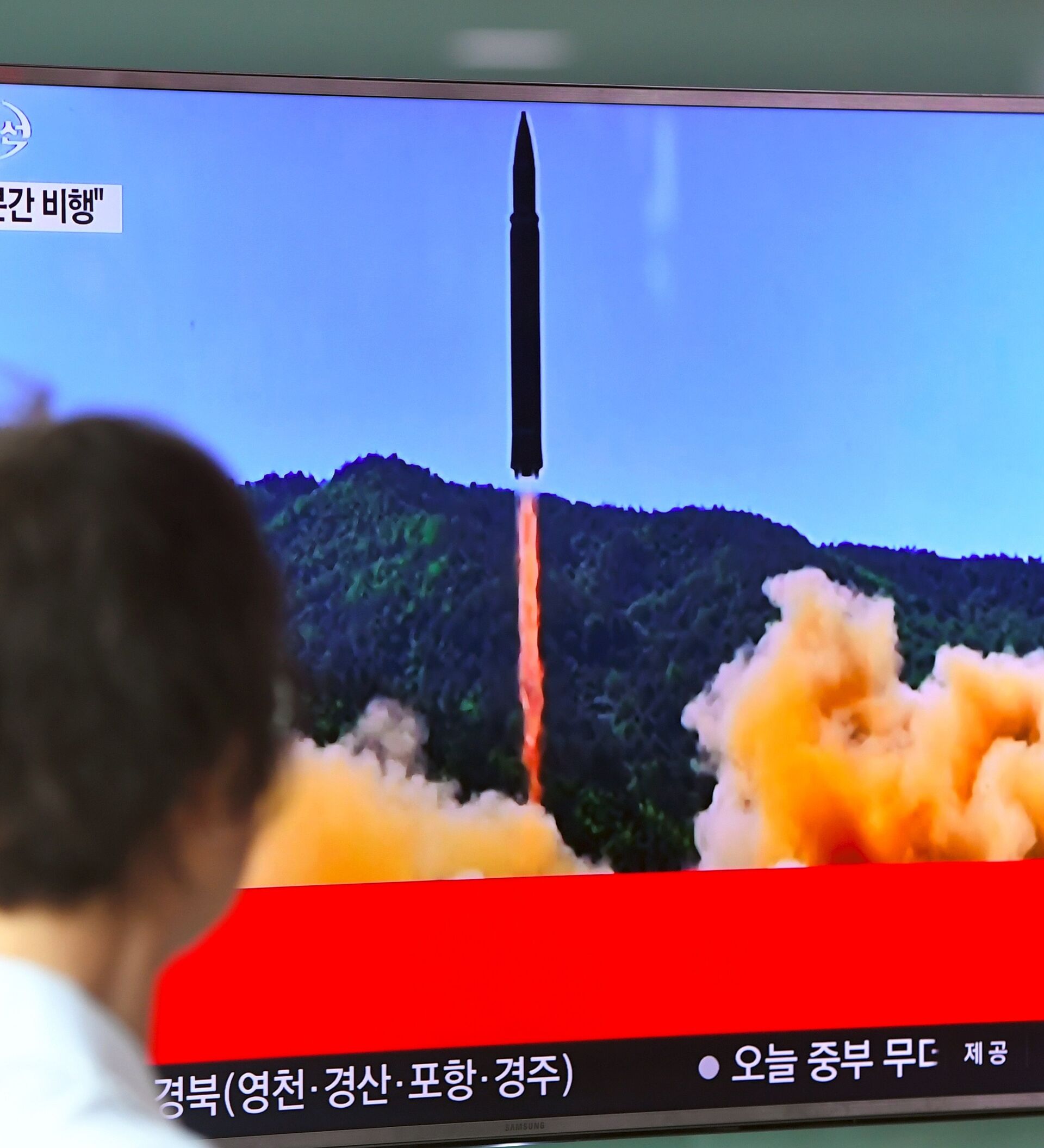
Meanwhile, on Friday it was reported that Pyongyang conducted another missile test launch. According to North Korea’s KCNA state news agency, the test involved the re-entry component of an intercontinental ballistic missile (ICBM).
According to the Pentagon, the missile was of the "intercontinental" variety and traveled approximately 1,000 kilometers before landing in the Sea of Japan. At the same time, the Russian Defense Ministry said that the missile was a medium-range ballistic missile.
On July 4, North Korea announced it had successfully launched its first ICBM, saying it traveled 580 miles and reached an altitude of 1,740 miles during its 39-minute flight before accurately hitting a targeted area in the Sea of Japan.