During the war, farmers near the village of Rum went off to war, and the harvest of apples, apricots, cherries, figs and walnuts was left to be gathered by women and children.
The residents were unable to bring the fruits to Damascus because the road was blocked by Nusra Front militants in the neighboring town of Hadera, resulting in a loss of much of the harvest.
"When the insurgents were near our village, all the men went to the army, were stuck in the trenches and defending their families from the terrorists," a resident of Rum, Fares Mayeen, said. "My son died in battle. Today there are only nine people, but believe me it is much easier to work now than before," he added.
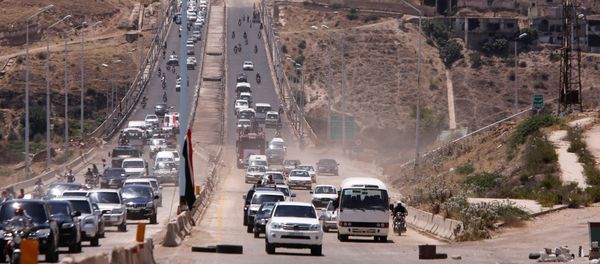
Russia has delivered tens of thousands of tons of food and medical aid to Syria over the last several years to assist the Syrian government and civilian population, much of which has become internally displaced. The Russian Armed Forces has also deployed military police and sappers to clear liberated areas of jihadist booby traps and improvised explosive devices.
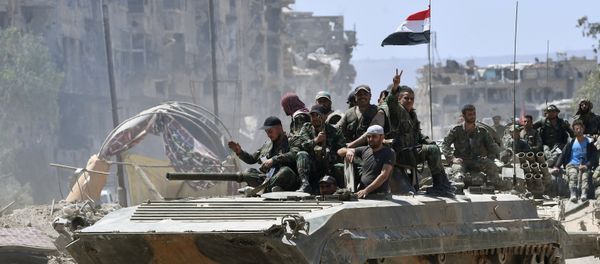
Syria has been in a state of foreign-sponsored civil war since 2011, with the government and its Russian, Iranian and Hezbollah allies fighting a collection of mostly radical Islamist militants. In late 2017, after the liberation of Aleppo, Russia, Iran and Turkey became guarantors of a ceasefire between the government and opposition groups, excluding Daesh (ISIS)*, Nusra Front* and several other extremist groups. The ceasefire allowed the Syrian Army to focus its attention on jihadist positions in Hama Province, sparsely populated areas in the country's east, as well as the East Ghouta pocket outside Damascus.
*A terrorist group outlawed in Russia.