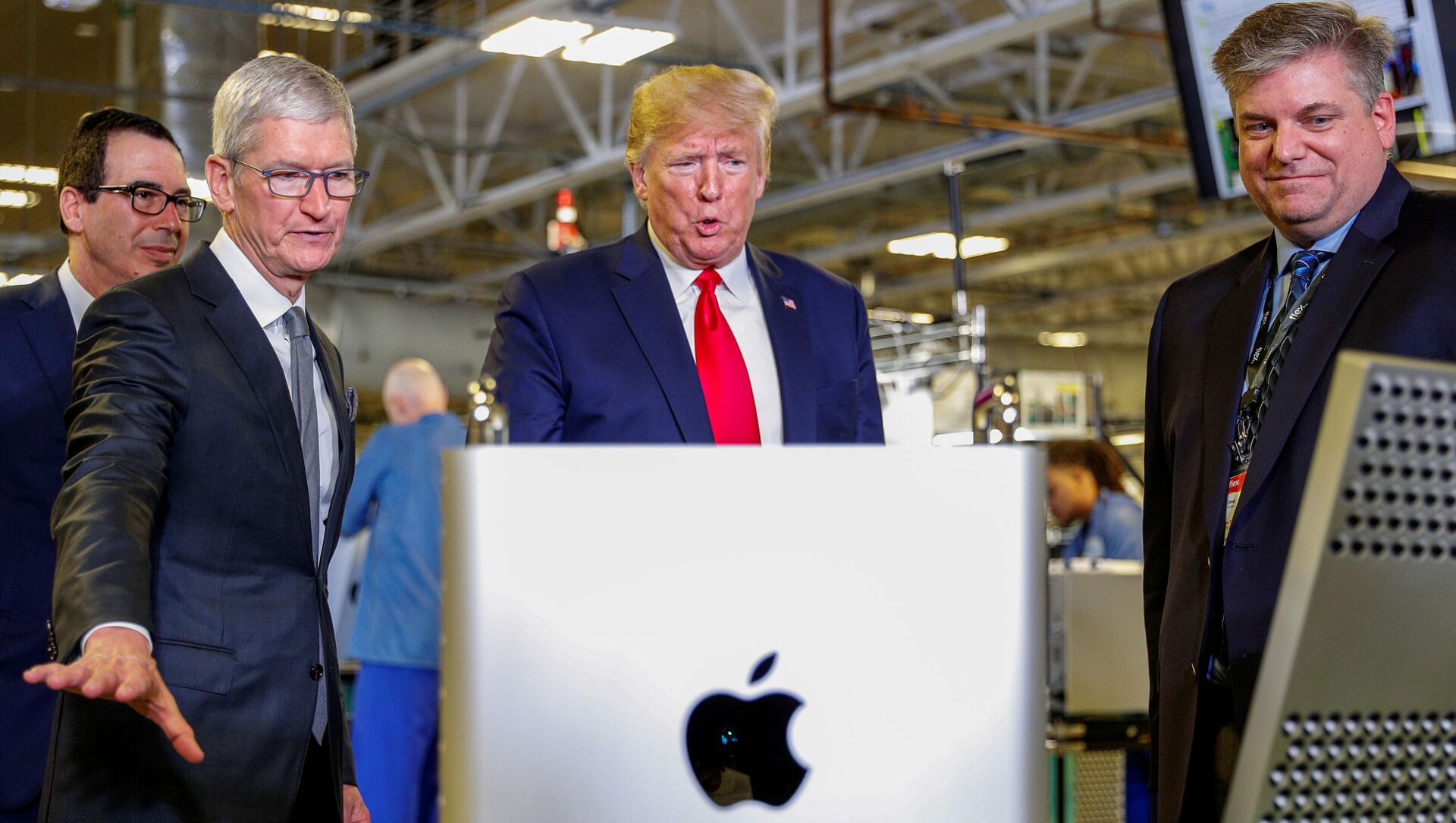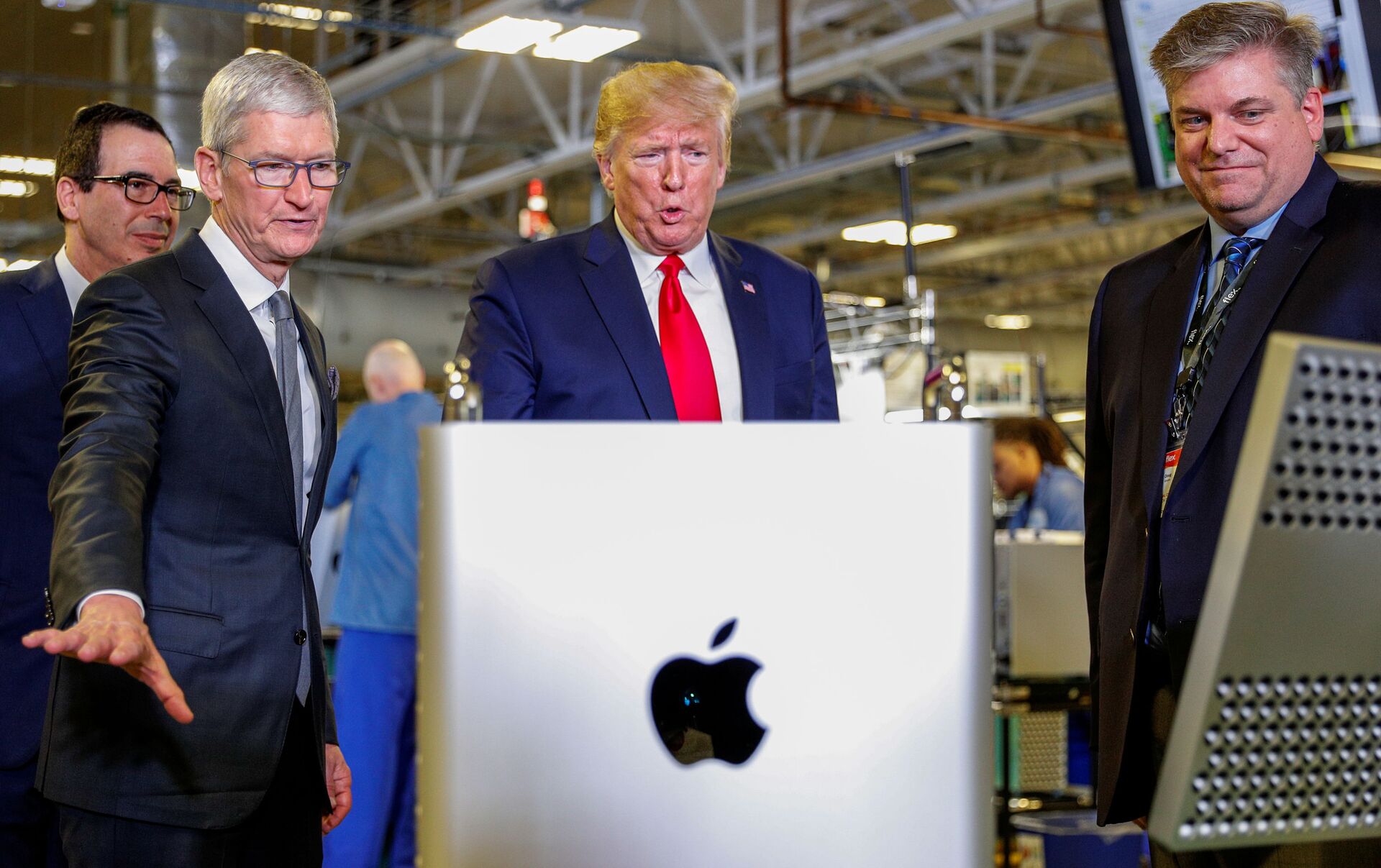

US President Donald Trump has announced via Twitter that he asked Apple Inc. CEO Tim Cook to participate in the construction of high-speed 5G networks across the country. POTUS argued that the American tech giant possessed everything needed to do the job properly.
During my visit yesterday to Austin, Texas, for the startup of the new Mac Pro, & the discussion of a new one $billion campus, also in Texas, I asked Tim Cook to see if he could get Apple involved in building 5G in the U.S. They have it all - Money, Technology, Vision & Cook!l
— Donald J. Trump (@realDonaldTrump) November 21, 2019
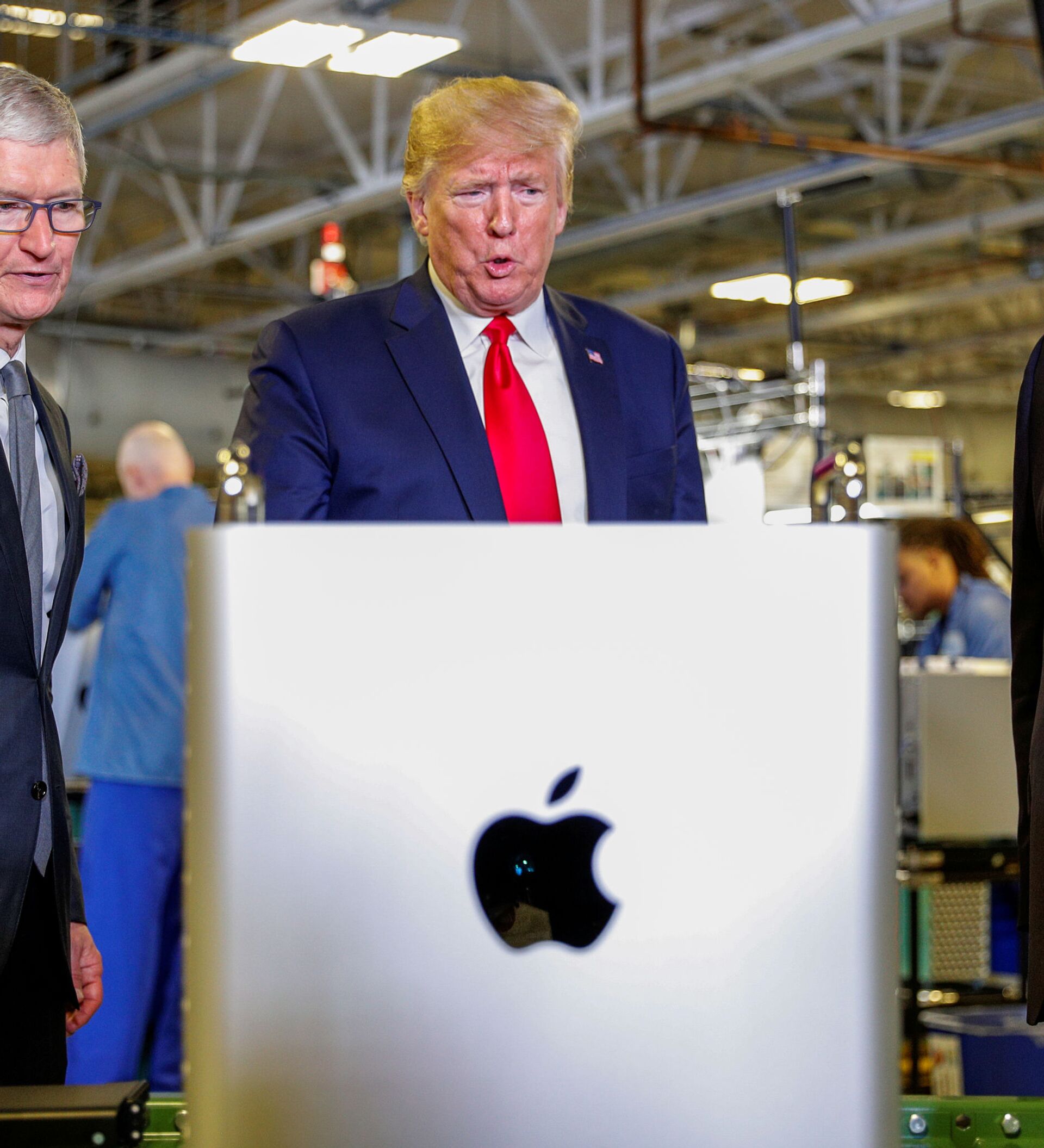
The conversation between the two took place when Trump visited the company's plant in Austin, Texas on the day the production of the new Mac Pro started there on 20 November. In the statement dedicated to the launch, the company noted that the newly produced PCs from the plant in Texas will be distributed "across the Americas", making no mention of other regions in the world.
Huawei Ban
Earlier in the year, Washington imposed a ban on one of the world's biggest providers of equipment for 5G networks, Chinese tech giant Huawei, prohibiting US internet service providers from buying parts for the innovative technology from the Chinese company. The American government justified the ban by claiming that Huawei is cooperating with Beijing and installing backdoors on its equipment to enable covert surveillance of its users.
Using the same logic, Washington tried to convince other countries, including its European allies to follow suit and ban Huawei's equipment from the 5G market, vowing to halt intelligence-sharing programmes otherwise. Few countries, however, complied with Washington's demands. The UK, France, Germany, and many other EU states reportedly considering letting Huawei into their 5G networks.
Huawei and Beijing deny the US claims and criticised Washington's measures, which, among other things, banned American companies from selling technologies to the Chinese tech giant without special permission. Huawei initiated litigation against the US government to contest its decision.