The US dollar could drop by up to 36 percent against the euro in the coming year or so, Ulf Lindahl, chief investment officer at A.G. Bisset, a hedge fund specializing in currency management, predicts.
Speaking to Reuters, the finance specialist said that the dollar’s recent slide may be “the beginning of a very large move” which could prove particularly painful to investors with large holdings of US stocks and bonds.
Lindahl pointed to the US currency’s tendency to jump and drop in relation to other currencies in 15 year cycles, and suggested that the recent slowing of the currency’s drop is “really an opportunity to get out of the dollar.”
The US currency already dropped about 11 percent from its 2020 peak against a basket of other major currencies in recent months, with hedge fund bets against the dollar reported to have hit their highest levels in a decade in August.

In January, the exchange rate was 1.12 dollars per euro, but has since dropped to 1.18 in Thursday morning trading in the US.
Money managers and economists worldwide, including Goldman Sachs, UBS and Societe Generale, expect the dollar to continue to depreciate against other major currencies including the euro amid the poor performance of the American economy as other major economies begin to recover, as well as the US’s low interest rates, along with fears that the move to pump trillions in additional debt into the system and to ramp up the deficit (it reached $2.8 trillion between October and July) could have negative consequences for its currency.
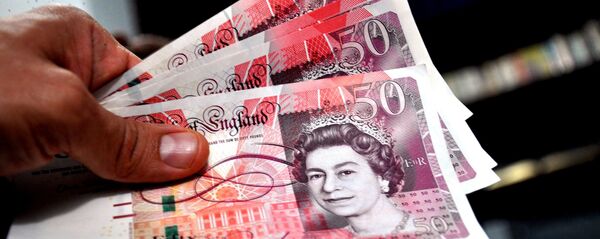
Experts at TD Securities have echoed these sentiments, estimating that the dollar is presently about 10 percent overvalued against other major currencies.
Some observers speculate that the dollar’s fall may lead to the currency losing its luster as the de-facto world reserve currency. Toroso Investments/ATAC Rotation Fund portfolio manager Michael Gayed said “there’s been a lot of speculation these days” on that subject.
However, Rick Rieder, global chief investment officer of fixed income at BlackRock Inc, the world’s largest asset manager, believes the dollar’s drop will be less dramatic, telling Reuters that other countries are still too dependent on the currency for trade for it to crash.
Last month, former International Monetary Fund deputy managing director Zhu Min said that the real concern “isn’t whether the US dollar will see an accumulated decline of 30 percent in the future, but whether there will be a blow-up event that causes a sudden loss of confidence in the US dollar, and its market to collapse.”
However, in recent years, some countries, including China, India, Russia, Iran and Turkey have moved to increase trade in their national currencies.
Last month, an analysis by Nikkei Asian Review found that less than half of all transactions between Russia and China were made in dollars in the first three months of 2020, with 30 percent denominated in euros and the remaining 24 percent carried in yuans and rubles.
Earlier this year, Russian Foreign Minister Sergei Lavrov confirmed that Russia would continue its “policy aimed at the gradual de-dollarization of the economy,” and suggest that “de-pegging from the dollar in mutual settlements is an objective response to the unpredictability of US economic policy and the outright abuse by Washington of the dollar’s status as a world reserve currency.”

Iran, which switched from dollars to the euro as its official trade currency in 2018, has recently proposed using the combined power of the Non-Aligned Movement (NAM) to put pressure on the dollar’s status in international trade amid Washington’s spate of sanctions against its adversaries.