https://sputnikglobe.com/20210816/scientists-find-origin-of-asteroid-that-killed-dinosaurs-66-million-years-ago-1083625252.html
Scientists Find Origin of Asteroid That Killed Dinosaurs 66 Million Years Ago
Scientists Find Origin of Asteroid That Killed Dinosaurs 66 Million Years Ago
Sputnik International
The researchers also found that the asteroid, Chicxulub, had a similar composition to today’s carbonaceous chondrites. Earlier studies suggest that objects... 16.08.2021, Sputnik International
2021-08-16T16:36+0000
2021-08-16T16:36+0000
2021-08-16T16:36+0000
newsfeed
world
asteroid
dinosaurs
scientists
https://cdn.imgsputnikglobe.com/img/07e5/07/04/1083306516_0:98:1920:1178_1920x0_80_0_0_93b848721246d5730f1c945aece36070.jpg
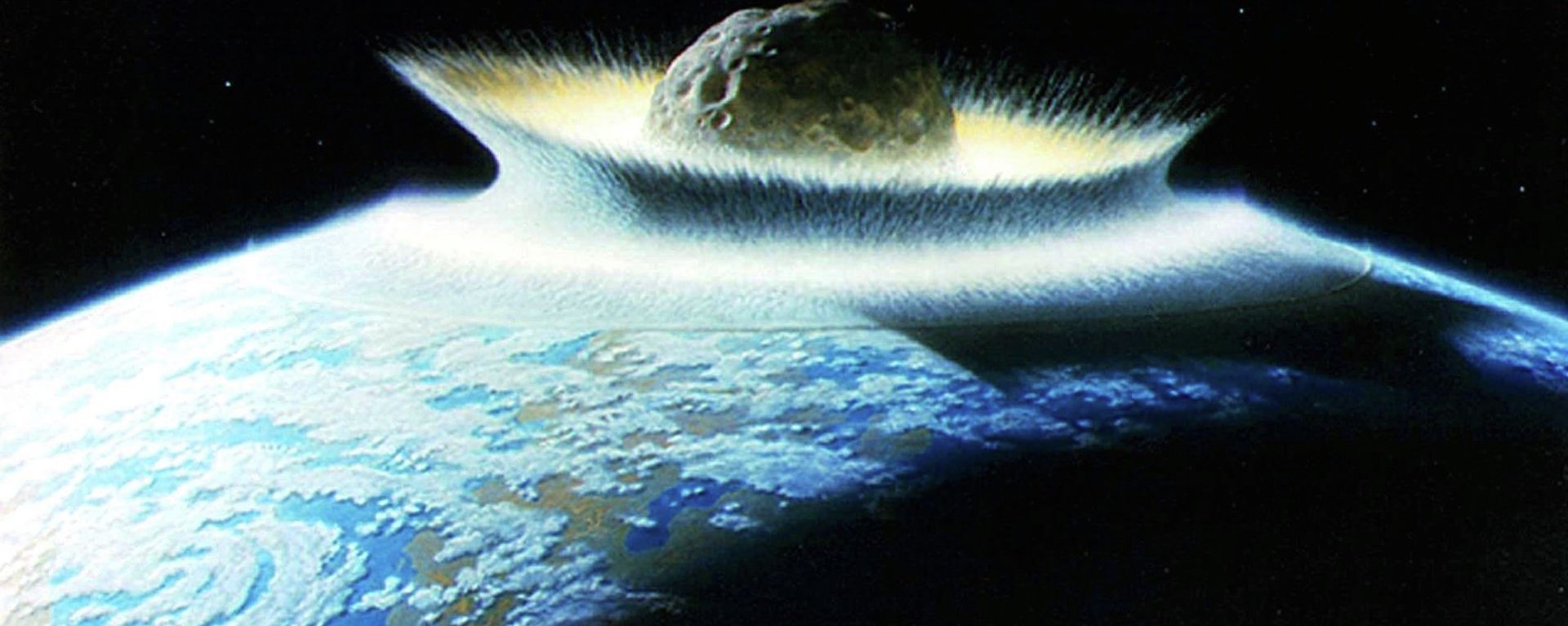
A team of scientists has found the origin of the asteroid responsible for the mass extinction of the dinosaurs 66 million years ago. According to Southwest Research Institute (SRI) researchers, the asteroid Chicxulub originated from the outer half of the solar system’s main asteroid belt.The asteroid, with an estimated width of 9.6 kilometres, produced a crater in Mexico’s Yucatan Peninsula that spans 145 kilometres. According to the scientists, after its sudden collision with the Earth, the asteroid wiped out around 75 percent of the planet’s animal species, including the dinosaurs. It is believed that this explosion was responsible for the mass extinction that led to the end of the Mesozoic Era.Moreover, the researchers used NASA’s Pleiades Supercomputer to analyse how asteroids far away from the Sun would have evolved over hundreds of millions of years. Additionally, one of the objectives was to see where the bigger asteroids are today.The team used computer models to study and analyse how asteroids are pulled from their orbit in different areas of the asteroid belt and attracted towards planets. After observing around 130,000 model asteroids, along with data and behaviour detected in other known impactors, the scientists found that objects are 10 times more likely to reach Earth from the outer asteroid belt than previous assumptions had suggested.The scientists have published their findings in the November 2021 issue of the journal Icarus. “The team’s simulations can, for the first time, reproduce the orbits of large asteroids on the verge of approaching Earth. Our explanation for the source of the Chicxulub impactor fits in beautifully with what we already know about how asteroids evolve”, said Dr Simone Marchi, one of the authors of the study, noted.
https://sputnikglobe.com/20210721/asteroid-that-killed-dinosaurs-also-caused-mile-high-tsunami-scientists-say-1083428765.html
Sputnik International
feedback@sputniknews.com
+74956456601
MIA „Rossiya Segodnya“
2021
Sushmita Panda
https://cdn.imgsputnikglobe.com/img/07e5/05/12/1082926186_0:0:2048:2048_100x100_80_0_0_4474d0d7e27a36878eb8727832be74b4.jpg
Sushmita Panda
https://cdn.imgsputnikglobe.com/img/07e5/05/12/1082926186_0:0:2048:2048_100x100_80_0_0_4474d0d7e27a36878eb8727832be74b4.jpg
News
en_EN
Sputnik International
feedback@sputniknews.com
+74956456601
MIA „Rossiya Segodnya“
Sputnik International
feedback@sputniknews.com
+74956456601
MIA „Rossiya Segodnya“
Sushmita Panda
https://cdn.imgsputnikglobe.com/img/07e5/05/12/1082926186_0:0:2048:2048_100x100_80_0_0_4474d0d7e27a36878eb8727832be74b4.jpg
newsfeed, asteroid, dinosaurs, scientists
newsfeed, asteroid, dinosaurs, scientists
Scientists Find Origin of Asteroid That Killed Dinosaurs 66 Million Years Ago
The researchers also found that the asteroid, Chicxulub, had a similar composition to today’s carbonaceous chondrites. Earlier studies suggest that objects found in the outermost parts of the asteroid belt include many carbonaceous chondrite impactors. These carbon-containing rocks are also found on earth.
A team of scientists has found the origin of the
asteroid responsible for the mass extinction of the dinosaurs 66 million years ago. According to Southwest Research Institute (SRI) researchers, the asteroid Chicxulub originated from the outer half of the solar system’s main asteroid belt.
The asteroid, with an estimated width of 9.6 kilometres, produced a crater in Mexico’s Yucatan Peninsula that spans 145 kilometres. According to the scientists, after its sudden collision with the Earth, the asteroid wiped out around 75 percent of the planet’s animal species, including the dinosaurs. It is believed that this explosion was responsible for the mass extinction that led to the end of the Mesozoic Era.
Dr David Nesvorný, co-author of the study, revealed that these new observations could provide insights into other sizable asteroids. "This work will help us better understand the nature of the Chicxulub impact. While also telling us where other large impactors from Earth’s deep past might have originated", he said.
Moreover, the researchers used
NASA’s Pleiades Supercomputer to analyse how asteroids far away from the Sun would have evolved over hundreds of millions of years. Additionally, one of the objectives was to see where the bigger asteroids are today.
"To explain their absence, several past groups have simulated large asteroid and comet breakups in the inner solar system, looking at surges of impacts on Earth with the largest one producing Chicxulub crater", Dr William Bottke, one of the study’s researchers said.
The team used computer models to study and analyse how asteroids are pulled from their orbit in different areas of the asteroid belt and attracted towards planets. After observing around 130,000 model asteroids, along with data and behaviour detected in other known impactors, the scientists found that objects are 10 times more likely to reach Earth from the outer asteroid belt than previous assumptions had suggested.
The scientists have published their findings in the November 2021 issue of the journal Icarus. “The team’s simulations can, for the first time, reproduce the orbits of large asteroids on the verge of approaching Earth. Our explanation for the source of the Chicxulub impactor fits in beautifully with what we already know about how asteroids evolve”, said Dr Simone Marchi, one of the authors of the study, noted.