Pakistan to Keep Sending Aid to Afghanistan, Focus on Humanitarian Mission, Ambassador Says
12:48 GMT 22.09.2021 (Updated: 18:49 GMT 19.10.2022)
© AFP 2023 / ASGHAR ACHAKZAI
Subscribe
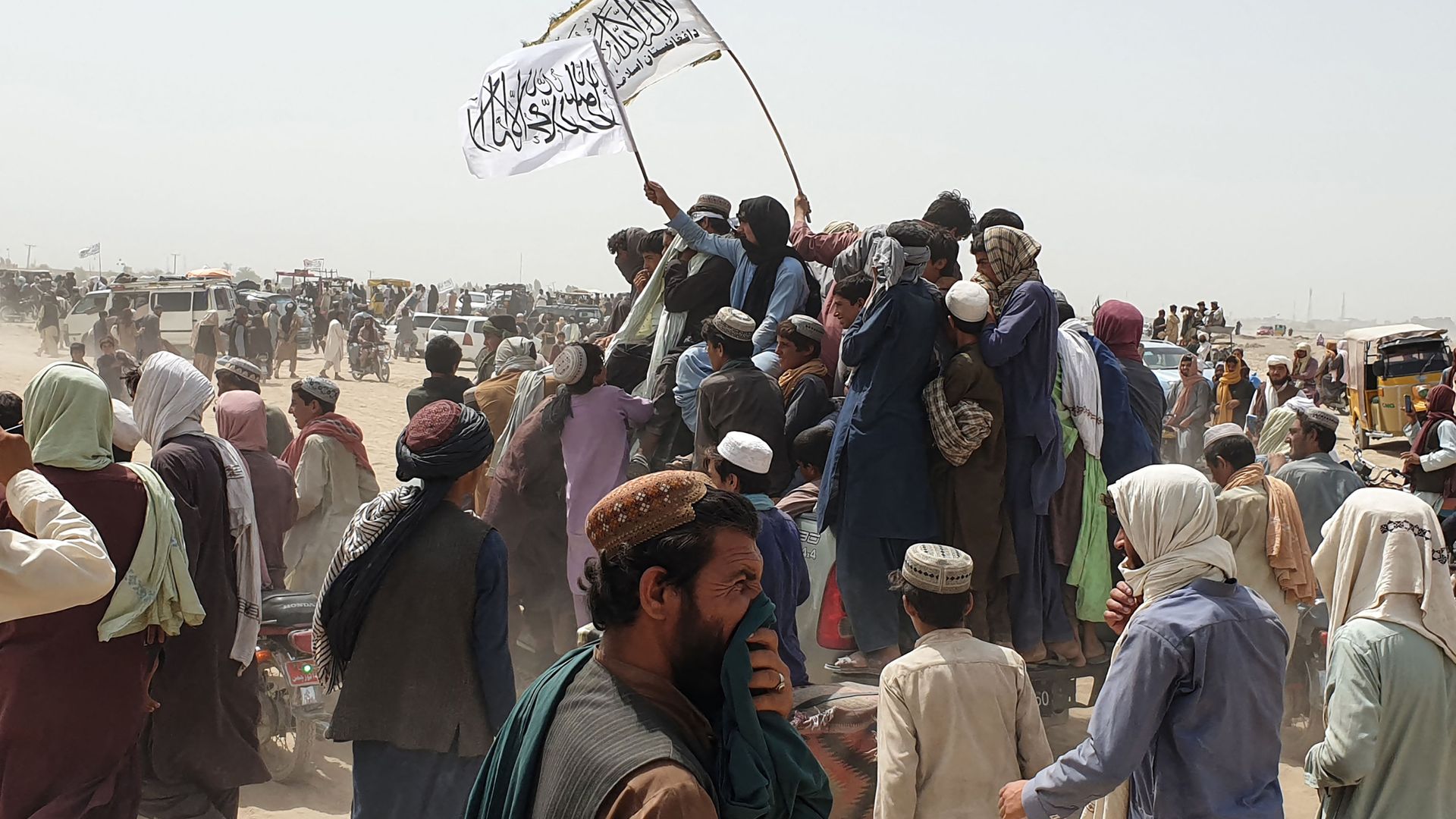
ST. PETERSBURG (Sputnik) - In his address to the UN General Assembly on Tuesday, Secretary-General Antonio Guterres called on world leaders to build up humanitarian assistance to Afghanistan as it is on the brink of a catastrophe under the Taliban* rule.
Pakistan intends to focus on the humanitarian efforts in Afghanistan and will continue to send trucks with aid to the country, Mansoor Ahmad Khan, the Pakistani ambassador to Afghanistan, said.
"Form Sunday, Pakistan started sending the humanitarian aid by trucks through our land border. On Sunday, we have received 13 trucks containing food and medical supplies for different provinces in Afghanistan and we will carry on. In the next coming weeks it will remain our focus in order to insure that the Afghan people do not face humanitarian disaster," Khan said.
Afghanistan will be able to profit from regional infrastructure projects, such as Pakistan’s economic corridor with China, once it reins in terrorism, the Pakistani ambassador to Afghanistan, said.
The diplomat said that Pakistan and Afghanistan share a 1,600 mile-long border, providing enormous opportunities for connectivity. He added that Afghanistan should become a hub for linking Central Asia, Russia and South Asian ports.
"These infrastructure projects can be linked through the Afghan soil to the Asian countries, there are major pipeline projects. We hope that Afghanistan will make full use of this opportunity and translate it into a big economic opportunity. This, however, will depend on how the country will be dealing with the threats of terrorism," he said in an interview.
The Afghan economy is facing collapse after the takeover by the Taliban in mid-August led to automatic suspensions of international aid, which the US-backed government had come to rely on, and freezing of Afghan assets abroad. The International Monetary Fund also blocked an automatic payout of $460 million and suspended the country's special drawing rights in August.
The ambassador praised the Taliban-run government for establishing what he described as a "good environment of security," but he stressed that more should be done to reopen the country to foreign investors.
International flights are expected to restart from Kabul in the following two weeks as the work is underway to restore the capital's only airport and bring in up to the standards set by the International Civil Aviation Organization (ICAO), according to Mansoor Ahmad Khan.
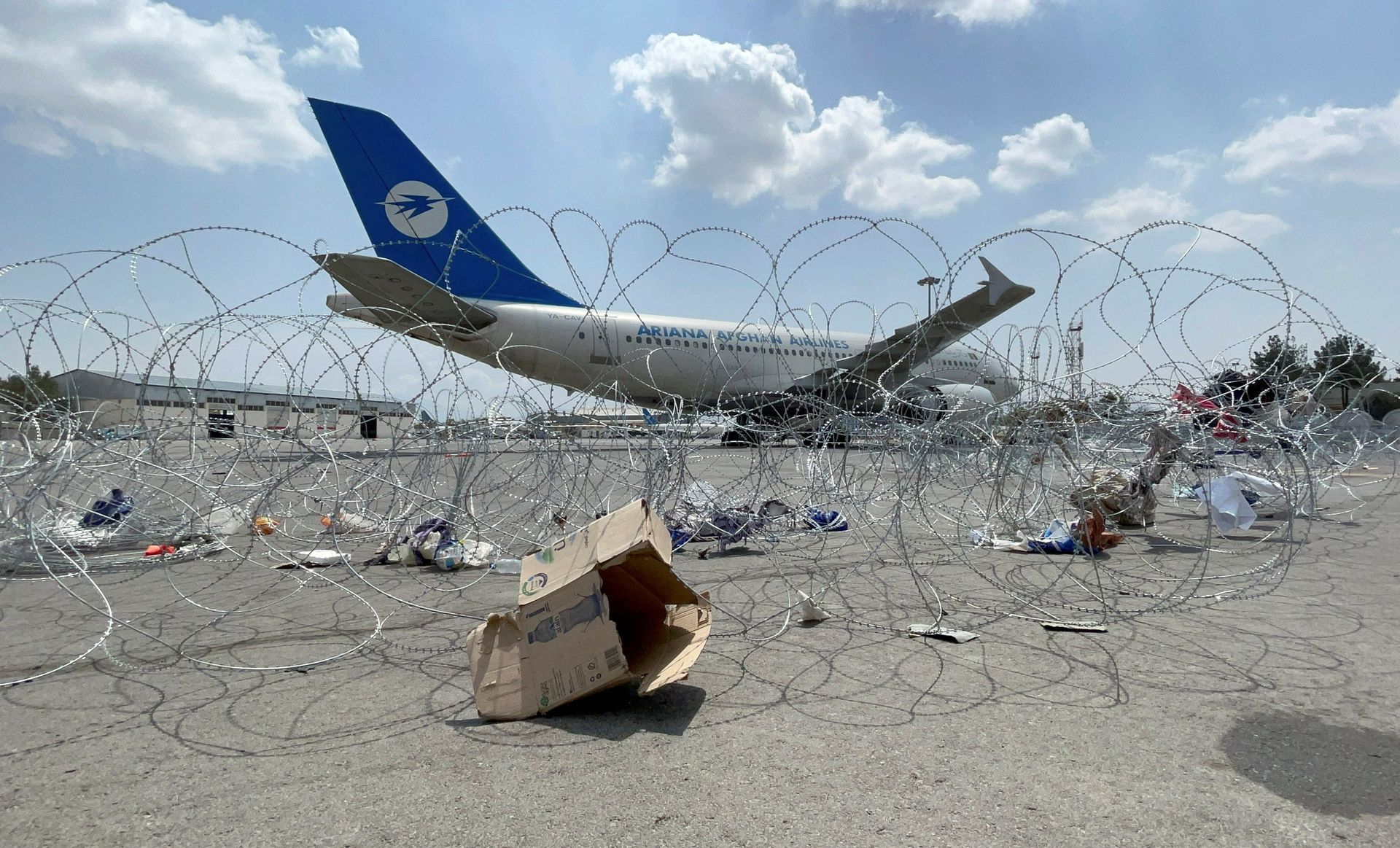
A commercial airplane is seen at the Hamid Karzai International Airport a day after U.S troops withdrawal in Kabul, Afghanistan August 31, 2021
© REUTERS / STRINGER
During the evacuations after Afghanistan's takeover by the Taliban in August, both civil and military facilities in the Kabul airport were significantly damaged, according to the ambassador. Qatar and Turkey have been in contact with the Taliban since the withdrawal of foreign forces concerning the restoration of the airport's operations, he said.
"So far commercial flights have not yet started because some airport's facilities, according to the ICAO standards, still require some work. I have been told that in the coming week or so these facilities will be there at a required level," Khan said in an interview.
He further noted that in the past weeks, special humanitarian flights have already been coming to the Kabul airport, while Pakistan has launched charter flights.
"As soon as facilities are restored in a week or two week, the commercial flights will be restored and not only Pakistani airlines, but many other countries would also be ready to start their operation," Khan added.
After gaining complete control of the country, the Taliban officials said they would resume international flights and allow safe passage for Afghans who wish to leave the country in a bid to gain international legitimacy.
On Monday, a source in the Afghan Civil Aviation Authority said that Kabul airport had officially opened for domestic and international commercial flights, accepting flights from 6 a.m. to 6 p.m. local time.
Earlier in the month, Russian Deputy Foreign Minister Igor Morgulov said that Moscow and partners planned to hold an extended Troika meeting on Afghanistan (including Russia, China, the United States, and Pakistan) in Kabul when air traffic resumes.
Pakistan sees Russia’s constructive contribution to the Afghan peace process and will continue engaging with it in different settings, the Pakistani ambassador stressed.
"Russia has been engaged in the Afghan peace process for many years in a very constructive manner. We will continue to engage with Russia in different settings," Mansoor Ahmad Khan said in an interview.
Pakistan is relying on its Troika partners — Russia, China and the United States — for restoring Afghanistan's stability after the Taliban took power in Kabul in mid-August, he said.
The diplomat said that the Pakistani special envoy for Afghanistan would keep in touch with his Russian, Chinese and US counterparts in the coming days and weeks. The focus of Pakistani engagement in the neighbor nation has shifted from evacuations to relief aid.
The diplomat said that the Pakistani special envoy for Afghanistan would keep in touch with his Russian, Chinese and US counterparts in the coming days and weeks. The focus of Pakistani engagement in the neighbor nation has shifted from evacuations to relief aid.
"Now our focus is on ensuring our humanitarian engagement and assisting Afghanistan in supplying food, restoring country's airport. Turkey and Qatar are engaged in ensuring normal connectivity," Mansoor Ahmad Khan said.
Pakistani, Russian and Chinese special envoys met with the Taliban in Kabul on Tuesday to talk about the militants’ vision of Afghanistan's future. The Taliban have been under pressure to form an inclusive government after it announced an all-male Pashtun-dominated lineup in early September.
The international community and regional neighbours need to assist the interim Afghan government throughout the transition period to insure that the country remains stable and peaceful, the Pakistani ambassador to Afghanistan added.
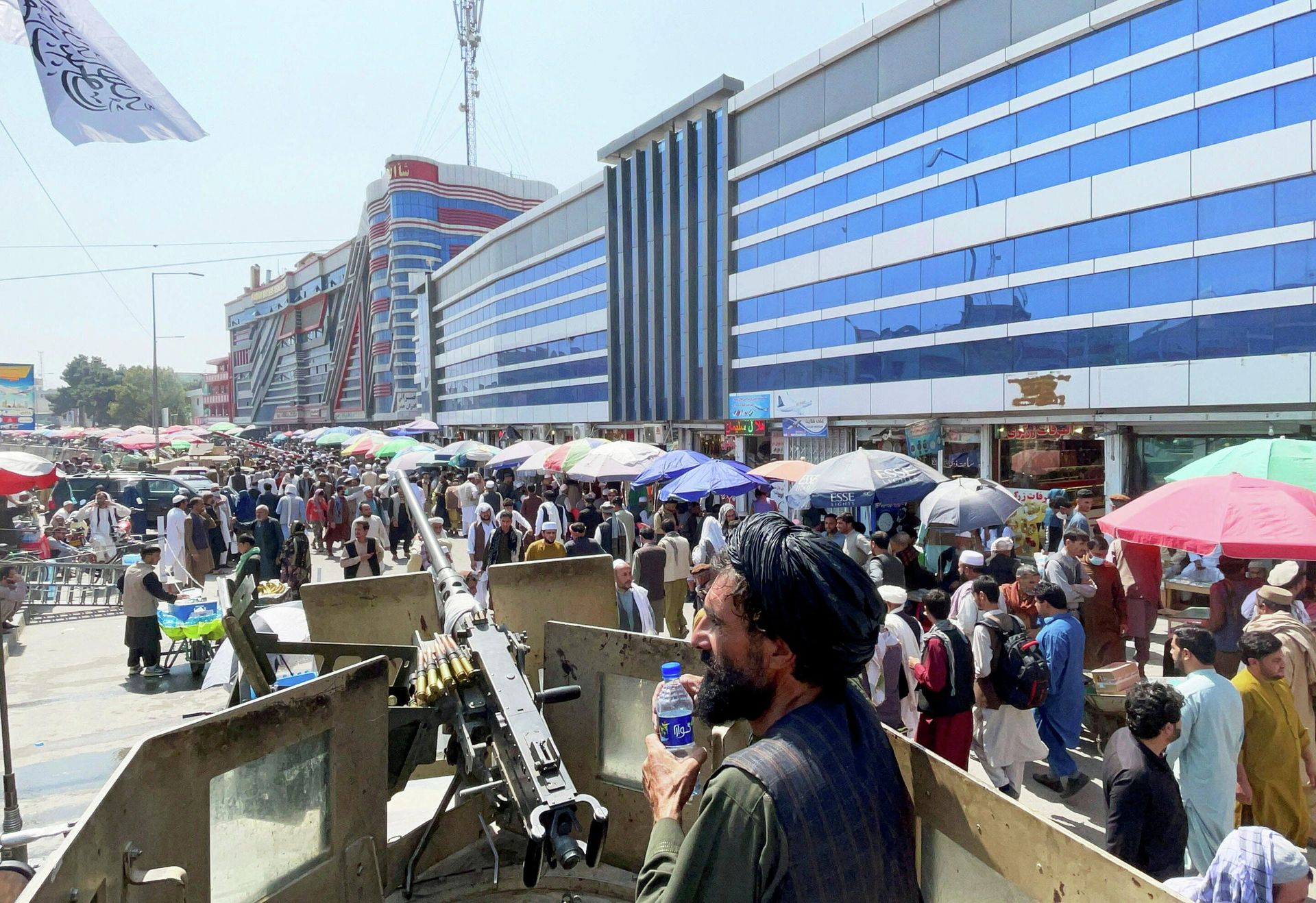
Members of Taliban security forces stand guard as crowds of people walk past in front of a money exchange market in Kabul, Afghanistan September 4, 2021
© REUTERS / STRINGER
"International community and neighbouring countries also need closely to collaborate with the new Afghan government and other segments of the society to insure that Afghanistan won't slide again to the period of civil war, internal fighting or instability," Khan said.
He stressed that Pakistan as one of the countries closest to Afghanistan with a 2,600-kilometer (1,600-mile) shared border is invested in ensuring lasting peace and stability in the region. Khan noted that, over the past few years, Islamabad has been actively engaged in the Afghan political process, including with the Taliban, as it does not believe that a military solution can help bring stability to Afghanistan.
20 September 2021, 19:54 GMT
The interim government in Afghanistan appointed by the Taliban should step up its efforts in fighting drug trafficking and terrorism, as well as insure respect for human rights if it wants to keep governing the country, Mansoor Ahmad Khan said.
"To succeed, the government should effectively meet the threat of the drug trafficking and drug production, terrorism because whenever we see the instability in Afghanistan, the drug trafficking and drug production increase," Khan said.
The ambassador noted that, apart from dealing with domestic issues, both humanitarian and economic, the Taliban and the interim government face challenges with "interaction with the international community."
"Besides, Afghanistan needs to realize its potential through regional connectivity. This is a very comprehensive agenda which requires the participation of all segments of the society and all the political spectrum, this will require an attendance to human rights," the diplomat added.
At the same time, Khan stressed that Pakistan wants to "remain very open" for interactions with Afghan politicians and the new government in order to assist with putting an end to almost four decades of conflict in Afghanistan.
The Pakistani ambassador to Afghanistan told Sputnik that the Taliban had restored security to Afghan provinces and a “degree” of freedom of movement since they swept to power in mid-August.
“I would say a better degree of the freedom of movement is there,” Mansoor Ahmad Khan said in an interview.
The diplomat added that international and regional terrorist groups, such as al-Qaeda*, Daesh*, Tehreek-e-Taliban Pakistan, and the Islamic Uzbekistan Movement, had found a safe haven in Afghanistan.
“This [Taliban] government needs to keep focused so that the space for these groups reduced significantly… We hope that the incoming government will be effectively dealing with the challenges of security and terrorism and will be able to establish full control over the entire territory,” he said.
“This [Taliban] government needs to keep focused so that the space for these groups reduced significantly… We hope that the incoming government will be effectively dealing with the challenges of security and terrorism and will be able to establish full control over the entire territory,” he said.
A month ago, the Taliban entered Kabul. The last province to resist the group, Panjshir, surrendered on 6 September.
As international troops withdrew from the country and foreign evacuations were completed, the Taliban unveiled the composition of the all-male interim cabinet, headed by Mohammad Hasan Akhund, a former foreign minister during the Taliban rule, who has been under UN sanctions since 2001.
As international troops withdrew from the country and foreign evacuations were completed, the Taliban unveiled the composition of the all-male interim cabinet, headed by Mohammad Hasan Akhund, a former foreign minister during the Taliban rule, who has been under UN sanctions since 2001.
*A terrorist group outlawed in Russia and many other countries.