https://sputnikglobe.com/20220219/solar-orbiter-captures-biggest-eruption-to-have-been-observed-on-the-sun-to-date---video-1093169079.html
Solar Orbiter Captures Biggest Eruption to Have Been Observed on the Sun to Date - Video
Solar Orbiter Captures Biggest Eruption to Have Been Observed on the Sun to Date - Video
Sputnik International
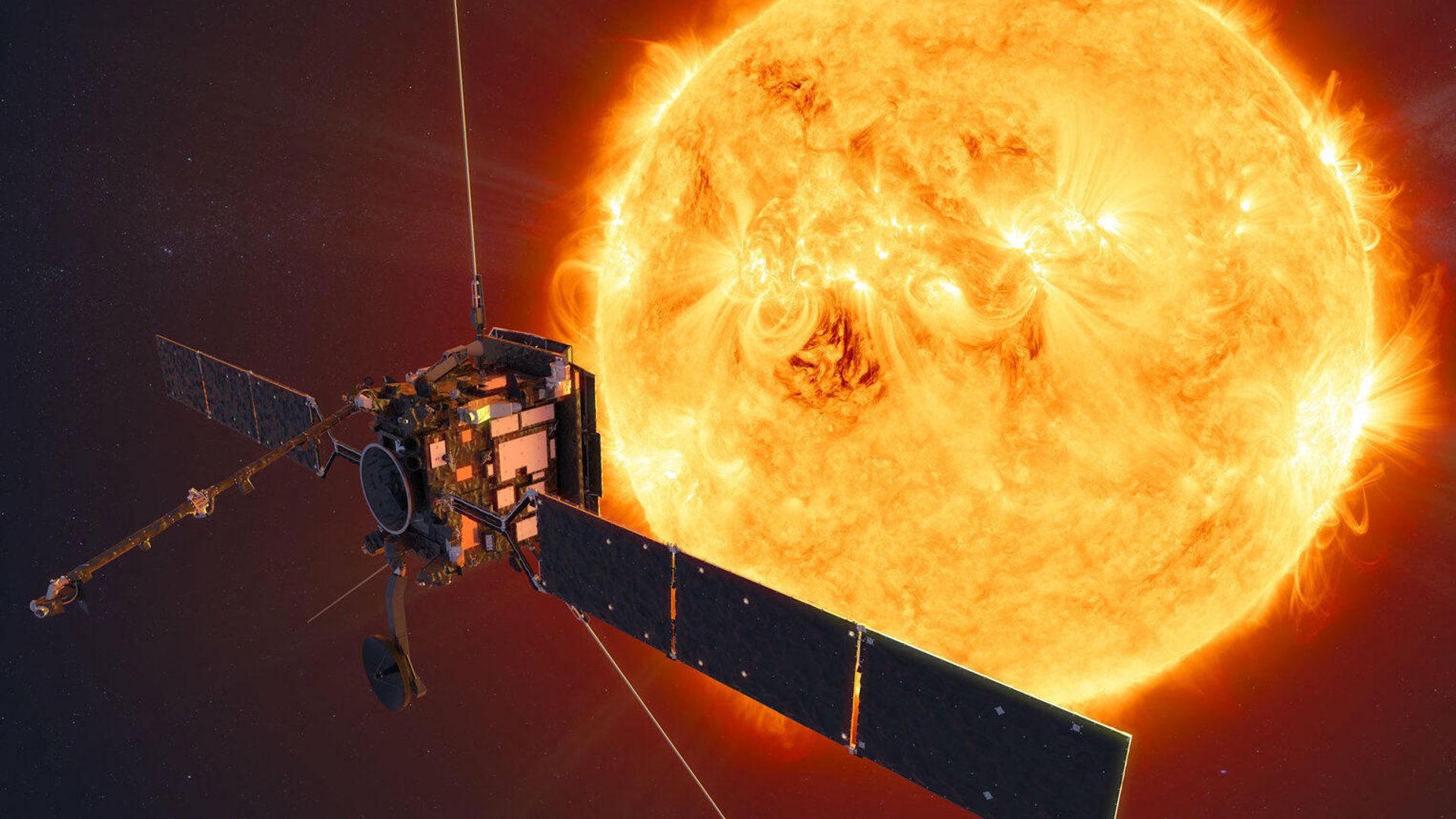
Solar Orbiter, a sun-monitoring satellite, was developed by the European Space Agency (ESA) and is jointly operated by NASA. Launched in February 2020, Solar... 19.02.2022, Sputnik International
2022-02-19T08:39+0000
2022-02-19T08:39+0000
2023-04-12T16:57+0000
sun
nasa
european space agency (esa)
solar storm
science & tech
earth
space
https://cdn.imgsputnikglobe.com/img/07e6/02/13/1093170501_0:111:1528:971_1920x0_80_0_0_ce79dffa3db107fc447ffb828d11ce60.jpg
The Solar Orbiter has captured the largest solar ‘prominence’ eruption ever observed in a single image together with the full solar disc, the European Space Agency (ESA) said in a statement.The observation has opened up “new possibilities” to see how events like these connect to the solar disc for the first time, the space agency said."Solar prominences" are tangled magnetic field lines that keep dense concentrations of solar plasma suspended above the Sun’s surface, the mission explained. The prominences take the form of “arching loops” and are associated with coronal mass ejections (CMEs). The CMEs have been linked to solar flares."There is no signature of the eruption on the solar disc facing the spacecraft – which is currently approaching the Earth-Sun line – meaning that it must have originated from the side of the Sun facing away from us," it said.The ESA said that the moving images of the prominence were captured by ‘Full Sun Imager’ (FSI) of the Extreme Ultraviolet Imager (EUI), mounted on Solar Orbiter.The agency said that the solar eruption was so powerful that even missions not dedicated to solar science felt its impact. For instance, the ESA/JAXA BepiColombo mission, currently in the vicinity of Mercury’s orbit, detected a massive increase in the readings of electrons, protons and heavy ions. BepiColombo is a joint mission between ESA and the Japan Aerospace Exploration Agency (JAXA) to study Mercury.
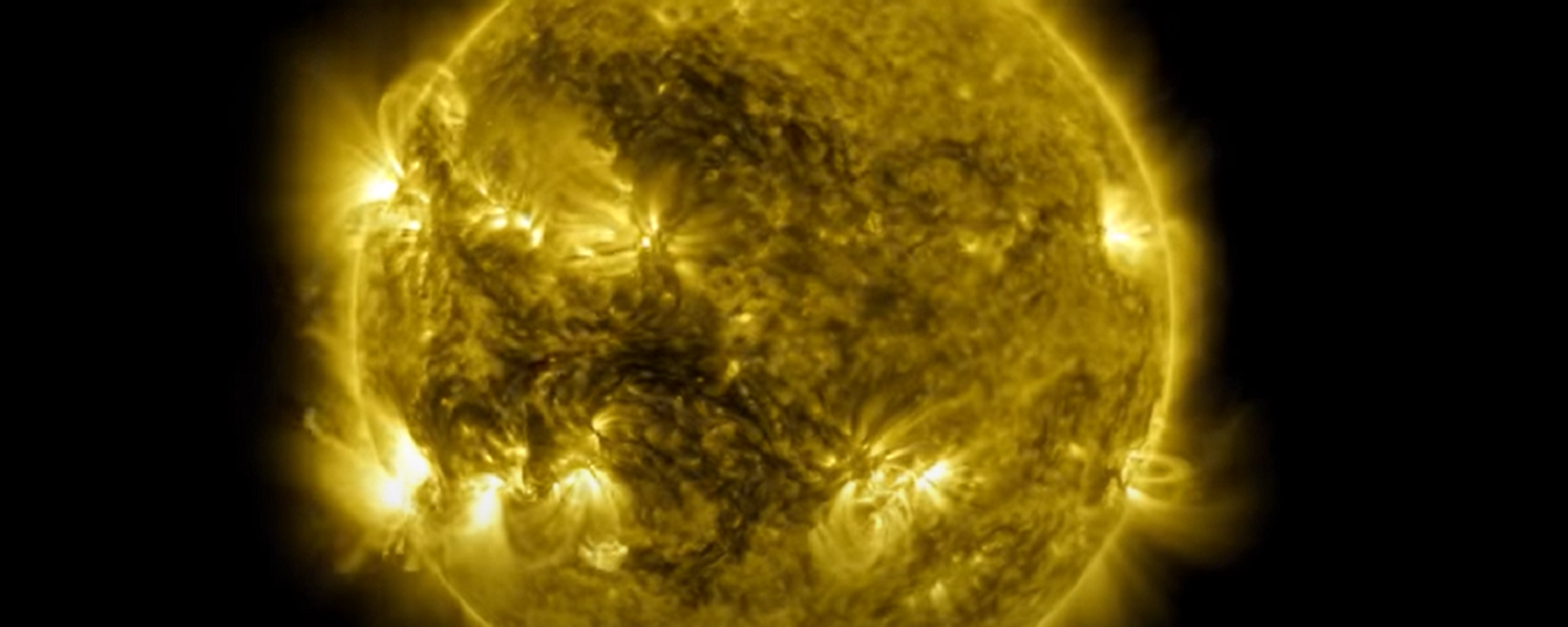
https://sputnikglobe.com/20211111/earth-could-face-internet-apocalypse-due-to-cannibal-solar-storms-scientists-warn-1090658018.html
earth
Sputnik International
feedback@sputniknews.com
+74956456601
MIA „Rossiya Segodnya“
2022
News
en_EN
Sputnik International
feedback@sputniknews.com
+74956456601
MIA „Rossiya Segodnya“
Sputnik International
feedback@sputniknews.com
+74956456601
MIA „Rossiya Segodnya“
sun, nasa, european space agency (esa), solar storm, science & tech, earth, space
sun, nasa, european space agency (esa), solar storm, science & tech, earth, space
Solar Orbiter Captures Biggest Eruption to Have Been Observed on the Sun to Date - Video
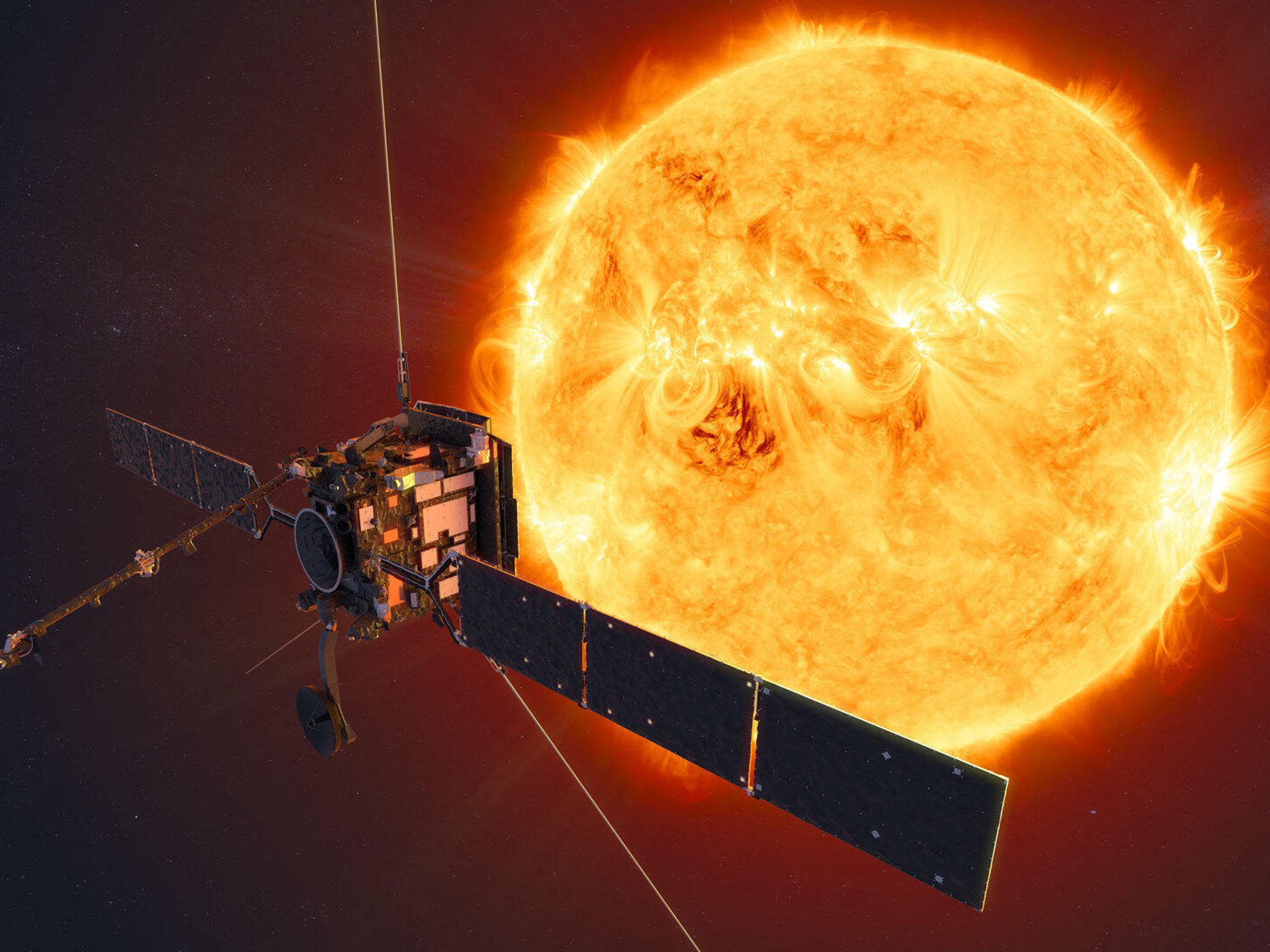
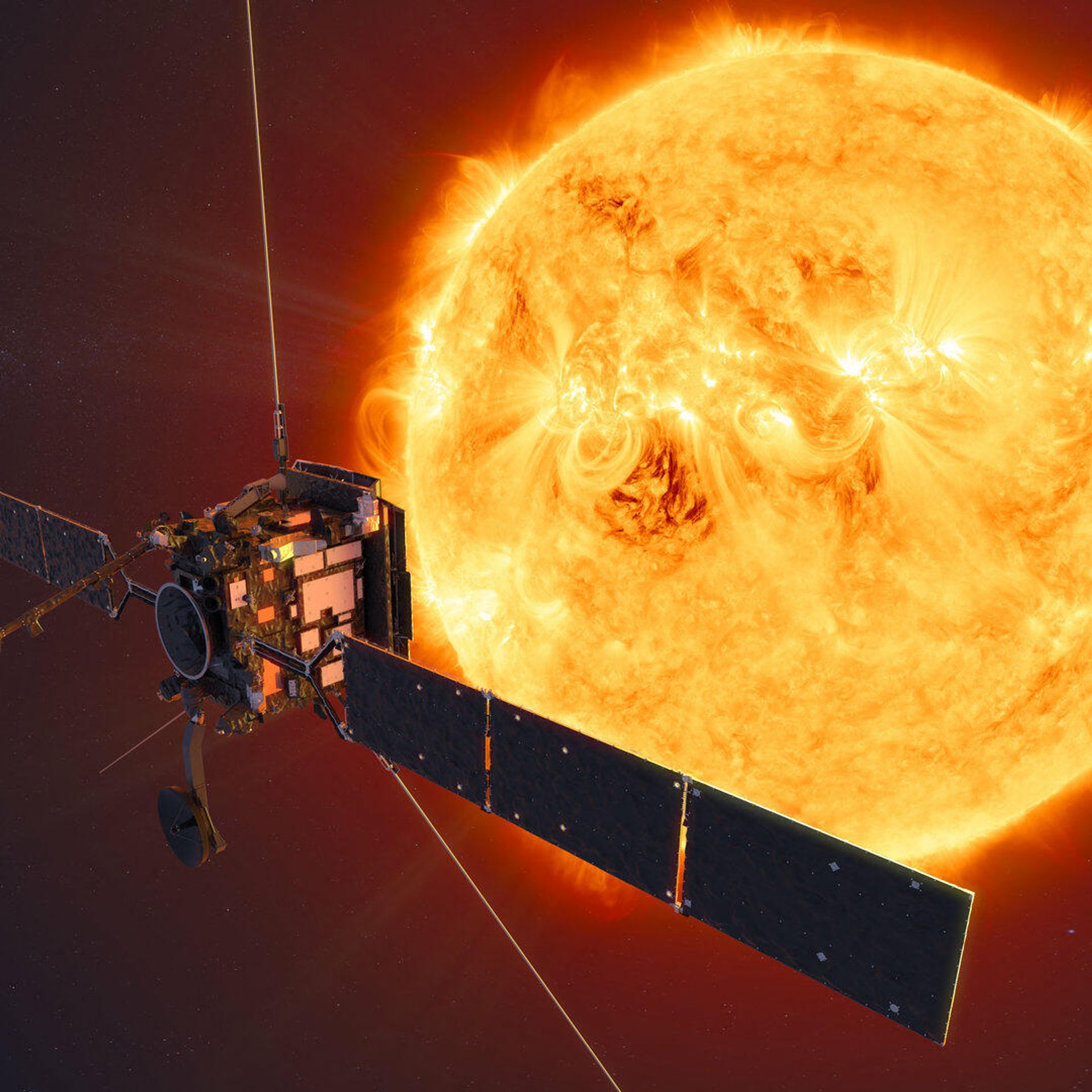
08:39 GMT 19.02.2022 (Updated: 16:57 GMT 12.04.2023) Solar Orbiter, a sun-monitoring satellite, was developed by the European Space Agency (ESA) and is jointly operated by NASA. Launched in February 2020, Solar Orbiter is observing our life-giving star from the closest distance to date. At its closest point, Solar Orbiter was 42 million kilometres from the Sun.
The Solar Orbiter has captured the largest solar ‘prominence’ eruption ever observed in a single image together with the full solar disc, the European Space Agency (ESA) said in a
statement.
The ESA says that the latest CME, which extended millions of miles into space, took place on 15 February.
The observation has opened up “new possibilities” to see how events like these connect to the solar disc for the first time, the space agency said.
"Solar prominences" are tangled magnetic field lines that keep dense concentrations of solar plasma suspended above the Sun’s surface, the mission explained. The prominences take the form of “arching loops” and are associated with coronal mass ejections (CMEs). The CMEs have been linked to solar flares.
The mission further said that the ejection wasn't directed at Earth and was in fact "travelling away from us". Such solar eruptions, if they are directed at Earth, have the potential to “wreak havoc” with our everyday lives and technology.
"There is no signature of the eruption on the solar disc facing the spacecraft – which is currently approaching the Earth-Sun line – meaning that it must have originated from the side of the Sun facing away from us," it said.
The ESA said that the moving images of the prominence were captured by ‘Full Sun Imager’ (FSI) of the Extreme Ultraviolet Imager (EUI), mounted on Solar Orbiter.
11 November 2021, 14:00 GMT
The agency said that the solar eruption was
so powerful that even missions not dedicated to solar science felt its impact.
For instance, the ESA/JAXA BepiColombo mission, currently in the vicinity of Mercury’s orbit, detected a massive increase in the readings of electrons, protons and heavy ions. BepiColombo is a joint mission between ESA and the Japan Aerospace Exploration Agency (JAXA) to study Mercury.
“And while this event did not send a blast of deadly particles towards Earth, it is an important reminder of the unpredictable nature of the Sun and the importance of understanding and monitoring its behaviour,” the agency said.