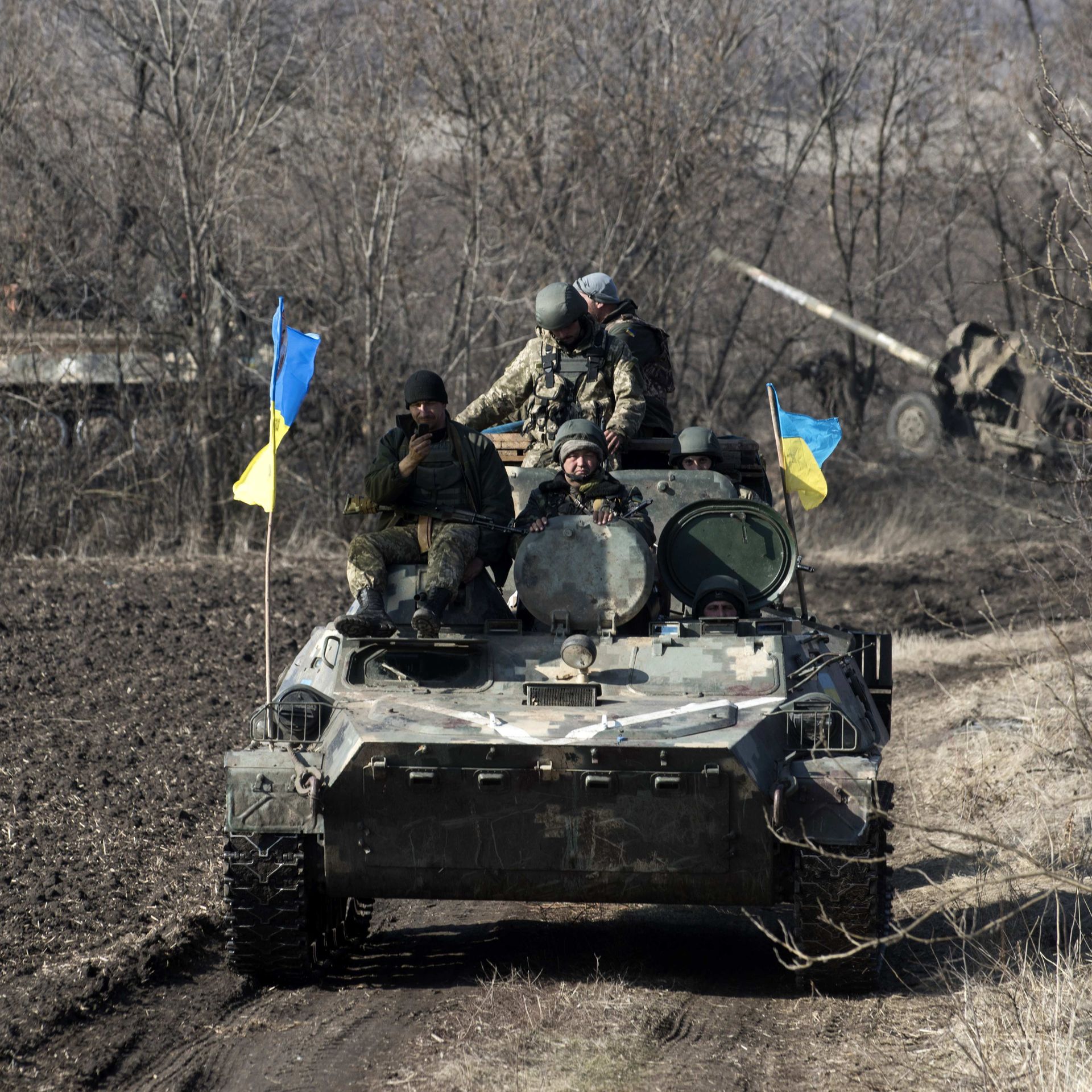
"Today at 0:26 a.m. [21:26 GMT on Monday], two strike UAVs [unmanned aerial vehicles] of the Armed Forces of Ukraine dropped two 120-mm caliber mines on a building located near the Zaporizhzhia NPP. There is damage to the roof and glass, no casualties," the spokesperson said.
"More and more of [Ukrainian President Volodymyr] Zelensky’s militants, who dare to encroach on peaceful life in our region, are eliminated during detention," Rogov said, adding that the property of the families of terrorists and their accomplices could be confiscated.
Rogov told Sputnik that the Security Service of Ukraine (SBU) is experiencing difficulties in recruiting people to carry out terrorist attacks and acts of sabotage in Zaporizhzhia despite the fact that "the price tag has risen sharply."
Earlier, Rogov told Sputnik that Ukrainian troops had made an unsuccessful attempt to carry out an offensive in the Zaporizhzhia Region, but met a tough rebuff, and were forced to flee.
He added that the city of Zaporizhzhia, currently under the control of Ukrainian troops, is waiting to be liberated.
On Monday, the Ukrainian foreign ministry summoned the Canadian charge d'affaires in Ukraine over Ottawa's decision to return the Nord Stream-1 turbine and called on the Canadian government to review the move.
Zelensky said in a video address released on Telegram that the decision is "absolutely unacceptable" and warned that any exceptions from the sanctions regime against Russia could be dangerous for Ukraine and other countries.
In early June, it was announced that the turbine sent by Siemens to its factory in Montreal, on behalf of Russia’s Gazprom, for maintenance, was unable to make it back to Russia because of sanctions imposed by the West over the conflict in Ukraine. Active negotiations on the issue were held between Ottawa and Berlin.
During the entire process, Canada met fierce resistance from the Canadian Ukrainian lobby and Ukraine’s government itself, which pressured Ottawa not to send the turbine back to Gazprom as it would violate sanctions.
On Sunday, Canadian Minister of Natural Resources Jonathan Wilkinson said that Ottawa had decided to return the Nord Stream 1 turbine to Germany to help Europe have access to "reliable and affordable energy."
"For many years, we have been customers of Scotiabank, which is part of the Canadian financial group of the same name. Shortly after the start of the special military operation in Ukraine, the bank refused to work with us. It is clear that this was done at the direction of the owners from Ottawa," Koronelli said.
In response to a request from Russian diplomats, Mexico’s National Banking and Securities Commission said that no formal restrictions were imposed on Russian individuals and legal entities in the banking sector at the federal level. At the same time, the regulator emphasized that each bank is free to make independent decisions when working with its clients.
Koronelli told Sputnik that Russian diplomats are now looking for an alternative bank. "I hope we can get service in another bank, a purely Mexican one," he said.
In March, Mexican President Andres Manuel Lopez Obrador said that his government was not going to join the sanctions imposed against Russia over its special operation in Ukraine and intends to maintain good relations with Moscow.
"The Ukrainian army has recently become more active in the Zaporizhzhia direction. In addition to terrorist attacks, sabotage and artillery shelling, an unsuccessful attempt was made to advance in the Zaporizhzhia Region. Their task was to inflict maximum damage on our positions, but, having met a tough rebuff, they were forced to flee," Rogov said.
He added that the city of Zaporizhzhia, currently under the control of Ukrainian troops, is waiting to be liberated.
"The warehouses with saltpeter exploded from the impact, there are victims. Now the explosions continue. Residential buildings, a hospital and a market were damaged," Leontyev said.
Earlier, a source in the military-civilian administration of the city told Sputnik that the dam of the Kakhovka hydroelectric power station had not been damaged as a result of the strike, but separate buildings of the power plant could be affected.
"This is unprecedented growth. Similar figures were recorded in the 1980," Espen Kristiansen, the section manager at SSB, said, as quoted by the NRK.
"It is clear that Russia justified the cut in supplies by the fact that the turbine did not return from Canada. This reason is thus removed, an agreement has been reached with Canada that the turbine will return, and it will be delivered to Russia. We welcome this decision by our Canadian partners [as] this eliminates the main reason why less gas is being supplied," Hoffmann said at a briefing.
“We follow this issue closely as well and we take note of Canada’s decision to return this turbine to Germany after the maintenance that was being carried out in Canada. So, with the return of this part, one of the excuses being used by Russia on reduced gas lows on Nord Stream 1 pipeline has been removed,” McPhie said during a briefing.