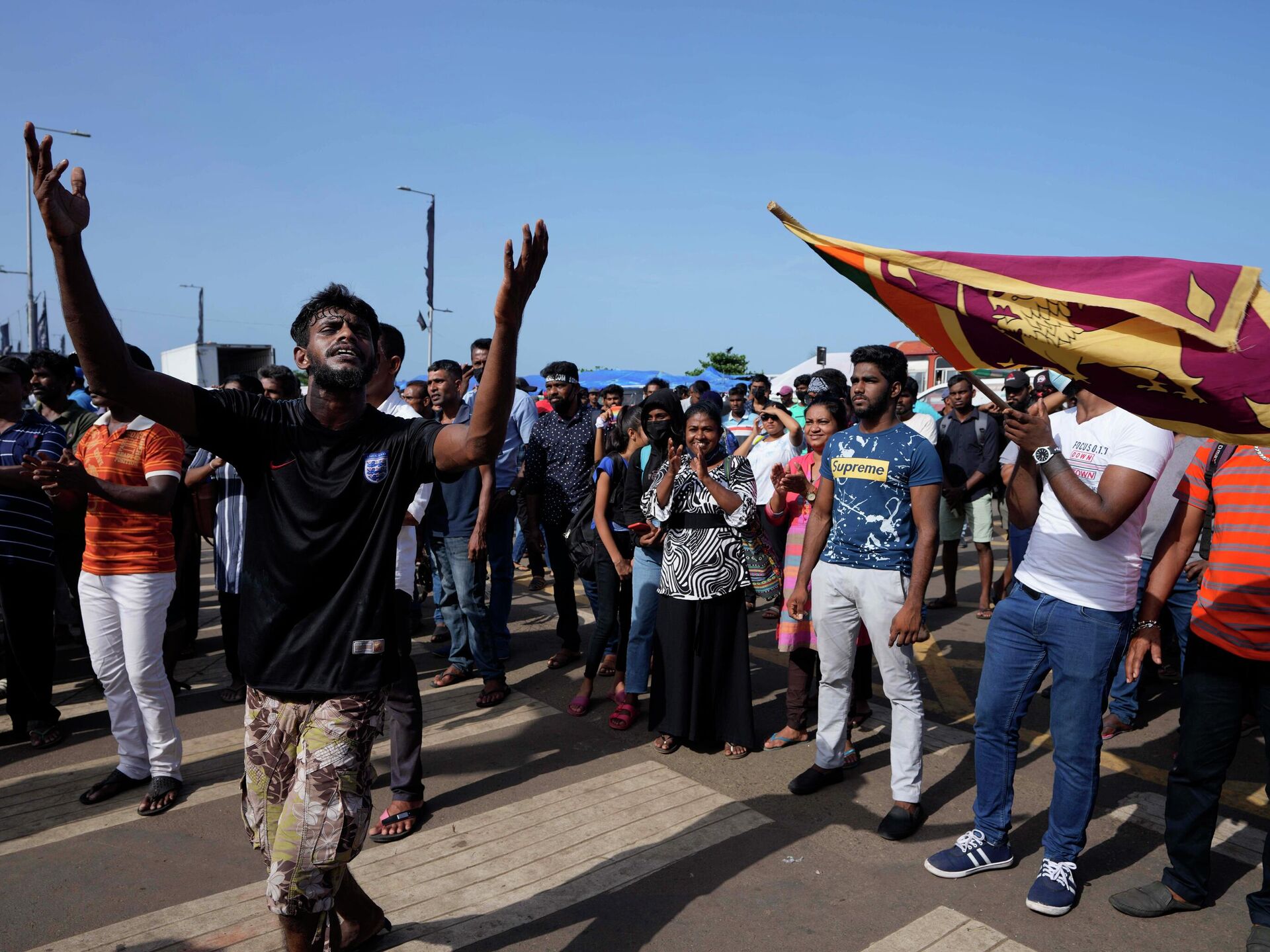
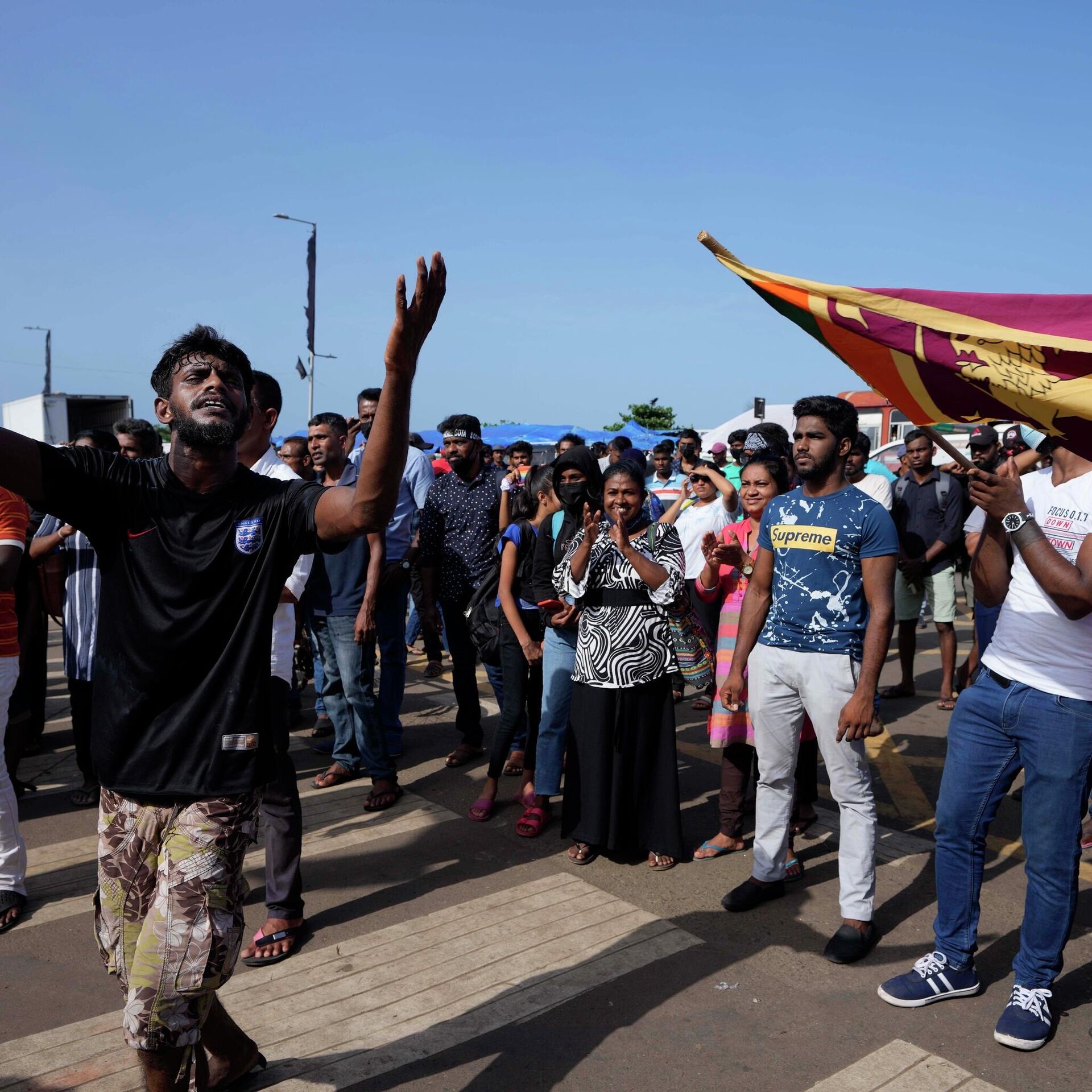
Economic Woes Propelled Peaceful Protesters in Sri Lanka to Surprising Historic Victory
07:52 GMT 14.07.2022 (Updated: 14:09 GMT 14.02.2023)
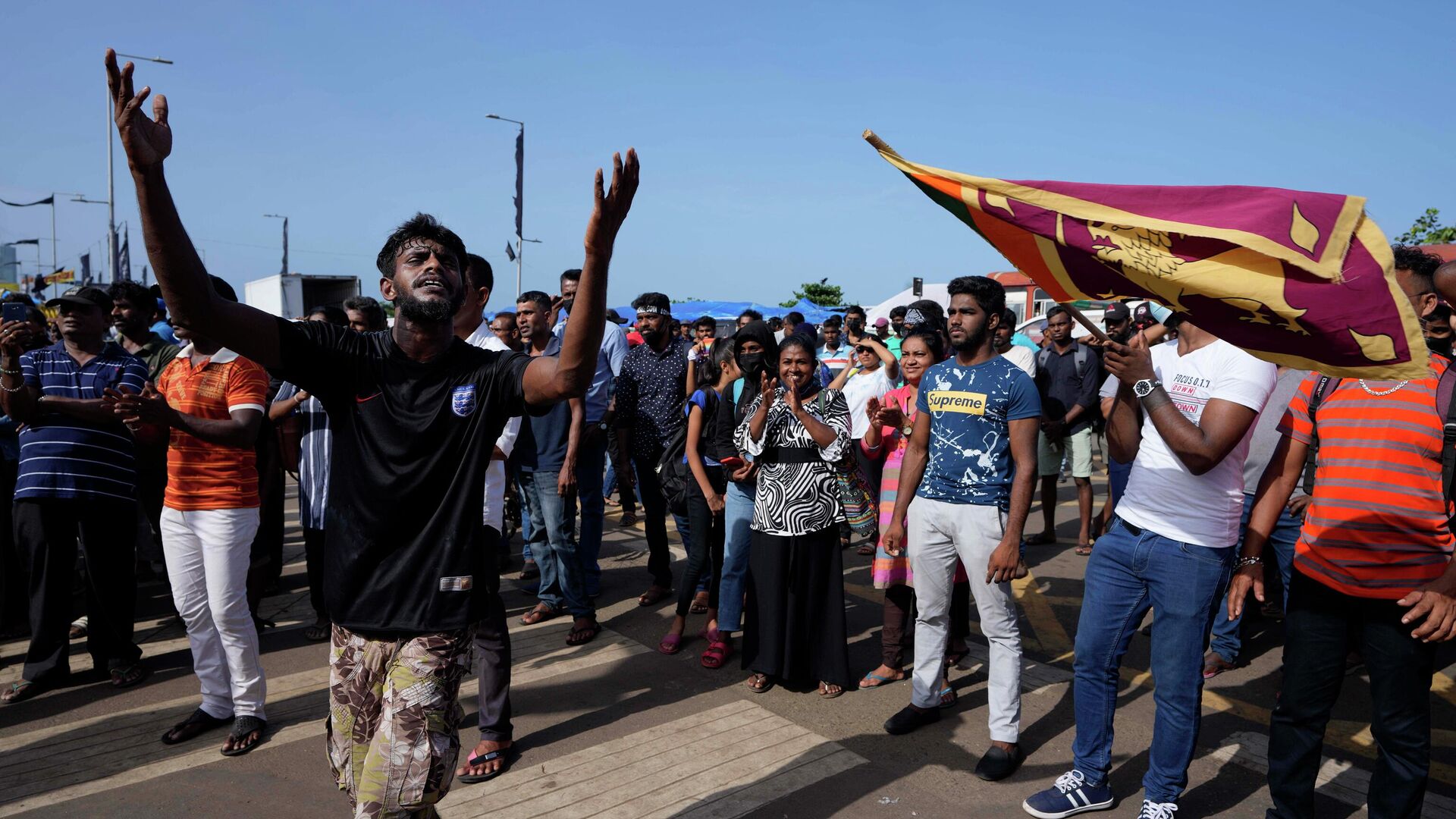
© AP Photo / Eranga Jayawardena
Subscribe
MOSCOW (Sputnik) Tommy Yang - Unprecedented economic crisis that triggered fuel and food shortages in Sri Lanka, which drove people from all walks of life to protest against the unpopular president, could be behind the surprising fall of one of the most powerful political families in the country’s history, activists and protesters told Sputnik.
Following less than four months of mass protests in Sri Lanka, president Gotabaya Rajapaksa, who took office in 2019 and became the main target of the protesters, fled the country with his wife on a military plane on Wednesday.
During the earlier stages of the protests, the president’s two brothers, who served as the country’s prime minister and finance minister, respectively, were both forced to resign.
Although Ranil Wickremesinghe, the prime minister appointed by Rajapaksa in May, would stay on as acting president until the parliament elects a new president, the former president’s departure from Sri Lanka marked the end of his turbulent tenure in the country.
Rare Win For Obedient Citizens
This rare victory for the protesters, who remained largely peaceful throughout the four-month struggle, surprised some veteran activists in the country.
"I am actually quite shocked that we were able to pull off something so huge, because Sri Lanka does not have a history of pulling off big struggles like other areas in South Asia, such as India for instance. We don't have a history of the sort of mass struggles. Even our independence came on the backs of India's struggles," Marisa de Silva, an activist who has been advocating for various social injustices for over 15 years in Sri Lanka, told Sputnik.
The advocate acknowledged that there were insurrections and the civil war in the country, but those struggles were all armed.
"So in terms of an unarmed struggle, we have never, as a people, in particular the Sinhalese majority, been able to push back on such a massive scale. That’s because we've always been trapped in this slave mentality, which we call, which is where we just bow down to whatever politicians dish out to us. So I think there was this sudden awakening to all of that. And the youth in particular push back hard like: ’we're not gonna take it anymore,’" she said.
The activist was surprised that such a powerful political family in Sri Lanka could fall within a short period of four months.
"It is historic and unbelievable that we were able to pull off something so huge in such a short span of time, because technically we're looking at a span of mainly between March and July of one year. And this is to bring down a political family that was probably the most powerful political family in Sri Lankan history, who are basically treated like gods as recently as last year. So in such a short frame of period of time, for a family of such great status to fall from grace, it is very significant and historic in Sri Lankan history," she said.
Crisis Affecting Everyone
After protesters, who were primarily the younger generation, started to gather outside the president’s residence in March, people from all walks of life in Sri Lanka joined the efforts as the country’s deep economic crisis showed no sign of improvement.
Lawyers, farmers, students, the monks and priests were all part of the movement that eventually brought down the powerful president and his family.
As the economic crisis worsened earlier this year, most families in Sri Lanka faced prolonged power cuts that lasted over 10 hours and had to wait in line for hours or even days for fuel. The fuel shortage also drove up food prices and vulnerable groups experienced food shortages.
Ranil Wickremesinghe, who took over as prime minister in early May following the resignation of the former president’s brother, also failed to resolve the country’s economic woes. He publicly admitted that the country was "bankrupt" last week.
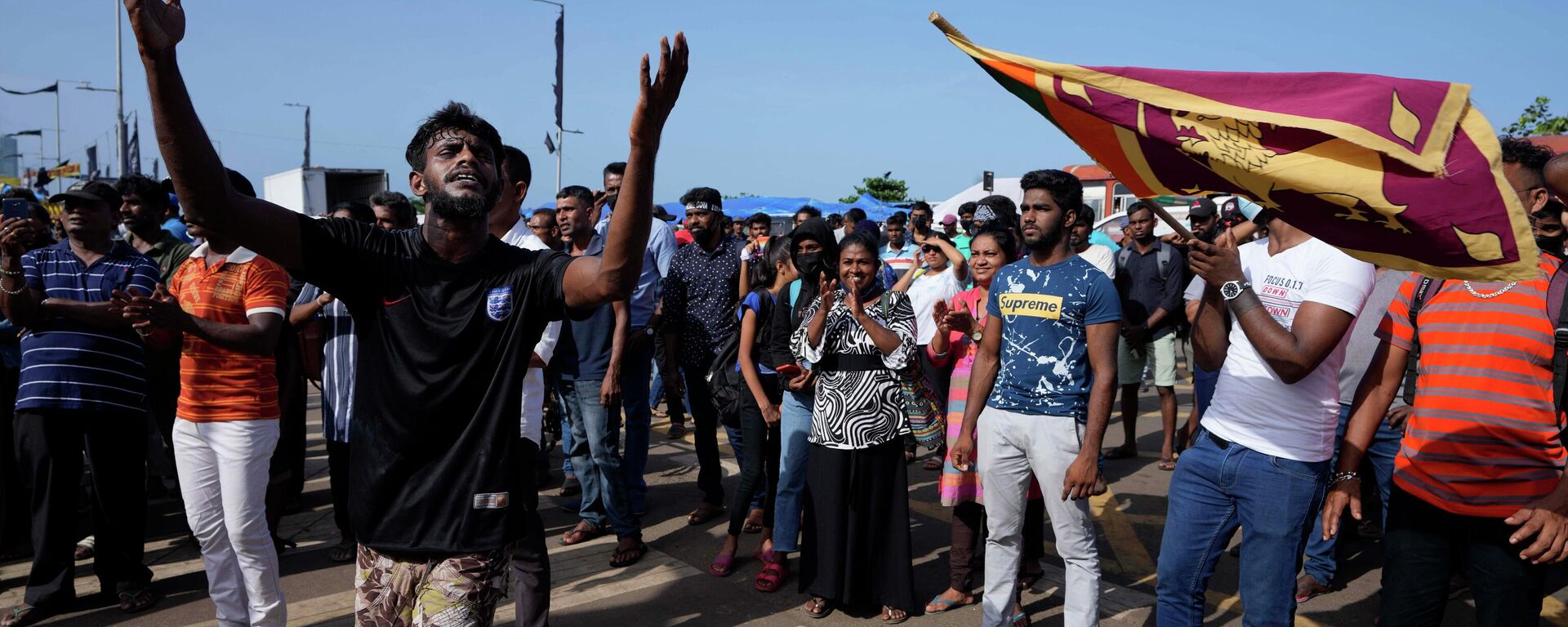
When the angry protesters stormed the former president's palace over the weekend, they did not face strong resistance from the military personnel who were supposed to be protecting the compound. Videos circulated on social media showed young protesters taking a dip in the swimming pool in the presidential palace.
The lack of harsh military response, not to mention a military crackdown against protesters, in Sri Lanka stood in stark contrast to other similar popular protests in neighboring Asian countries. For example, the military government in Myanmar did not hesitate to open fire on peaceful protesters last year.
The Sri Lankan activist pointed out that the dire economic situation in the country probably led to the former president losing support from the military.
"Because of the economic crash, the military families were also affected. So I think they were finally broken down. And they also realized the Rajapaksas were not powerful anymore," de Silva said.
Similar to other Asian neighbors, the youth in Sri Lanka played a key role in the success of the movement, the activist noted.
"I think it became a surge of disgruntled youth, initially, and then, of course, many of the middle aged and the elderly also joined. But I think the core of it is that there was this disgruntled youth that were fed up of being lied to, of being sort of used or pitted against each other," she said.
Not Another Gotabaya
Nuzly Hameem, a 28-year-old engineer who was never politically active before March, was driven to the protests following long hours of power cuts at home and struggles at gas stations. He went on to become one of the 20-30 most active protesters who frequently organized events and coordinated efforts to push the movement forward.
Hameem shared an action plan with Sputnik that listed detailed demands from the protesters on the political future of the country.
According to the proposal from protesters, they wanted the interim government to introduce constitutional reforms by abolishing the power of the executive presidency.
For protesters like Hameem, the departure of the former president was just the first step in a long struggle.
"Yes. It’s a massive victory, but it’s just the start in all these changes we are expecting. We are actually demanding an election within 6 months. Once the new government stabilizes the economy to give relief to people, we will keep pushing for the new interim government. We need the executive presidency to be abolished completely. We need certain laws such as Prevention of Terrorism Act to be repealed as well," he said.
Hameem explained why abolishing the executive presidency would be critical to the protesters.
"We do not trust anyone right now. That’s why the election is required and people can decide who they want. We do not want another Gotabaya. That’s why we are asking to abolish executive presidency," he said.
The parliament in Sri Lanka is expected to elect a new president next week, with Prime Minister Wickremesinghe serving as acting president until then. After Wickremesinghe introduced curfews in the Western Province and declared a nationwide emergency on Wednesday, the protesters vowed to continue their struggle until he is removed from office as Rajapaksa was.