https://sputnikglobe.com/20220726/russian-space-station-to-replace-iss-will-be-built-no-earlier-than-2028-1097826035.html
Russian Space Station to Replace ISS Will Be Built No Earlier Than 2028
Russian Space Station to Replace ISS Will Be Built No Earlier Than 2028
Sputnik International
MOSCOW (Sputnik) - The construction of a new Russian Orbital Service Station (ROSS) will begin no earlier than 2028, Vladimir Solovyov, the general designer... 26.07.2022, Sputnik International
2022-07-26T15:31+0000
2022-07-26T15:31+0000
2023-04-12T16:58+0000
russia
iss
space station
roscosmos
russian federal space agency roscosmos
space
https://cdn.imgsputnikglobe.com/img/07e5/04/03/1082533754_0:82:3061:1803_1920x0_80_0_0_9dba97b67d80c8f90a124ecf6f058f4c.jpg
"We propose to build it in two stages. If the decision on its construction is made before the end of the year, then the first stage will begin in 2028 with the launch of the Science Power Module by the Angara-A5M launch vehicle," Solovyov said in an interview with the Russian Space magazine.After that, the node and gateway modules will be launched on the same rocket. The first will be similar to the module that is already part of the International Space Station. The second will be used for spacewalks. Earlier, it was reported that the launch of the first module could take place in 2027-2028.For this, the Soyuz-2.1b rocket would need to be certified for manned flights, he explained. It is a more powerful version of the Soyuz-2.1a currently used in manned cosmonautics, and it will be needed due to the fact that launches into orbit with an inclination of 97 degrees require more energy than to the ISS, which flies at an inclination of 51.6 degrees.He also stated that ROSS could be used as a base for flights to the Moon, it may have a lunar spacecraft "assigned" to it.Earlier in the day, the new head of Roscosmos, Yuri Borisov, reported to President Vladimir Putin that Russia would fulfill all its international obligations and withdraw from the ISS project in 2024.Commenting on the state of the national space industry, the Roscosmos chief said that the situation is "difficult."Ex-Roscosmos head Dmitry Rogozin said on July 15 that after four years the industry managed "to get out of the system crisis quagmire." The Russian space industry, among other things, has achieved complete accident-free operations over the past four years, carrying out 86 successful launches in a row, completing the construction of the Russian segment of the ISS, and receiving the financing of the multi-satellite orbital grouping Sphere. Additionally, Rogozin pointed out that Roscosmos managed to successfully implement a range of tasks including creating new Soyuz-5 spacecrafts, developing the preliminary design of the Russian orbital station to replace the ISS, and launch tests of the newest Sarmat intercontinental ballistic missiles have begun, which are expected to start combat duty by the end of 2022.
https://sputnikglobe.com/20220511/relations-on-iss-not-changed-following-russias-military-operation-in-ukraine-astronaut-says-1095440280.html
Sputnik International
feedback@sputniknews.com
+74956456601
MIA „Rossiya Segodnya“
2022
Sputnik International
feedback@sputniknews.com
+74956456601
MIA „Rossiya Segodnya“
News
en_EN
Sputnik International
feedback@sputniknews.com
+74956456601
MIA „Rossiya Segodnya“
Sputnik International
feedback@sputniknews.com
+74956456601
MIA „Rossiya Segodnya“
iss, space station, roscosmos, russian federal space agency roscosmos, space
iss, space station, roscosmos, russian federal space agency roscosmos, space
Russian Space Station to Replace ISS Will Be Built No Earlier Than 2028
15:31 GMT 26.07.2022 (Updated: 16:58 GMT 12.04.2023) MOSCOW (Sputnik) - The construction of a new Russian Orbital Service Station (ROSS) will begin no earlier than 2028, Vladimir Solovyov, the general designer for Russian manned systems and the general designer of RSC Energia, said.
"We propose to build it in two stages. If the decision on its construction is made before the end of the year, then the first stage will begin in 2028 with the launch of the Science Power Module by the Angara-A5M launch vehicle," Solovyov said in an interview with the Russian Space magazine.
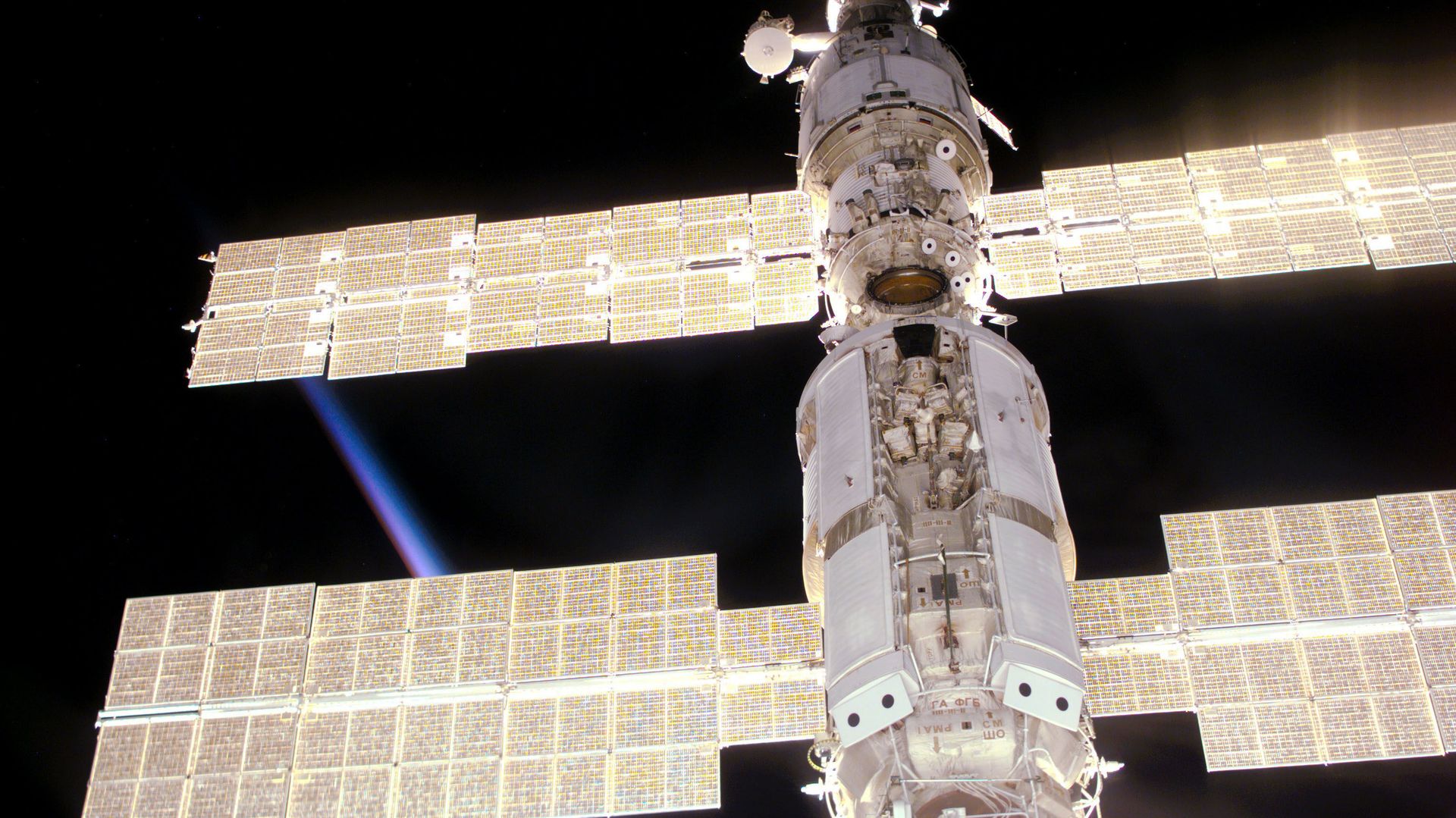
After that, the node and gateway modules will be launched on the same rocket. The first will be similar to the module that is already part of the International Space Station. The second will be used for spacewalks. Earlier, it was reported that the launch of the first module could take place in 2027-2028.
“After the docking of the Node Module in 2028, it will be possible to send the first crew from Baikonur by a Soyuz-2.1b launch vehicle on a Soyuz-type spacecraft," Solovyov said.
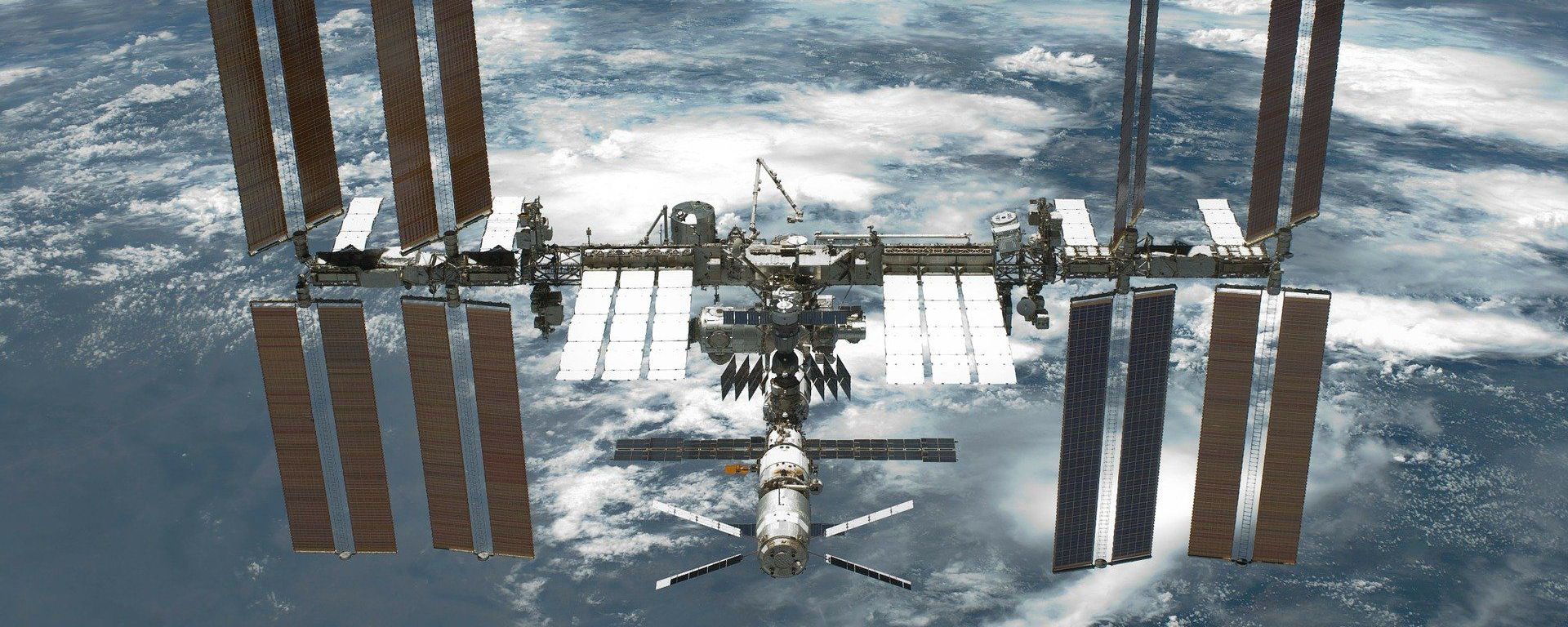
For this, the Soyuz-2.1b rocket would need to be certified for manned flights, he explained. It is a more powerful version of the Soyuz-2.1a currently used in manned cosmonautics, and it will be needed due to the fact that launches into orbit with an inclination of 97 degrees require more energy than to the ISS, which flies at an inclination of 51.6 degrees.
He also stated that ROSS could be used as a base for flights to the Moon, it may have a lunar spacecraft "assigned" to it.
"With political will and sufficient funding, ROSS can be used as a base for assembling a lunar or Martian complex. With the help of ROSS, effective two-launch schemes can be implemented when the crew is waiting at the station for the arrival of an upper stage to perform a departure impulse to the Moon," he said.
Earlier in the day, the new head of Roscosmos, Yuri Borisov, reported to President Vladimir Putin that Russia would fulfill all its international obligations and withdraw from the ISS project in 2024.
Commenting on the state of the national space industry, the Roscosmos chief said that the situation is "difficult."
"I see my main task alongside with my colleagues as the following: not to drop, but to raise the bar, and first of all to provide the Russian economy with the necessary space services. And this is navigation, communication, data transmission, meteorological, geodetic information, and so on. These are the most required services today, without which it is impossible to imagine modern life," Borisov added.
Ex-Roscosmos head Dmitry Rogozin said on July 15 that after four years the industry managed "to get out of the system crisis quagmire." The Russian space industry, among other things, has achieved complete accident-free operations over the past four years, carrying out 86 successful launches in a row, completing the construction of the Russian segment of the ISS, and receiving the financing of the multi-satellite orbital grouping Sphere.
Additionally, Rogozin pointed out that Roscosmos managed to successfully implement a range of tasks including creating new Soyuz-5 spacecrafts, developing the preliminary design of the Russian orbital station to replace the ISS, and launch tests of the newest Sarmat intercontinental ballistic missiles have begun, which are expected to start combat duty by the end of 2022.