https://sputnikglobe.com/20221127/how-a-musty-gold-mine-became-key-in-the-quest-for-mysterious-dark-matter-1104745629.html
How a Musty Gold Mine Became Key in the Quest for Mysterious Dark Matter
How a Musty Gold Mine Became Key in the Quest for Mysterious Dark Matter
Sputnik International
Experiment led by Lawrence Berkeley National Lab hopes to solve mystery of dark matter.
2022-11-27T08:12+0000
2022-11-27T08:12+0000
2023-04-21T10:42+0000
science & tech
dark matter
xenon
weakly interacting massive particles (wimps)
https://cdn.imgsputnikglobe.com/img/07e6/0b/1b/1104743839_0:343:2421:1704_1920x0_80_0_0_4f182a51330f45611f36890cca945f0f.jpg
An old gold mine and a vat containing liquid xenon are the key elements of an ongoing hunt for the elusive dark matter that is believed to make up about 85 percent of all matter in the Universe.This hypothetical form of matter doesn’t emit, absorb or scatter light, while existing almost everywhere in our Universe, making it undetectable in astronomical observations. In the hopes of solving this fundamental mystery, a team of researchers picked an old gold mine in Lead, South Dakota, US, burrowing down underground to a depth of nearly a mile, or 1.6 kilometers, to block out all background noise.The experiment spearheaded by Lawrence Berkeley National Lab (Berkeley Lab) with contribution from physicists at the University of Massachusetts Amherst and involving an international team comprising around 250 engineers and scientists is calculating on catching the undetectable dark matter as it interacts with other particles.The crucial element of the Sanford Underground Research Facility is liquid xenon, sitting inside two titanium tanks, fitted with detectors able to zoom in on miniscule flashes of energy potentially coming from a particle of dark matter colliding with a xenon atom. The titanium is designed to keep the liquid xenon cold and also to maintain background radiation down to a minimum.According to the plan for the experiment, the mysterious dark matter might come from the theoretical Weakly Interacting Massive Particles (WIMPs). The WIMPs, if they exist, while interacting with gravity, could be expected to collide with particles of visible matter on rare occasions.Early results are expected sometime in 2023, with observations scheduled to continue for up to five years.
https://sputnikglobe.com/20211110/scientists-roll-out-theory-about-contagious-dark-matter-1090635104.html
Sputnik International
feedback@sputniknews.com
+74956456601
MIA „Rossiya Segodnya“
2022
News
en_EN
Sputnik International
feedback@sputniknews.com
+74956456601
MIA „Rossiya Segodnya“
Sputnik International
feedback@sputniknews.com
+74956456601
MIA „Rossiya Segodnya“
hunt for dark matter, what is dark matter, sanford underground research facility, catching dark matter as it interacts with other particles, dark matter colliding with a xenon atom
hunt for dark matter, what is dark matter, sanford underground research facility, catching dark matter as it interacts with other particles, dark matter colliding with a xenon atom
How a Musty Gold Mine Became Key in the Quest for Mysterious Dark Matter
08:12 GMT 27.11.2022 (Updated: 10:42 GMT 21.04.2023) Scientists believe that roughly 85 percent of the Universe is made of dark matter - a certain type of material that cannot directly be observed since it does not emit light or energy.
An old gold mine and a vat containing liquid xenon are the key elements of an ongoing hunt for the elusive
dark matter that is believed to make up about 85 percent of all matter in the Universe.
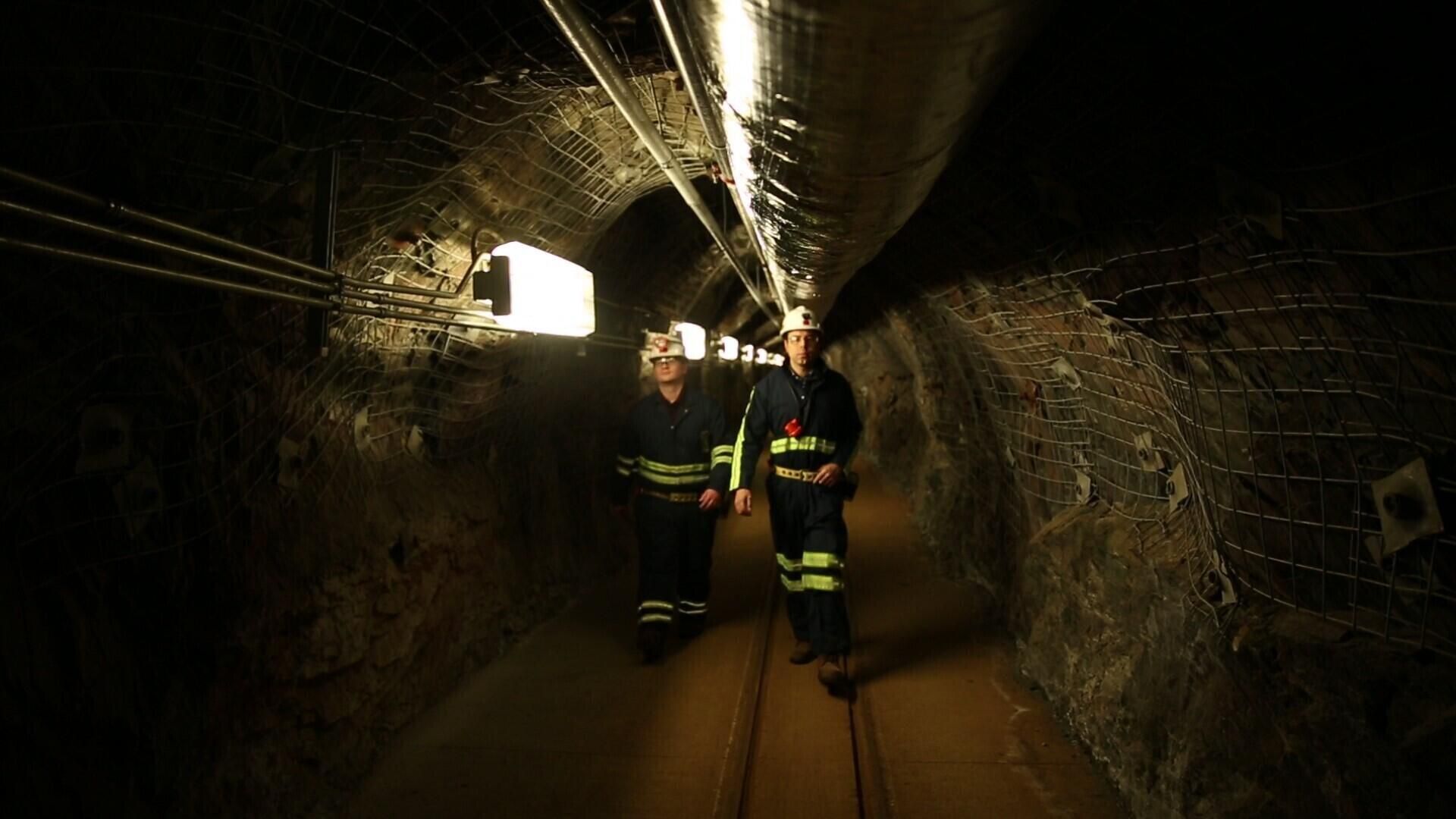
This hypothetical form of matter doesn’t emit, absorb or scatter light, while existing almost everywhere in our Universe, making it undetectable in astronomical observations. In the hopes of solving this fundamental mystery, a team of researchers picked an old gold mine in Lead, South Dakota, US, burrowing down underground to a depth of nearly a mile, or 1.6 kilometers, to block out all background noise.
The experiment spearheaded by Lawrence Berkeley National Lab (Berkeley Lab) with contribution from physicists at the University of Massachusetts Amherst and involving an international team comprising around 250 engineers and scientists is calculating on catching the undetectable dark matter as it interacts with other particles.
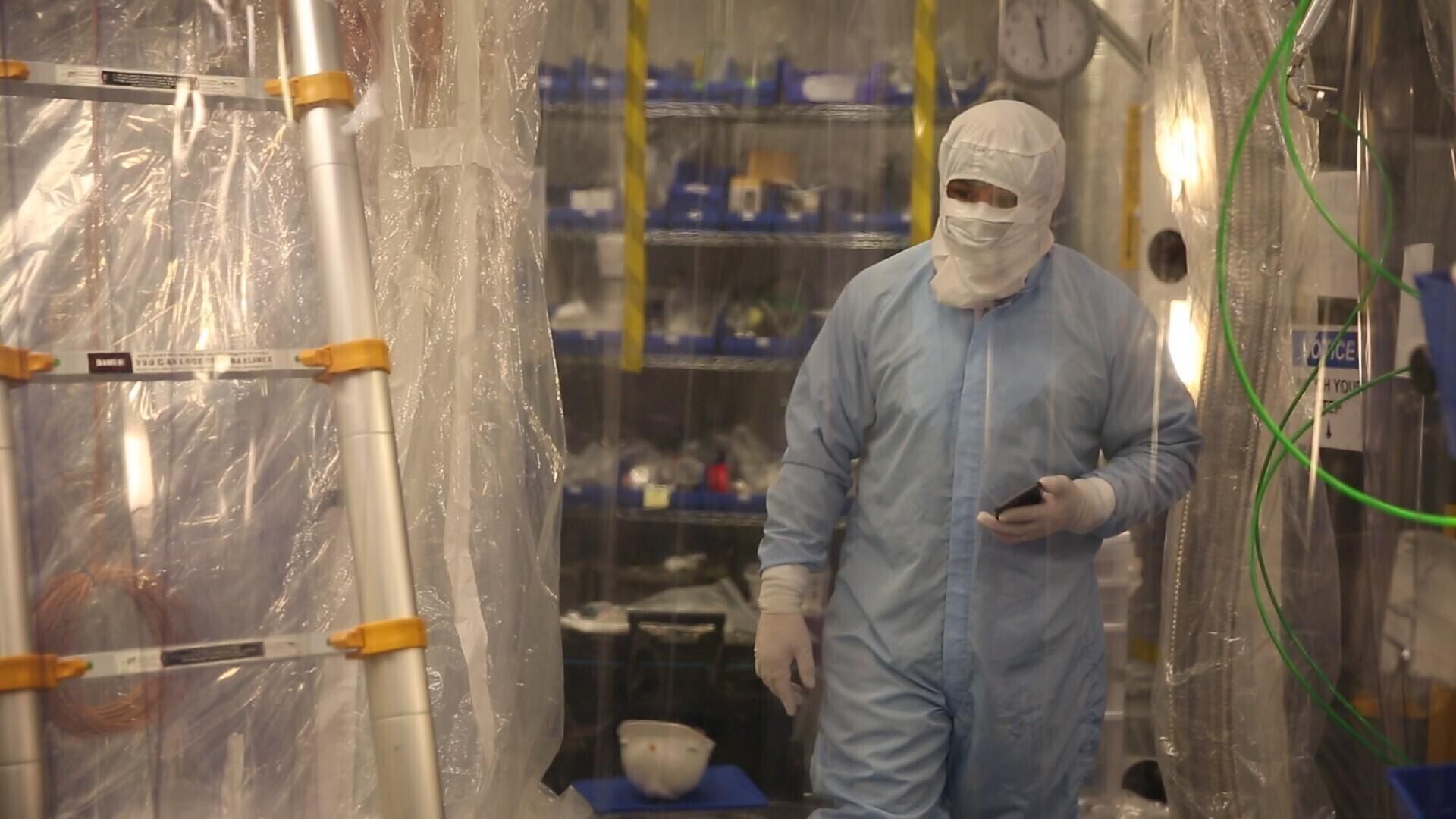
The crucial element of the Sanford Underground Research Facility is liquid xenon, sitting inside two titanium tanks, fitted with detectors able to zoom in on miniscule flashes of energy potentially coming from a particle of dark matter colliding with a xenon atom. The titanium is designed to keep the liquid xenon cold and also to maintain background radiation down to a minimum.
According to the plan for the experiment, the
mysterious dark matter might come from the theoretical Weakly Interacting Massive Particles (WIMPs). The WIMPs, if they exist, while interacting with gravity, could be expected to collide with particles of visible matter on rare occasions.
"Our job is to get some chunk of matter, which is very clean and very quiet from a particle perspective, and in which we can instrument and be able to detect when there was a particle interaction," Aaron Manalaysay, the project's physics coordinator, told media.
Early results are expected sometime in 2023, with observations scheduled to continue for up to five years.

10 November 2021, 19:30 GMT