https://sputnikglobe.com/20221212/mass-kill-traps-study-reveals-purpose-of-mysterious-stone-structures-spanning-arabian-desert-1105382407.html
'Mass-Kill Traps': Study Reveals Purpose of Mysterious Stone Structures Spanning Arabian Desert
'Mass-Kill Traps': Study Reveals Purpose of Mysterious Stone Structures Spanning Arabian Desert
Sputnik International
Mysterious stone structures spanning Arabian Desert were used as hunting traps on migrating animals by nomadic peoples, recent research revealed.
2022-12-12T11:45+0000
2022-12-12T11:45+0000
2023-04-21T10:42+0000
science & tech
arabia
desert
https://cdn.imgsputnikglobe.com/img/07e6/0c/0c/1105381137_0:160:3075:1889_1920x0_80_0_0_830aac32b1aa97f5fb8f7be5b1b6a544.jpg
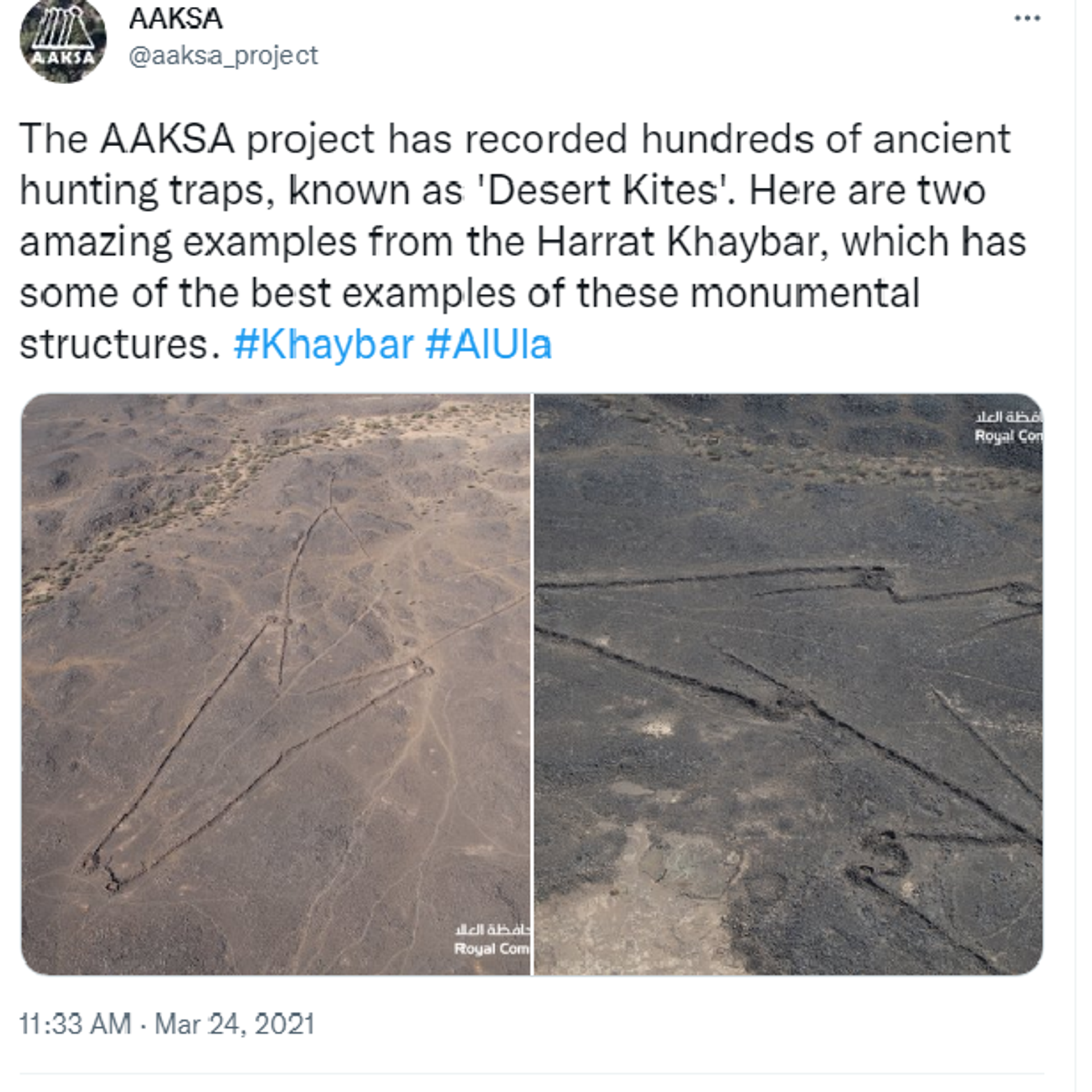
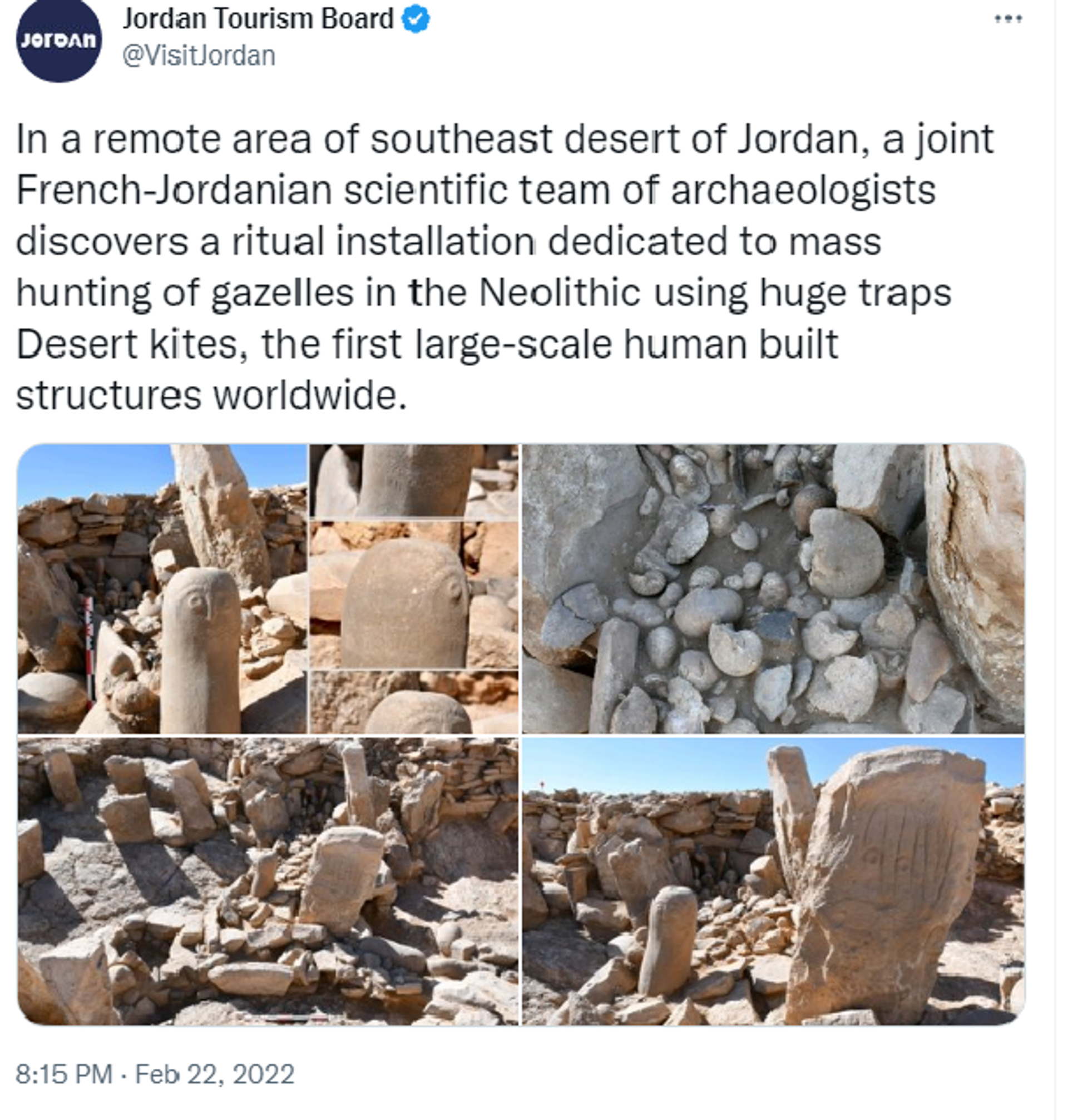
A spate of recent satellite images and drone surveys carried out in the ʿUwayriḍ desert of Saudi Arabia have helped scientists prove a theory they have long pursued but been unable to prove.Researchers have been wondering about the original purpose of thousands of huge stone structures, visible from the sky and spanning vast areas across the Arabian peninsula, from Jordan to Saudi Arabia to Syria, Armenia, Kazakhstan, and Iraq.Hailing back to a bygone era when the deserts were populated by ancient civilizations, the V-shaped stone patterns have been dubbed by archaeologists as “desert kites”. After dozens of previously unknown such structures were found in ʿUwayriḍ, the common conclusion was that they used to serve as mass hunting traps used by ancient nomadic peoples.There were certain variations in the design of these stone constructions, with some narrowing down towards a pit, and others to a cliff or an enclosure.The research made use of a combination of data gathered through satellite remote sensing and aerial survey as part of the Aerial Archaeology in the Kingdom of Saudi Arabia, Al Ula Project (AAKSAU). The satellite imagery of AlUla County was made freely available.
arabia
Sputnik International
feedback@sputniknews.com
+74956456601
MIA „Rossiya Segodnya“
2022
News
en_EN
Sputnik International
feedback@sputniknews.com
+74956456601
MIA „Rossiya Segodnya“
Sputnik International
feedback@sputniknews.com
+74956456601
MIA „Rossiya Segodnya“
stone structures, v-shaped patterns in desert, arabian desert, hunting traps on migrating animals, nomadic peoples
stone structures, v-shaped patterns in desert, arabian desert, hunting traps on migrating animals, nomadic peoples
'Mass-Kill Traps': Study Reveals Purpose of Mysterious Stone Structures Spanning Arabian Desert
11:45 GMT 12.12.2022 (Updated: 10:42 GMT 21.04.2023) Archaeologists have previously speculated that the stone structures found in the sandy regions that possibly used to be seasonal grasslands were used for hunting purposes, targeting migrating gazelle or goats. There was even a theory that the constructions could have been used to breed wild animals for domestication.
A spate of recent satellite images and drone surveys carried out in the ʿUwayriḍ desert of Saudi Arabia have helped scientists
prove a theory they have long pursued but been unable to prove.
Researchers have been wondering about the original purpose of thousands of huge stone structures, visible from the sky and spanning vast areas across the Arabian peninsula, from Jordan to Saudi Arabia to Syria, Armenia, Kazakhstan, and Iraq.
Hailing back to a bygone era when the deserts were populated by ancient civilizations, the V-shaped stone patterns have been dubbed by archaeologists as “desert kites”. After dozens of previously unknown such structures were found in ʿUwayriḍ, the common conclusion was that they used to serve as mass hunting traps used by ancient nomadic peoples.
There were certain variations in the design of these stone constructions, with some narrowing down towards a pit, and others to a cliff or an enclosure.
"The hunting of animals, most commonly gazelle and other herbivorous ungulates, possibly ibex, wild equids, and ostriches, is now accepted as the most common use of these structures," authors of a new study concluded.
The research made use of a combination of data gathered through satellite remote sensing and aerial survey as part of the Aerial Archaeology in the Kingdom of Saudi Arabia, Al Ula Project (AAKSAU). The satellite imagery of AlUla County was made freely available.