https://sputnikglobe.com/20230115/blizzards-in-space-saturns-moon-enceladus-boasts-deep-snowdrifts-research-shows-1106335715.html
Blizzards in Space? Saturn’s Moon, Enceladus, Boasts Deep Snowdrifts, Research Shows
Sputnik International
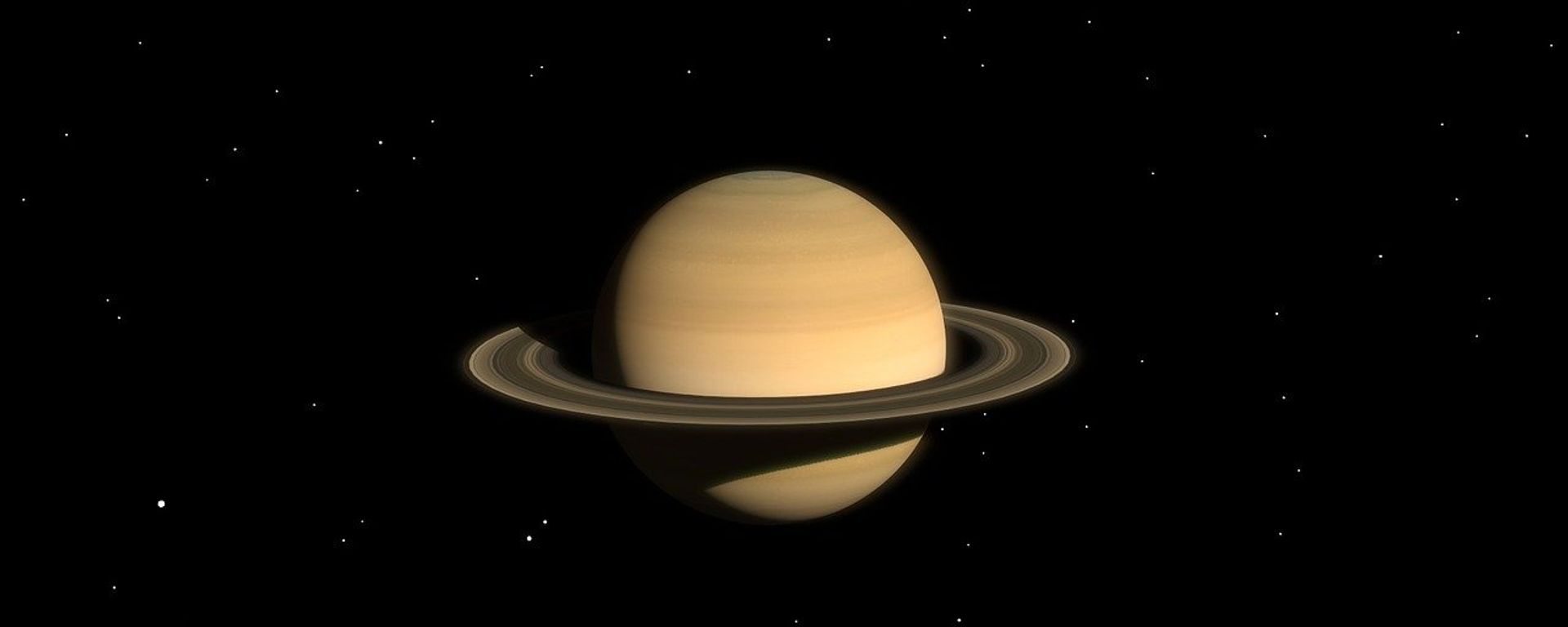
Saturn’s Moon, Enceladus, is covered with snow, research claims.
2023-01-15T11:43+0000
2023-04-21T10:43+0000
science & tech
saturn
enceladus
snow
alien
iceland
https://cdn1.img.sputnikglobe.com/img/101937/82/1019378217_0:53:1680:998_1920x0_80_0_0_25248b54c60b1f076cea03a75c48a318.jpg
Enceladus, the sixth-largest moon of the ringed giant planet Saturn, has snow about 700 meters deep in some places, a study has revealed.Moreover, the varying snow depth could indicate that Enceladus’ dramatic plume - the vapor from surface fractures at its south pole - may have been more active in the past, Research Physical Scientist Emily Martin believes.The surface of Enceladus is covered in a thick layer of ice, yet underneath it all is an ocean of liquid salty water. Furthermore, geysers from that ocean continuously spurt out liquid jets that turn to snow. The snow then settles back upon the surface of Enceladus, besides also reaching some of its neighboring moons.Together with her colleagues, Emily Martin, who works at the Center for Earth and Planetary Studies at the National Air and Space Museum in Washington, DC, embarked upon research to determine just how thick, dense, and compact Enceladus’ snow is. They explained that this was important for future landings on Saturn's moon.“If you’re going to land a robot there, you need to understand what it’s going to be landing into,” Martin explained.As a reference point for their research, details of which were published in the Icarus scientific journal, the team used Iceland. The fact is that this country has geological features in common with Enceladus: "pit chains." These are streaks or marks in the ground formed when ice or snow drain into a crack underneath. Scientists were able to see them when NASA’s Cassini spacecraft, which orbited Saturn from 2004 to 2017, sent back pictures. The depth of the pits, as was earlier suggested by scientists, could be probed via geometry, together with the angle at which sunlight hits the surface. So Martin's team set out on some field trips to Iceland to find out if this approach could be used when studying Enceladus.Finally, using images supplied by Cassini, Martin and her colleagues discovered that the depth of the snow drifts on Enceladus’ surface varied greatly. In some places it was hundreds of meters deep, with its greatest registered thickness close to 700 meters.For the moon's plume to deposit so much snow on the surface, it would require around 4.5 billion years, said the scientists, adding that the strength of the jets must have altered over time.Everything linked to Enceladus is increasingly fascinating as it is commonly considered by the planetary science community to be a candidate for finding extraterrestrial life.Five key ingredients are required by every living thing on Earth: hydrogen, oxygen, carbon, nitrogen, and phosphorus. According to Dr. Christopher Glein of the Southwest Research Institute, Enceladus' plume contains "almost all the basis requirements of life as we know it,” with phosphorus being the exception, as there is "no direct evidence for its presence."
https://sputnikglobe.com/20230104/scientists-reveal-how-life-could-be-detected-on-enceladus-saturns-moon-1106031379.html
https://sputnikglobe.com/20221229/no-need-to-land-or-drill-to-hunt-for-alien-life-hiding-on-saturns-moon-study-claims-1105883195.html
iceland
Sputnik International
feedback@sputniknews.com
+74956456601
MIA „Rossiya Segodnya“
2023
News
en_EN
Sputnik International
feedback@sputniknews.com
+74956456601
MIA „Rossiya Segodnya“
https://cdn1.img.sputnikglobe.com/img/101937/82/1019378217_140:0:1540:1050_1920x0_80_0_0_9894249044b68511f8c49272e8454221.jpgSputnik International
feedback@sputniknews.com
+74956456601
MIA „Rossiya Segodnya“
saturn’s moon, enceladus, covered with snow, research, warm saltwater ocean, plumes, to determine how thick snow is, future landings on saturn's moon, nasa’s cassini spacecraft, key ingredients for life,
Blizzards in Space? Saturn’s Moon, Enceladus, Boasts Deep Snowdrifts, Research Shows
11:43 GMT 15.01.2023 (Updated: 10:43 GMT 21.04.2023) Enceladus, one of Saturn’s moons and one of the coldest places in its system, is ice-covered, but has a warm saltwater ocean under its surface that has those hunting for alien life in the universe marking it as a very promising candidate.
Enceladus, the
sixth-largest moon of the ringed giant planet Saturn, has snow about 700 meters deep in some places, a study has revealed.
Moreover, the varying snow depth could indicate that Enceladus’ dramatic plume - the vapor from surface fractures at its south pole - may have been more active in the past, Research Physical Scientist Emily Martin believes.
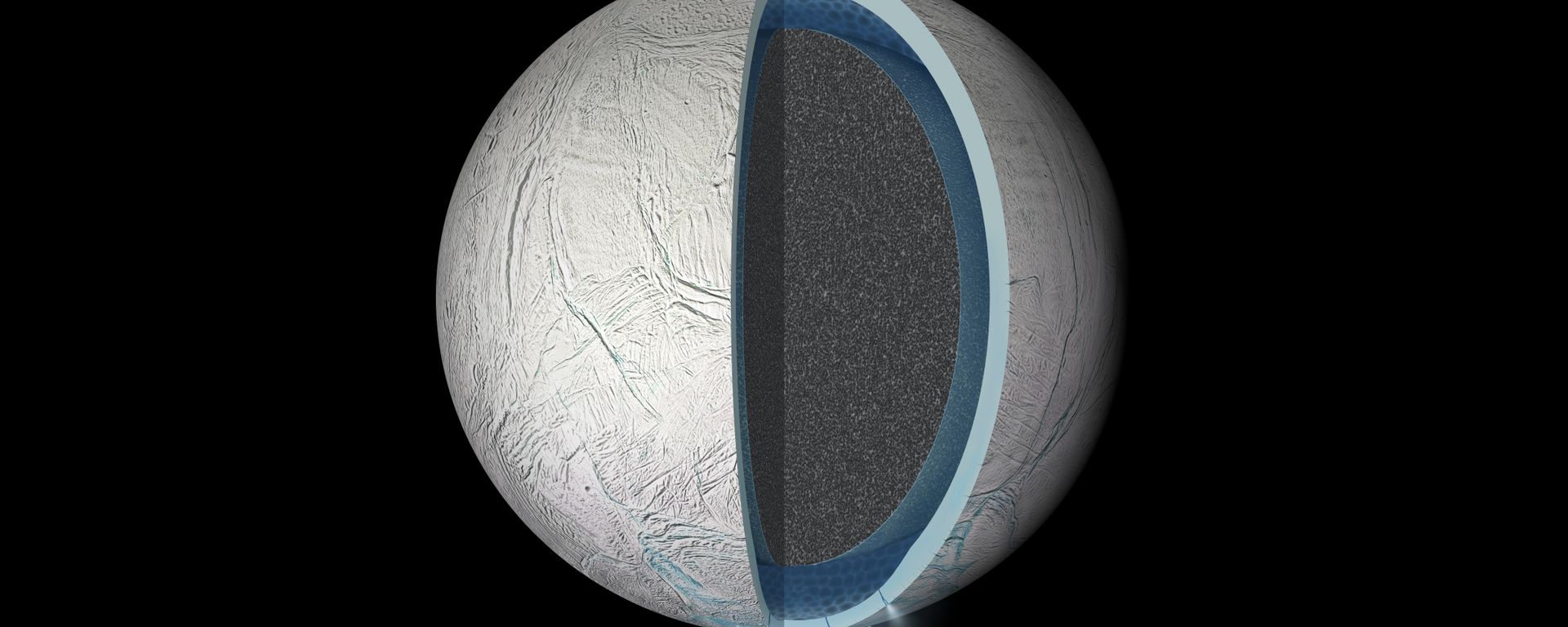
The surface of Enceladus is covered in a thick layer of ice, yet underneath it all is an ocean of liquid salty water. Furthermore, geysers from that ocean continuously spurt out liquid jets that turn to snow. The snow then settles back upon the surface of Enceladus, besides also reaching some of its neighboring moons.
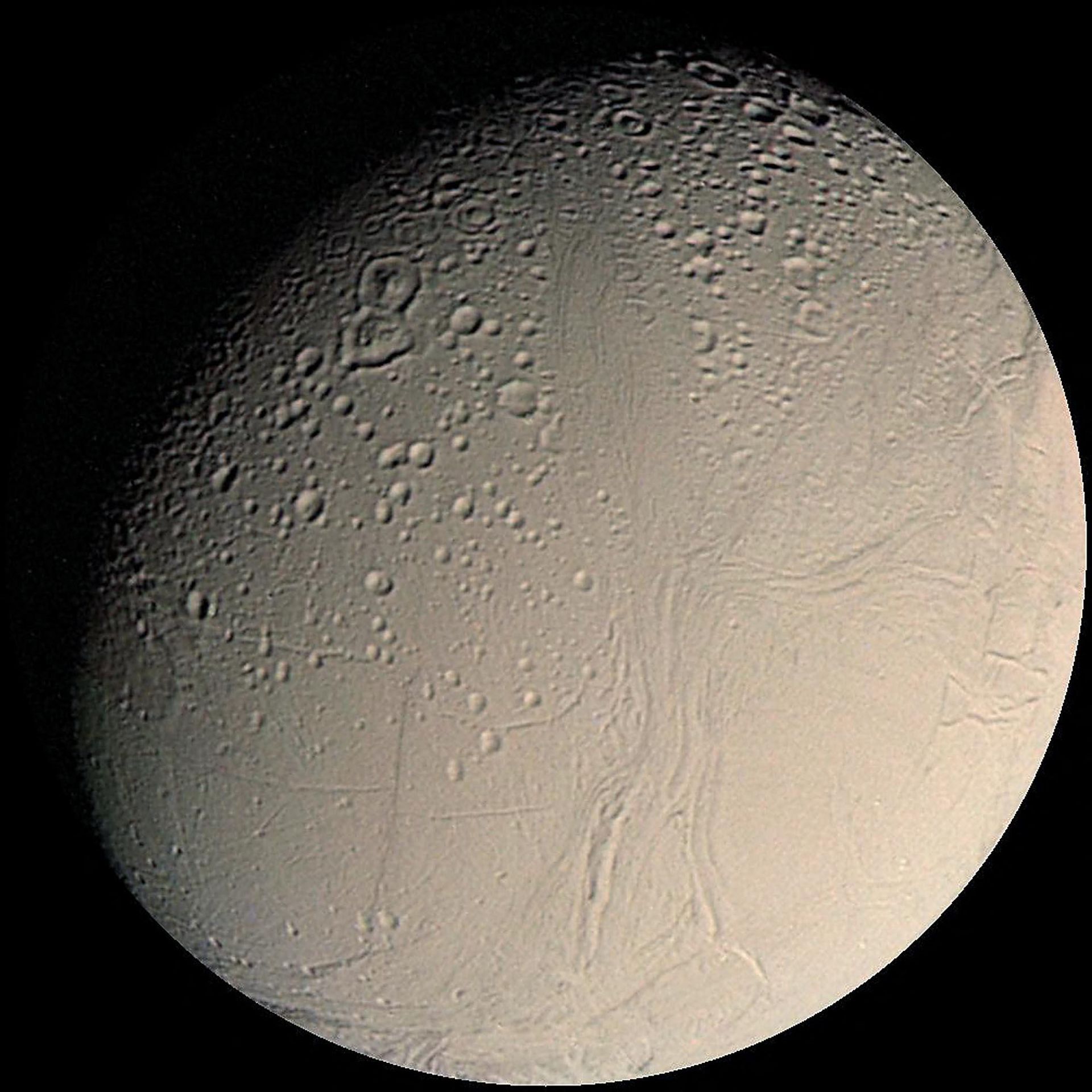
Together with her colleagues, Emily Martin, who works at the Center for Earth and Planetary Studies at the National Air and Space Museum in Washington, DC, embarked upon research to determine just how thick, dense, and compact Enceladus’ snow is. They explained that this was important for future landings on Saturn's moon.
“If you’re going to land a robot there, you need to understand what it’s going to be landing into,” Martin explained.
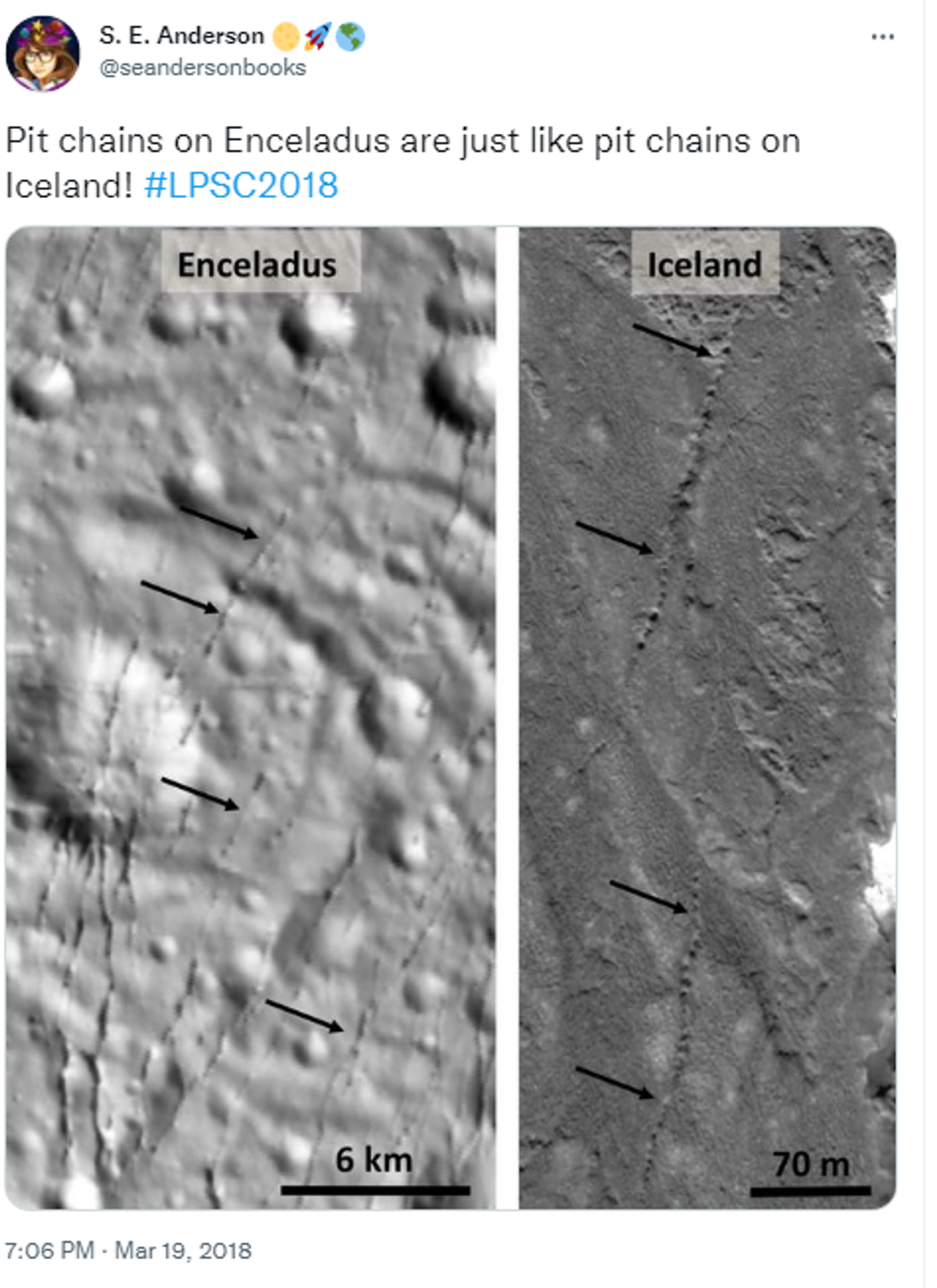
As a reference point for their research, details of which
were published in the Icarus scientific journal, the team used Iceland. The fact is that this country has geological features in common with Enceladus: "pit chains." These are streaks or marks in the ground formed when ice or snow drain into a crack underneath. Scientists were able to see them when NASA’s Cassini spacecraft, which orbited Saturn from 2004 to 2017, sent back pictures.
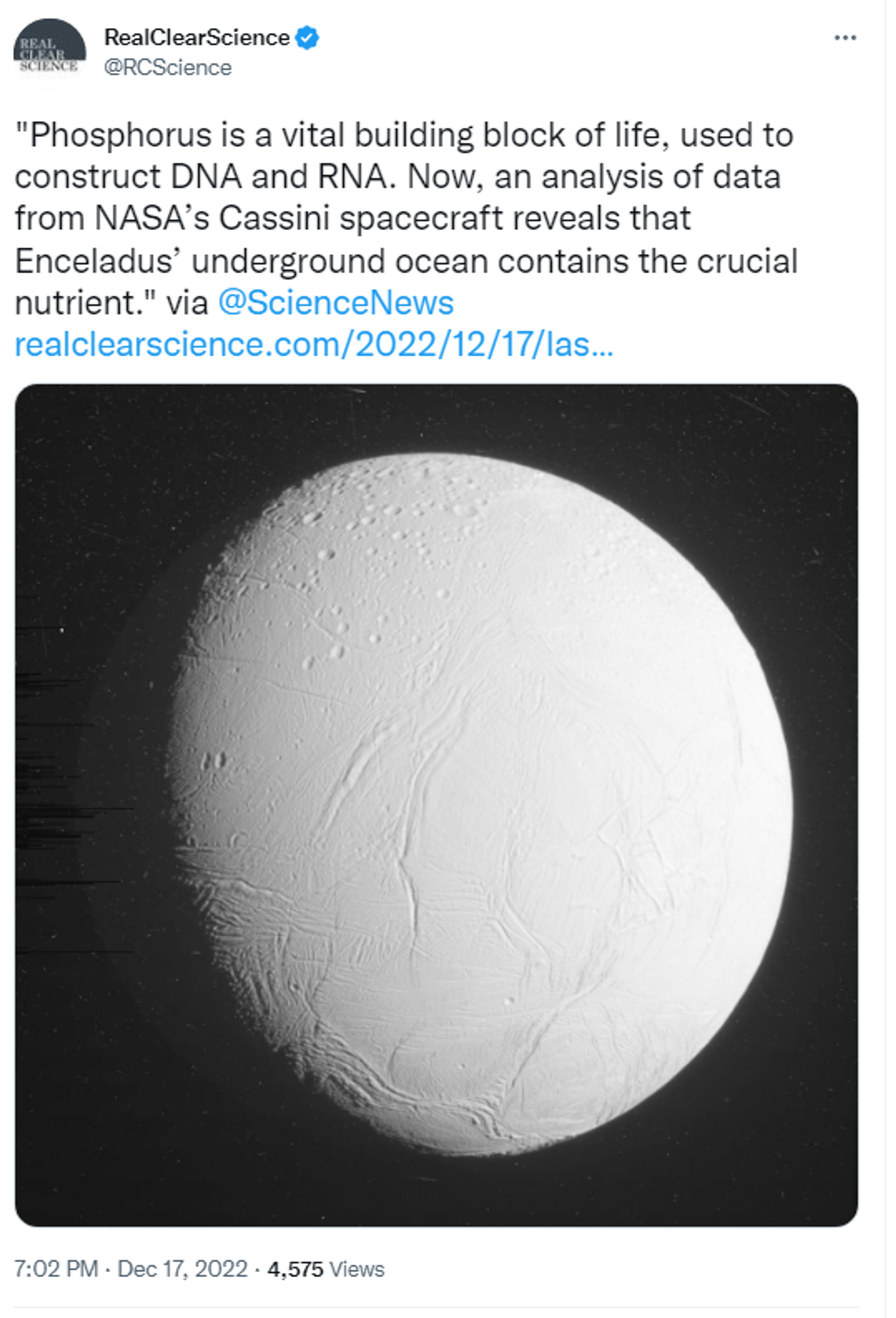
The depth of the pits, as was earlier suggested by scientists, could be probed via geometry, together with the angle at which sunlight hits the surface. So Martin's team set out on some field trips to Iceland to find out if this approach could be used when studying Enceladus.
Finally, using images supplied by Cassini, Martin and her colleagues discovered that the depth of the snow drifts on Enceladus’ surface varied greatly. In some places it was hundreds of meters deep, with its greatest registered thickness close to 700 meters.
For the moon's plume to deposit so much snow on the surface, it would require around 4.5 billion years, said the scientists, adding that the strength of the jets must have altered over time.
“It makes me think we don’t have 4.5 billion years to do this... We need to do it in a much shorter timeframe. You need to crank up the volume on the plume.”
4 January 2023, 12:08 GMT
Everything linked to Enceladus is increasingly fascinating as it is commonly considered by the planetary science community to be a candidate for
finding extraterrestrial life.
Five key ingredients are required by every living thing on Earth: hydrogen, oxygen, carbon, nitrogen, and phosphorus. According to Dr. Christopher Glein of the Southwest Research Institute, Enceladus' plume contains "almost all the basis requirements of life as we know it,” with phosphorus being the exception, as there is "no direct evidence for its presence."
"What makes Enceladus unique is that it’s giving us free samples of its ocean: there are geysers which jet water vapor and ice crystals into space, where we can scoop them up with a passing spacecraft and analyze them. So, Enceladus is a very good place to go and look for potential life, because we can *directly* sample material from the ocean,” Dr. Francis Nimmo, who is a professor at the Department of Earth and Planetary Sciences at the University of California, Santa Cruz, told media in October, 2022.
29 December 2022, 12:41 GMT