At their recent meetings, the leaders of the European Union agreed on the form and the amount of sanctions they want to impose on Russia for the war in Ukraine. However, the sanctions have not yet been enacted because of the fragile ceasefire in Ukraine. Will the “stand by” mode for sanctions become permanent?
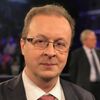
Studio guest Vladimir Kozin, Adviser to the Director of the Russian Institute for Strategic Studies, Nigel Kushner, the CEO of W Legal, an international law firm that specializes in sanctions, and the European Union's Ambassador to Moscow Vygaudas Ušackas shared their opinions with Radio VR.
Vladimir Kozin, Adviser to the Director of the Russian Institute for Strategic Studies.
Why is Russia being punished now, at this time, especially when several peace initiatives are in place?
Vladimir Kozin: We still do not understand why. We are actually not afraid of the sanctions, because they affect a number of personalities, personally mentioned in the sanctions list. And a number of banks, and a number of Russian enterprises are to be affected as well, but, at large, the Russians – the rank and file and Russia per se, as the country, will not be affected by them at all.
But to my surprise there is a mere coincidence that on Friday, at the end of the day the EU and Ukraine altogether will enact these sanctions, separately from each other’s angle. However, the impact of these sanctions will backfire. It will be a kind of boomerang and will adversely affect their engineers, their authors, rather than the Russian Federation.
Do you think that the sanctions could ultimately have a positive effect, pushing Russia towards peace? The only problem is that the war is in Ukraine, so it is very strange that the sanctions are enacted against only one of the sides.
Vladimir Kozin: Yes! A couple of things. First of all, fairly, the sanctions should have been imposed not against the Russian Federation, but against Ukraine for its atrocities, for its war crimes against its own people, for the policy of genocide. But this story never happened. What is standing behind these new sanctions is that Washington and its major NATO allies, and the countries from the EU do not believe that the ceasefire will be real. I think that they are anticipating that President Poroshenko will violate this fragile ceasefire agreement, it is already violated it many-many times by the Ukrainian regular army and the irregular armed formations. So, they believe that the second assault and counteroffensive masterminded by Kiev will be effective very soon.
Vygaudas Ušackas, European Union's Ambassador to Moscow.
What about the timing for these new sanctions against Russia? Why is the EU applying them now?
Vygaudas Ušackas: The decision on the new measures is a response, first of all, to the developments which were condemned by the European Council on the 30th of August. And that is a clear proof of the inflow of fighters and weapons from the territory of the Russian Federation into the eastern Ukraine, as well as the aggression by the Russian armed forces on the Ukrainian soil.
Well, we have witnessed some positive developments on the ground over the past hours, but these have not diminished the high level of volatility of this crisis. And we hope it will facilitate the further concrete steps and tangible results to deliver on the ceasefire and promote, first of all, the respect of sovereignty and territorial integrity of the brotherhood nation and the country of Ukraine by the Russian Federation.
Maybe it would have made sense to wait for at least a week, to let the fragile peace in Ukraine ripen, because sometimes sanctions drive countries into a corner?
Vygaudas Ušackas: The conflict in Ukraine has its own history, which is very unfortunate, starting from the illegal annexation of Crimea, following with the destabilization in eastern Ukraine. And while we note certain hopeful signs, such as the Minsk protocol agreement and the steps towards the ceasefire, we still see the shelling taking place. And we hope that the measures we’ve adopted will contribute to cementing the agreement and delivering on the important aspects such as the withdrawal of all the troops and fighters and weapons, as well as ensuring that there is a border control, and there is no more illegal transfers over the border.
And we, as it was stated yesterday by the President of the European Council Mr. Van Rompuy, we are ready to review the sanctions in part or in full by the end of the month. And that shows one may even say a kind of conditionality from our side, that we are positioning ourselves in a constructive way and we really want to turn the page and move forward towards the common efforts of stabilizing and ensuring security in Ukraine, and working together with Russia.
What would be the timeline and what would be the conditions to actually have these sanctions lifted?
Vygaudas Ušackas: Again, we should not make an assessment just by one press report or another information coming from the conflict’s ground. We have committed to make a comprehensive review of the implementation of the peace plan before the end of the month. And in the light of the review and if the situation on the ground allows, we will provide concrete proposals to amend, suspend or repeal the set of sanctions in force in all or in part.
The independent press, both in the EU and in Russia, repots that the European business is very unhappy with the sanctions. Do you think that at a certain point there can be enough opposition to the sanctions inside the EU, which will lead to the lifting of these sanctions?
Vygaudas Ušackas: No one is happy about them, first and foremost, myself, representing the EU in the Russian Federation and having the mission of promoting trade, investment and people to people contacts. Having said that, the only sustainable economic and political development, and the relationship between the two major powers on the Eurasian continent – Russia and the EU – is possible when we respect the rules of the game, when we respect the international agreements, first and foremost, the territorial integrity and sovereignty of our common neighbours.
What happened, and, again, I want to remind to the listeners of your radio that the idea to enact the sanctions didn’t come nowhere, it is a consequence of the disrespect by the Russian Federation of the international agreements, disrespect of territorial integrity and sovereignty of Ukraine. We deem these kinds of actions are inappropriate and that’s why we believe the sanctions, first and foremost, are not the goal in itself, it is about how to change the behavior. There are some promising signs. We want to work with Russia in delivering stability and long-term sustainability of economic and political development of our mutual friend, mutual neighbour – Ukraine.
Nigel Kushner, the CEO of W Legal, an international law firm that specializes in sanctions.
What effect could this have on the peace efforts, to your mind? And what response can be anticipated from Russia to these sanctions?
Nigel Kushner: To answer your second question first, I'm very concerned about the Russian response. And I've just turned my computer at 7 o’clock in the morning, and I've already got emails from clients, saying – what is going to happen, what Russia is going to do, we are involved in the automotive sector, we are involved in the airlines sector, we are worried what is going to happen. And what I often find, as sanctions regimes increase, is that the bark is worse than the bite, sometimes. So, it has a bigger impact, because people worry and don’t do deals, than the actual regulations themselves.
And we saw that happen with Iran. Now, I followed the ramp up of sanctions with Iran for many years and have been heavily involved with them, and I see very big differences between the sanctions on Iran and the sanctions on Russia. The sanctions on Iran took time, they ramped up and they worked. They were devastating for Iran, but there wasn’t a lot Iran could do to the EU. With Russia, I see two big differences: I see lots of aggressive talk and comments by the EU when they announce sanctions, but, frankly, so far the sanctions are an irritant to Russia, but they are in no way devastating whatsoever. They are not devastating at all.
But what Russia is doing, I think they are being very prudent and measured in saying – you place sanctions on us, we will place appropriate sanctions back on you. Now, they’ve already down that with food imports and there is a talk about taking new action in relation to these sanctions. And certainly, the perception I see in the city of London is: well, yes, we have no choice but to place sanctions on Russia, but we are not really sure they are going to work, and we know that it is going to have a negative impact on us as well.
These sanctions were not voted on by parliaments of the European countries. This is a decision of the EU, which was taken without consulting the population and the parliaments of individual member states. Do you think that at a certain moment the business community in Europe and regular people can apply pressure that would make the EU change its policy towards Russia?
Nigel Kushner: I do think that there is a continual pressure all the time by business on member states, in order that certain views can be put forward in the EU. So, I disagree with the comment that parliaments haven't had an opportunity to debate this. I think, certainly, there is a debate going on within each country and very clear messages are being put forward to the representatives at the EU level.
But you are absolutely right in one thing. I think we’ve seen on the sanctions against Russia that some countries are very careful. And they are saying – we are not going to do this, which is going to impact us, unless you do something that is going to impact you. In other words, we must all share the pain equally. And the danger with people having that attitude, is that – what you get, is a very weak set of sanctions.
So, rather than the focus being on businessmen putting pressure in the future, I don’t think they are going to need to, because I think the sanctions that have been announced are actually very weak indeed. Certainly, as compared to the sanctions on Iran. Were the EU to turn around and say – right, we are cutting off the Russian banks from the SWIFT system or we are going to actually place the sanctions on the Russian banks and put them on the assets freeze list, then you are talking of serious, devastating action. But we are not there yet.
The views expressed in this article are solely those of the author and do not reflect the official position of Sputnik.