Russia’s military involvement in Syria and its daily success seem to be an apparent headache for many American foreign policy analysts.
Two American foreign policy and national security experts from the Washington-based Foundation for Defense of Democracies lay hopes on “the traditional financial patrons of militant Islam in the Middle East”.
“To be sure, there is no shortage of Sunni Arab states that wish to target the Russians. Many of those states, including Qatar and Kuwait, already have groups on the ground they can work with. It is hard to believe that they are not mobilizing further assets to do so, particularly as Russian ground operations take shape,” Jonathan Schanzer and Boris Zilberman write in their article in The National Interest magazine, disregarding President Putin’s recent reiteration that Russia would not be sending ground troops to Syria.
“But it is the Saudis who have done this before on a grand scale,” they say, referring to the former Saudi anti-Russian policies, especially their fight against the Soviets in Afghanistan.
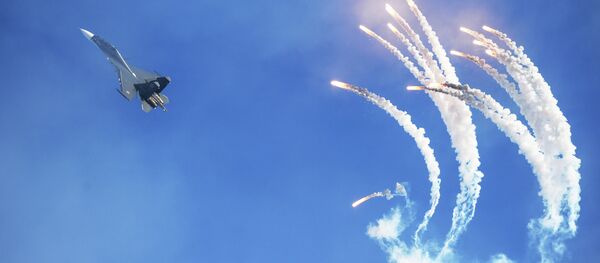
“For any proxy group to succeed they will need to raise the cost of strikes from Russian and Syrian warplanes,” they therefore suggest.
“US-backed rebels have requested anti-aircraft weapons to do just that. It’s unclear whether their requests will be met, but it’s important to note that it was exactly this type of weapon that ultimately turned the tide of war for the mujahideen in the 1980s, when Russian helicopters began to tumble from the sky.”
“If Riyadh wants to arm the next wave of jihadists to target Russia, armed they shall be,” the authors rather boldly proclaim.