"The EU is being endangered and no doubt, the situation is extremely alarming. No one can say whether the EU will exist in its current form ten years later," Schulz said.
According to him, "it is absurd to believe that each country can cope with the global challenges of the 21st century, including migration, terrorism, climate change and international crime."
Schulz lamented the fact that some EU member states are interested in weakening the EU, while at the same time accusing Brussels of failing to solve the main modern-day challenges.
The EU elite sees every crisis as an opportunity to extend EU power and marginalise nation states. It's time they were put in their place.
— Hmmmph (@scepticalists) 16 декабря 2015
As an example, he referred to some EU countries' unwillingness to grapple with the migration crisis, with only five countries, Greece, Italy, Austria, Germany and Sweden, currently bearing the burden.
EU has comprehensive strategy for migration crisis but implementation too slow. We need to speed up on all fronts
— Donald Tusk (@eucopresident) 15 декабря 2015
"If we distributed one million refugees among the 508 million citizens of 28 EU countries, we would have coped with this problem," Schulz said.
On the resumption of negotiations with Turkey on its accession to the EU, Schulz stressed the necessity of openly discussing difficult issues on the matter, such as freedom of the press and the ongoing conflict between the Turkish government and the country's Kurdish minority.
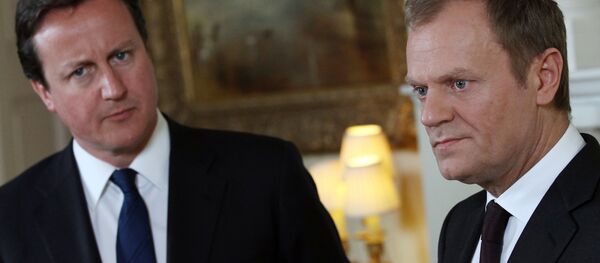
"Some of the requirements of the British Prime Minister David Cameron are very difficult to implement as they relate to the basic freedoms of the internal market," Schultz said, warning against restricting freedom of citizens' movement.
At the same time, he underscored the importance of British proposals aimed at transforming the EU into a more dynamic project, something that he said will hopefully lead to a mutually advantageous agreement.