Donald Trump's determination to reconsider the US' international agreements on the basis of the "America First" principle has prompted blowback from Europe.
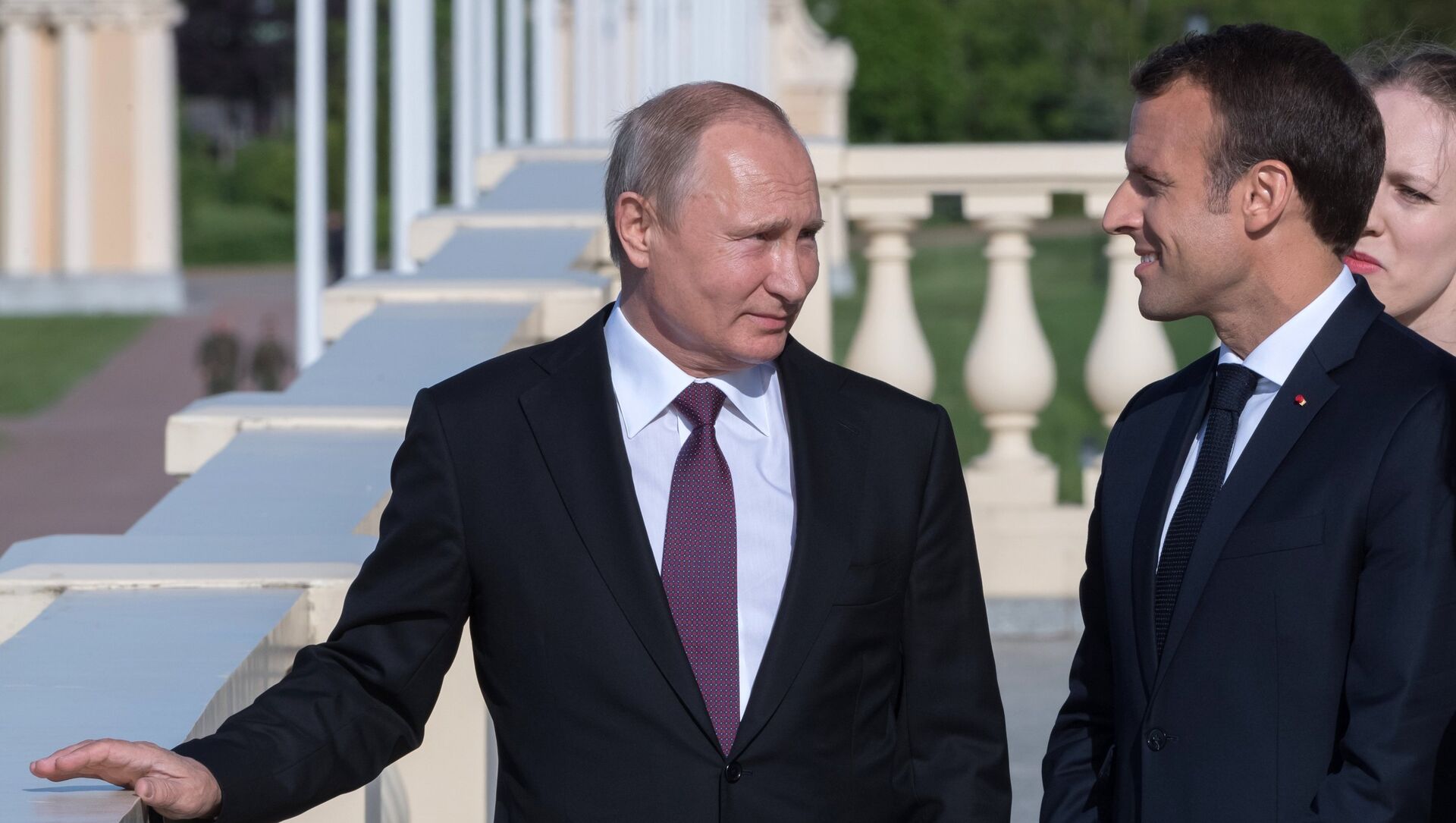
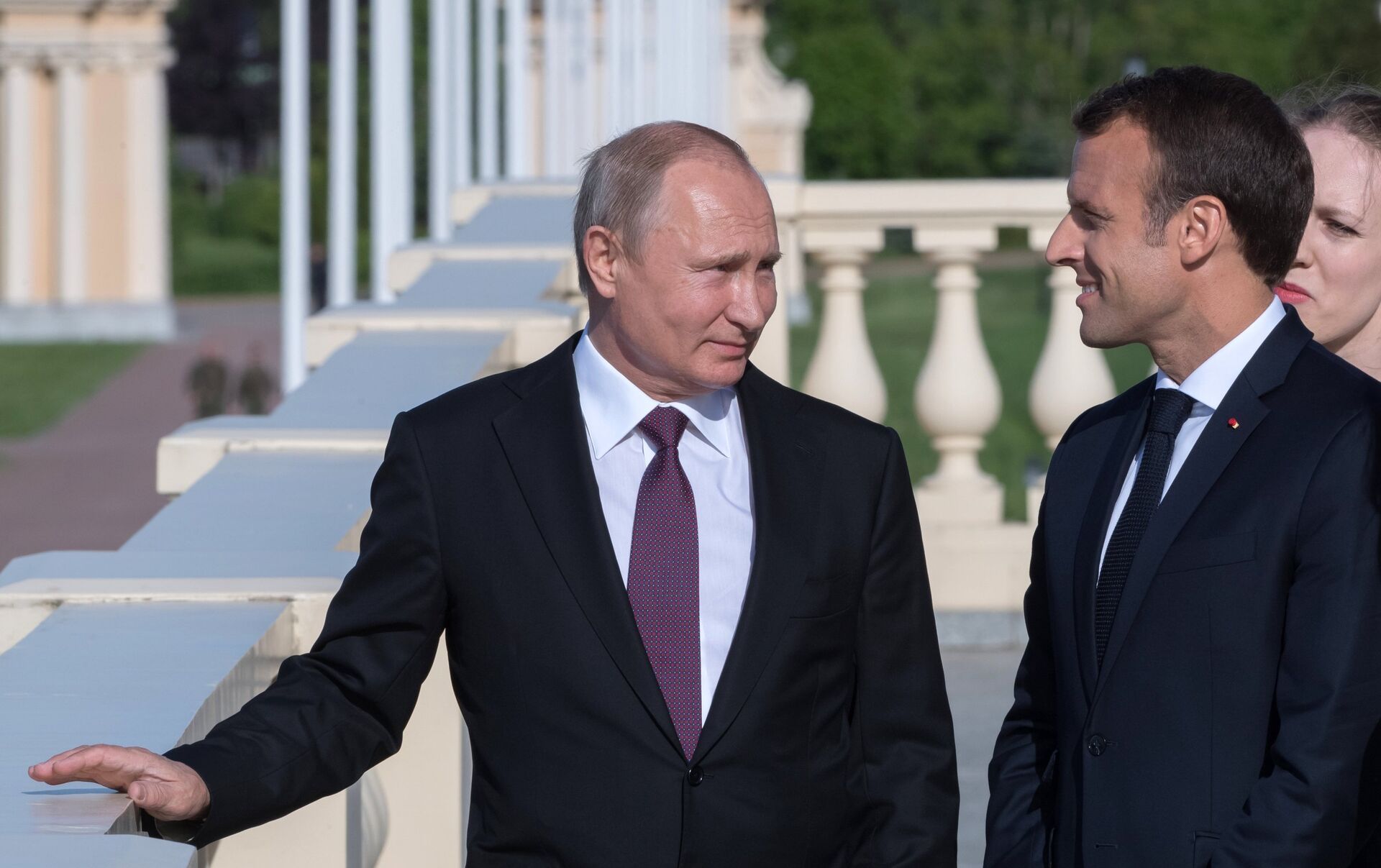
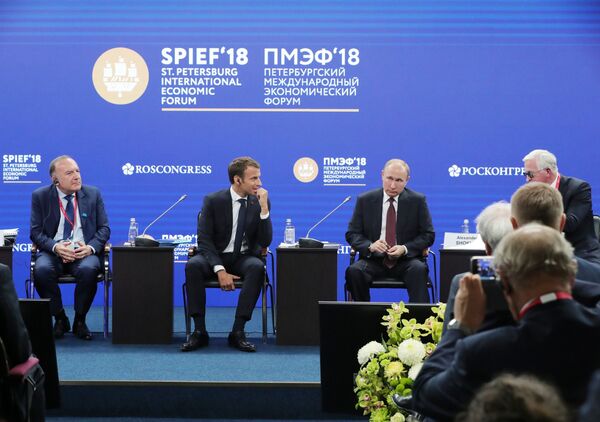
"We must work to boost cross-investments and to achieve financial independence of Europe. It is necessary, if we want to reach our strategic goals, to achieve individual and autonomous financing of these projects and strategies. It is necessary to separate some spheres from geopolitical ones, from politicization," French President Emmanuel Macron stated at the St. Petersburg International Economic Forum in Russia.
Addressing the forum, Macron insisted on the necessity to restore the EU-Russian relationship, stressing that he was "ready" for this. "The window of opportunity exists, it is now, and if we don't take it, it can close again," the French president underscored.
Trump's trade politics and his unilateral withdrawal from the Joint Comprehensive Plan of Action (JCPOA), also known as the Iran nuclear deal, have apparently prompted the US' European partners to reconsider their foreign strategy in order to ensure their economic interests. A number of European companies, including Airbus and Total, have already fallen prey to Washington's decision on Iran.
The US' trade protectionism has triggered criticism from Brussels and the International Monetary Fund (IMF).
"There are darkening clouds from the risk of a retreat from global trade and multilateral cooperation," IMF chief Christine Lagarde told the forum, adding that "protectionism hurts the poor especially hard."
At the same time, Lagarde lauded Russia.
"Russia in many ways is setting the standard of excellence when it comes to macroeconomic standards. The way that you look at fiscal policy, inflation situation, the debt situation, all those levels are very much setting the standards of excellence," she highlighted.
Macron Taking Lead in Europe's Apparent Shift to Russia
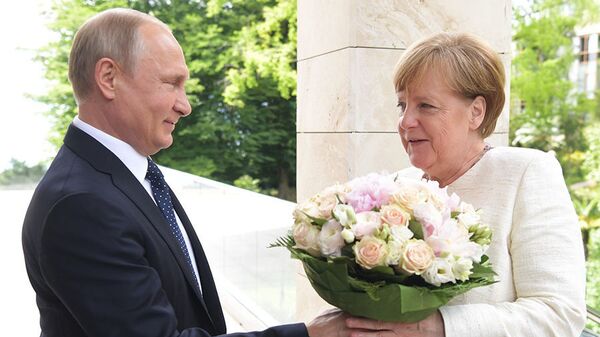
German Chancellor Angela Merkel's visit to Russia was largely seen as a first sign of an apparent thaw between Europe and Russia.

At the same time, the May 18 Merkel-Putin summit in the Russian resort city of Sochi has not translated into a meaningful breakthrough, as the German chancellor was largely focused on the Ukrainian issue and human rights problems.
However, it appears that the French president is ready to go further. Macron's determination to bolster Russian-French ties could put him at the forefront of a Russian vector of European policy. Along with Austria, Italy and the Balkan states, France may facilitate the formation of a new pro-Russian bloc.
"France realizes that Russia is a neighbor," Gino Raymond, professor of French Studies at the University of Bristol, opined in an interview with Radio Sputnik. "It's a neighbor that Europe and France have to engage with in order to look for common solutions to common challenges."
For his part, Dr. Paul Sanders, associate professor at the NEOMA business school, told Sputnik that by turning to Russia "the Europeans [are] really trying to develop other options than just relying on the US."
Anti-Russian Sanctions as a Stumbling Block
The issue of the anti-Russian sanctions was raised by Paolo Grimoldi, a member of the Italian parliament representing the Lega party, on the sidelines of the St. Petersburg forum.
"A new government would raise an issue of lifting the anti-Russia sanctions. We know that we would come under pressure, [the lifting of sanctions] would be a very difficult process, but we are committed to becoming the first European government with a platform focusing on it in its policy," Grimoldi told Sputnik.
The Italian parliamentary elections held on March 4 resulted in the sweeping victory of center-right parties that admit the necessity to improve ties with Russia. The Five Star Movement (M5S) secured more than 32 percent of the vote, while the coalition of Lega, center-right Forza Italia and the Brothers of Italy movement, received 37 percent.
Nothing Personal, Just Business: Europe is Guided by Pragmatism
However, Europe's shift to Russia is being dictated by pragmatism. Being hit by the anti-Iranian sanctions, France's Total has jumped at the opportunity to sign an agreement with Novatek PJSC to take a 10 percent stake in Russia's Arctic LNG-2 project.
The Russia-hosted forum brought together representatives from a wide range of countries, including the US, Britain and Sweden, which clearly demonstrated that the idea to isolate Moscow is no longer relevant.
For its part, Russia is signaling that it is ready to resume cooperation with Europe if it is based on mutually beneficial cooperation. Vladimir Putin highlighted that the EU trade turnover with Russia, which amounted to $450 billion, fell by one half last year. However, China stepped in and filled the vacuum.
This means Europe has to take efforts to regain its positions.