Chinese Embassy Demands Respect for 'One China' Principle As Indian MPs Laud Pelosi's Taiwan Visit
06:35 GMT 03.08.2022 (Updated: 12:44 GMT 19.06.2023)
© AP Photo / Taiwan Presidential Office
Subscribe
Soon after US House Speaker Nancy Pelosi landed in Taipei, the People’s Liberation Army’s (PLA) Eastern Theatre Command announced “live fire drills” around all sides of Taiwan, urging civilian ships and aircraft to avoid the area. The Chinese defense ministry has further warned of “targeted military operations” in response to Pelosi’s visit.
The Chinese Embassy in New Delhi has said that the One-China Principle remains the "political foundation" of ties between India and China, hours after US House of Representatives’ Speaker Nancy Pelosi arrived in Taiwan along with a Congressional delegation.
“India is one of the first countries to recognize that there is only one China. The Chinese side is willing to push forward the development of our relations on the basis of the one-China principle,” Chinese embassy spokesman Wang Xiaojian said in a statement on Wednesday morning.
The Chinese official recalled that the supremacy of the “One China principle” has been recognized through the United Nations (UN) General Assembly’s resolution 2758, which was passed in 1971, which Beijing says “restored” its “lawful seat” at the assembly. India at the time backed the resolution and has since then adhered to the One-China Policy.
Wang noted that the Taiwan Strait is facing a “new round” of tensions owing to Pelosi's defiance of previous warnings by China to not go ahead with the controversial trip.
The embassy also hit out at the administration of Taiwanese leader Tsai Ing-Wen for “seeking” US support for independence, promoting the “de-Sinicization agenda” as well as promoting “incremental independence”.
The statement by the Chinese Embassy in New Delhi comes as several Indian parliamentarians have lauded Pelosi’s visit to Taiwan.
Mahesh Jethmalani, an upper house (Rajya Sabha) MP from the ruling Bharatiya Janata Party (BJP), remarked that “no praise can be too high for Pelosi”.
“She has trodden a ground which no other US leader has, belled the Chinese cat in its own backyard. At one stroke, she has challenged Chinese territorial aggression, braved its threats and restored US’ credibility as a reliable ally,” Jethmalani said on Tuesday evening.
Manish Tewari, a former federal minister and an MP from the main opposition Congress party, described Pelosi’s visit as “historic”. Tewari also called upon the Indian lower house (Lok Sabha) speaker Om Birla to “explore a visit” of an Indian parliamentary delegation to Taiwan.
However, Pelosi's visit has also drawn criticism from some Indian strategic experts. Pravin Sawhney, a former Indian Army officer and geopolitical expert, noted that it was "stupid" on the part of the Democrat speaker to undertake her Taiwan trip.
"The Association for Southeast Asian Nations (ASEAN) cannot be happy by great power tensions in its backyard. This (visit) will weaken US’ Indo-Pacific Strategy, pivoted on military power with ASEAN centrality. The US gains nothing by increased adversarial relations with China!" Sawhney tweeted.
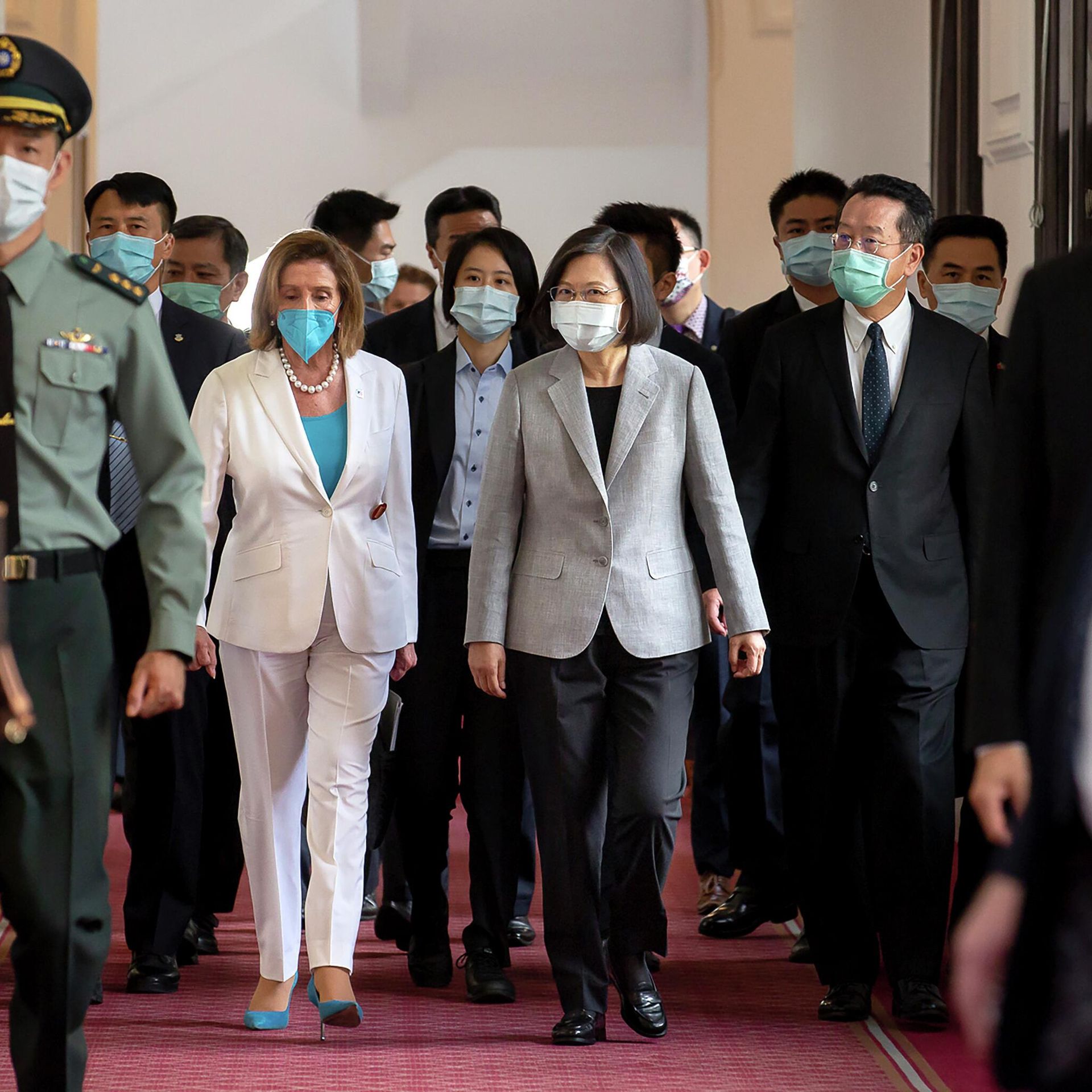
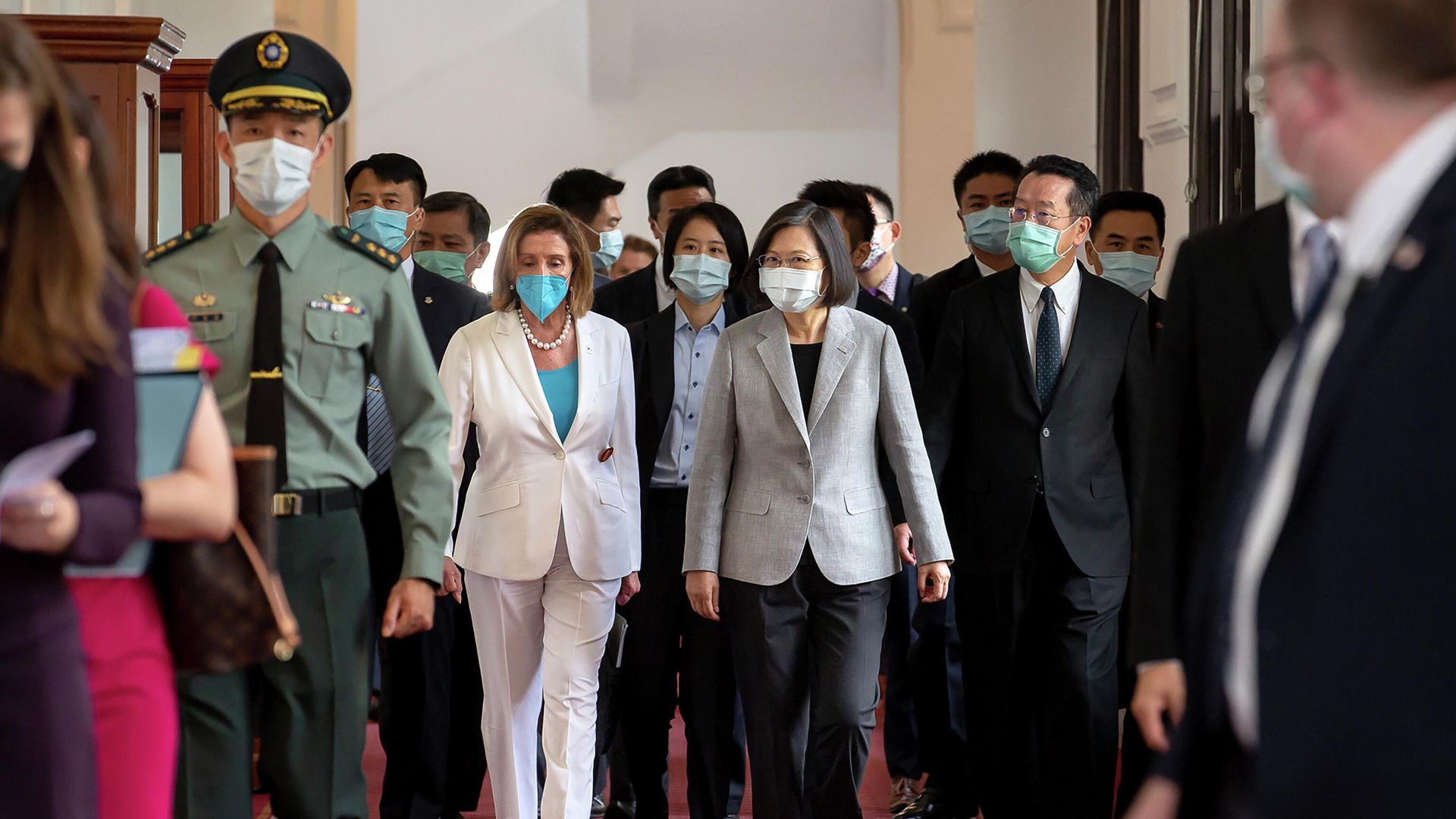
Pelosi became the highest elected American official to visit the self-governed island in 25 years when she landed at Taipei’s Songshan Airport at around 10:00 PM local time.
A press statement from Pelosi's office on July 31 said that the Congressional delegation being led by her would travel to Singapore, Malaysia, South Korea and Japan to focus on “mutual security”. The US delegation was in Singapore on August 1 and in Malaysia the next day, before it arrived in Taipei.
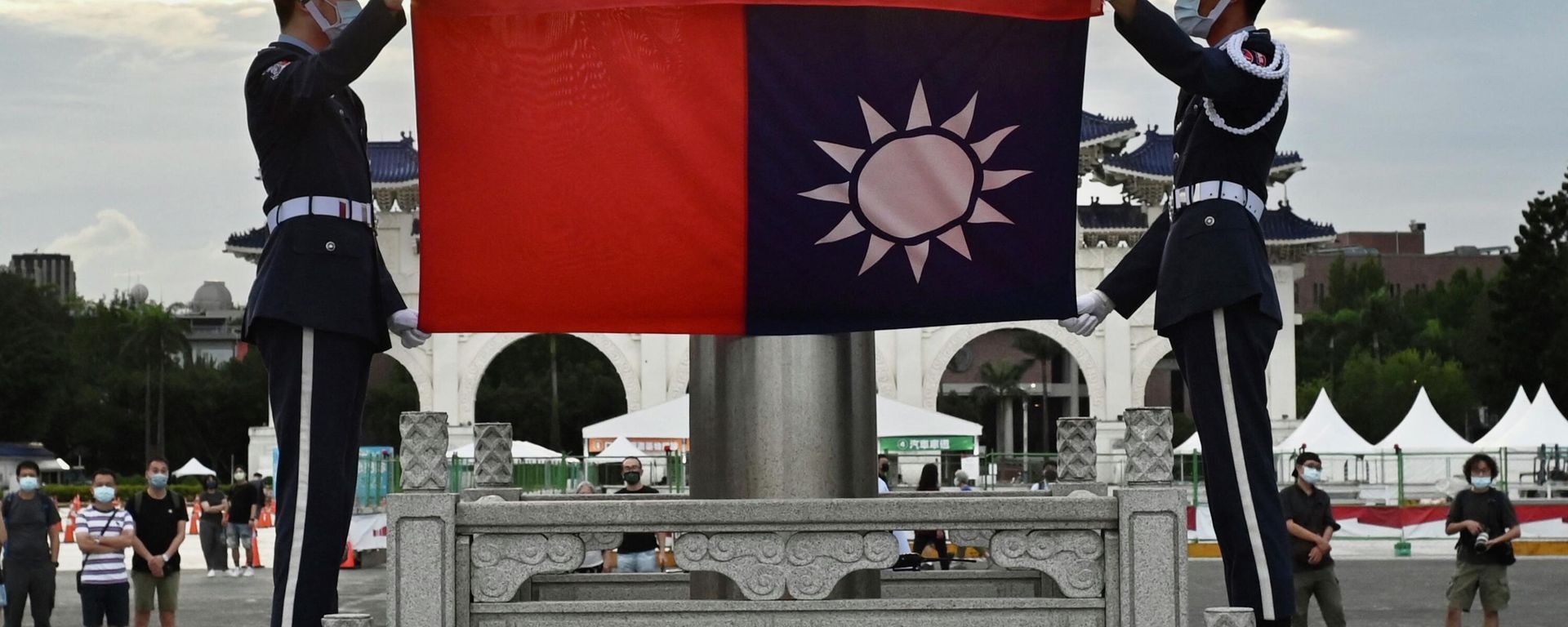
Chinese foreign minister Wang Yi warned Washington against playing the “Taiwan card to disrupt” regional stability in the Asia-Pacific region.
“This move seriously violates the one-China principle, maliciously infringes on China's sovereignty and blatantly engages in political provocations, which has aroused strong indignation among the Chinese people and widespread opposition from the international community,” Wang said in a statement.