https://sputnikglobe.com/20230328/from-columbine-to-covenant-why-the-us-cant-seem-to-escape-the-scourge-of-gun-violence-1108875658.html
From Columbine to Covenant: Why the US Can’t Seem to Escape the Scourge of Gun Violence
From Columbine to Covenant: Why the US Can’t Seem to Escape the Scourge of Gun Violence
Sputnik International
Flags will be flown at half-staff across the United States through the end of March to honor victims of Monday’s school shooting in Nashville, in which three children and three adults were killed by an ex-student. The US has faced over 130 mass shootings so far in 2023. What makes gun control such a prickly issue among Americans? Sputnik explains.
2023-03-28T16:11+0000
2023-03-28T16:11+0000
2023-03-28T16:11+0000
sputnik explains
gun control
guns
shootings
school shootings
mass shootings
explanation
https://cdn.imgsputnikglobe.com/images/sharing/article/eng/1108875658.jpg?1680019861
Americans recoiled in horror Monday in the aftermath of the deadly shooting at Covenant School, with many undoubtedly putting themselves in the shoes of parents of the three children under 10 who were killed.Joe Biden made things worse by holding a press conference about the shooting where he cracked an ill-timed joke about his love for chocolate chip ice cream, renewing debates about whether the president is just tone-deaf or suffering a massive mental decline.Day-to-day politics aside, the shooting is another reminder that almost a quarter century after the 1999 Columbine High School massacre, the scourge of school shootings, and mass shootings in general, continues seemingly unabated.According to data by the Gun Violence Archive, a US non-profit aggregator of stats on gun-related violence, Monday’s incident was at least the 131st mass shooting event in the United States so far this year. Gun-related incidents have claimed nearly 10,000 lives so far this year, including 4,200 victims of homicides, murders and unintentional shootings, and 5,700+ suicides by gun.Gun deaths in America have been creeping up steadily since the 1980s, with a surge in the number of shootings and victims observed over the past decade or so. The United States has consistently proven an outlier among developed countries in terms of shootings, and per capita gun-related crimes outmatched only by a handful of violence and poverty-stricken countries in Latin America and Africa.What’s the Problem?Guns and the American PsycheGun culture is deeply, perhaps inextricably rooted in the mythology of the American psyche.Forged in the gun-based warfare of the American Revolution against the British during the 18th century, and using guns to effect during the conquest of North America as colonist drove west to the Pacific coast, guns have become ingrained in the minds of many owners as a symbol of freedom and independence. This ideology is fed by American popular culture, and the prevalence of guns in films, television, music, video games, and other entertainment.Guns are also protected by the Constitution, which grants citizens the “right to keep and bear arms.” The document’s framers explicitly argued that gun rights aren’t just about individual rights, but a check on federal government overreach into states’ affairs.The famous Jefferson quote “The tree of liberty must be refreshed from time to time with the blood of patriots and tyrants,” helps to define precisely why many Americans, particularly in conservative Red states, profusely refuse to entertain strict, European-style gun control. Instead, many argue, gun safety can be assured through background checks and perhaps some support for mental health initiatives.There’s No Business Like War BusinessAlong with legal, psychological and cultural reasons, the popularity and prevalence of guns in the United States is explicable by the fact that they’re simply good for business. The rescue of the American economy during the Second World War through the mass production of weaponry may have taken the country out of the Great Depression, but it also left an indelible mark on America, which subsequently turned into the world’s largest arms exporter.While the domestic impact of the country’s militarization has yet to be measured to effect by sociologists, it was touched on by filmmaker Michael Moore in his 2002 documentary Bowling for Columbine during an interview with a spokesman at a Lockheed Martin missile plant, one of the main employers of the town in which the Columbine massacre took place.While the money the US military-industrial complex makes on small arms sales is overshadowed by contracts with the military and foreign arms sales (about $28 billion compared to $145.6 billion and $153.7 billion, respectively), gun sales are a highly lucrative industry not only to gun makers, but to retailers, with some 16.4 million sold in 2022.How Effective Has Government Action Been?Last month marked the fifth anniversary of the Parkland massacre – a deadly school shooting that claimed the lives of 17 people and injured 17 others. While the killings sparked widespread protests and activism, and promises by politicians from both side of the aisle to act, no serious measures were enacted until last year, and another massacre at Robb Elementary School in Uvalde, Texas, where 22 people were killed and 18 injured.That attack sparked renewed gun control discussions, and the passage of the Bipartisan Safer Communities Act, which enacted new background checks for gun buyers under the age of 21, federal support for state red flag laws (which allow courts to temporarily remove firearms from individuals deemed to pose a danger to themselves and others), and the partial closure of some loopholes –such as the purchase of firearms by a third party. Almost a dozen states implemented additional, state-level legislation, including tightened background checks, the outlawing of high-capacity magazines, and limits on where guns can be open-carried.The Bipartisan Safer Communities Act was hailed as the first federal-level gun control legislation in decades, but in the wake of the continued epidemic of mass shootings, the jury is still out on its effectiveness.
https://sputnikglobe.com/20230328/you-think-im-kidding-biden-starts-conference-after-nashville-shooting-with-a-joke-1108850735.html
https://sputnikglobe.com/20230328/over-130-mass-shootings-in-us-since-beginning-of-2023-npo-1108870485.html
https://sputnikglobe.com/20230215/five-years-after-the-parkland-shooting-not-much-has-been-done-to-combat-us-gun-violence-1107443567.html
Sputnik International
feedback@sputniknews.com
+74956456601
MIA „Rossiya Segodnya“
2023
News
en_EN
Sputnik International
feedback@sputniknews.com
+74956456601
MIA „Rossiya Segodnya“
Sputnik International
feedback@sputniknews.com
+74956456601
MIA „Rossiya Segodnya“
gun violence, guns, fire arms, weapons, mass schooting, school shooting
gun violence, guns, fire arms, weapons, mass schooting, school shooting
From Columbine to Covenant: Why the US Can’t Seem to Escape the Scourge of Gun Violence
Flags will be flown at half-staff across the United States through the end of March to honor victims of Monday’s school shooting in Nashville, in which three children and three adults were killed by an ex-student. The US has faced over 130 mass shootings so far in 2023. What makes gun control such a prickly issue among Americans? Sputnik explains.
Americans recoiled in horror Monday in the aftermath of the deadly shooting at Covenant School, with many undoubtedly putting themselves in the shoes of parents of the three children under 10 who were killed.
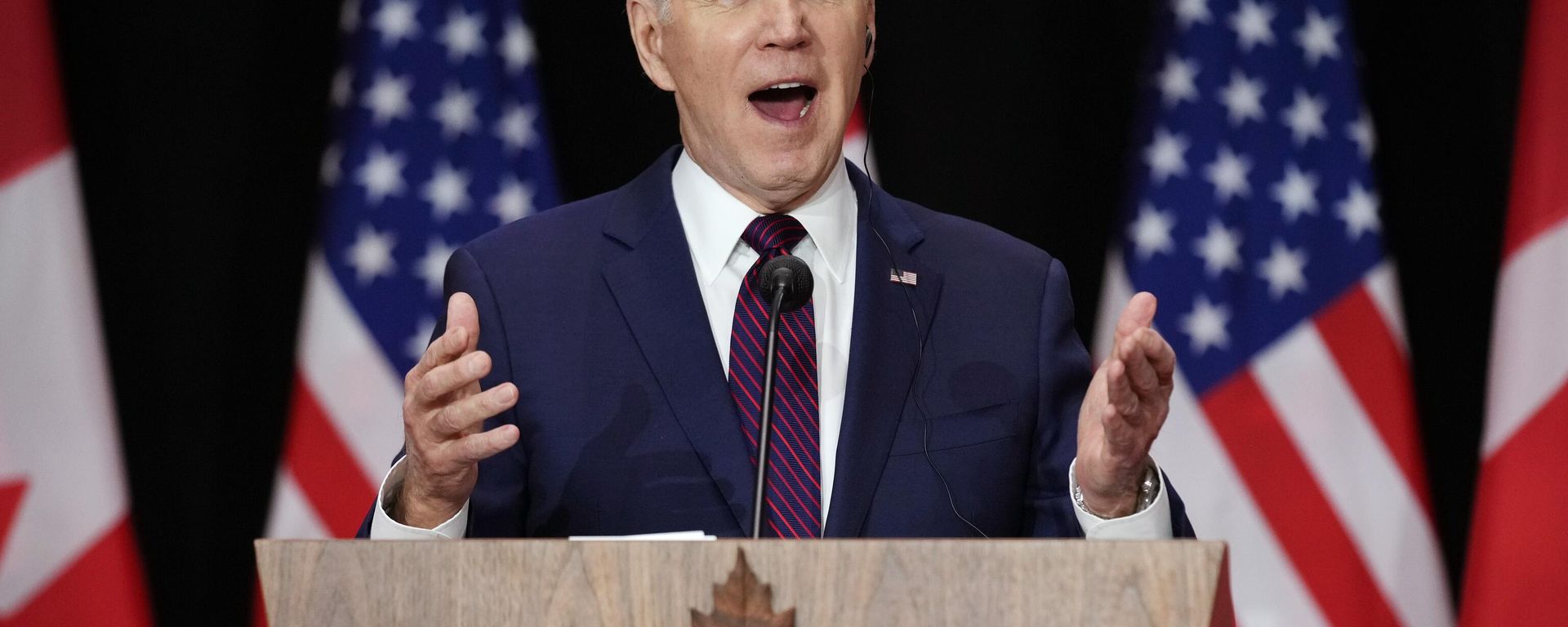
Joe Biden made things worse by holding a press conference about the shooting where he
cracked an ill-timed joke about his love for chocolate chip ice cream, renewing debates about whether the president is just tone-deaf or suffering a massive mental decline.
Day-to-day politics aside, the shooting is another reminder that almost a quarter century after the 1999 Columbine High School massacre, the scourge of school shootings, and mass shootings in general, continues seemingly unabated.
According to
data by the Gun Violence Archive, a US non-profit aggregator of stats on gun-related violence, Monday’s incident was at least the 131st mass shooting event in the United States so far this year. Gun-related incidents have claimed nearly 10,000 lives so far this year, including 4,200 victims of homicides, murders and unintentional shootings, and 5,700+ suicides by gun.
Gun deaths in America have been
creeping up steadily since the 1980s, with a surge in the number of shootings and victims observed over the past decade or so. The United States has consistently proven an outlier among developed countries in terms of shootings, and per capita gun-related crimes
outmatched only by a handful of violence and poverty-stricken countries in Latin America and Africa.
Guns and the American Psyche
Gun culture is deeply, perhaps inextricably rooted in the mythology of the American psyche.
“You see, guns are America. The history of the gun is the history of this country,” Mr. Vogel, an eccentric gun collector, explained to officers in the squad room of Manhattan’s fictional 12th Precinct in an episode of the legendary 1970s cop show Barney Miller. “From the pilgrims’ Blunderbuss to the Winchester, the Colt, why even the snub-nose .38 you carry…Culminating in the ultimate gun – the atomic bomb. The one that may make all other guns obsolete,” the character added.
Forged in the gun-based warfare of the American Revolution against the British during the 18th century, and using guns to effect during the conquest of North America as colonist drove west to the Pacific coast, guns have become ingrained in the minds of many owners as a symbol of freedom and independence. This ideology is fed by American popular culture, and the prevalence of guns in films, television, music, video games, and other entertainment.
Guns are also protected by the Constitution, which grants citizens the “right to keep and bear arms.” The document’s framers explicitly argued that gun rights aren’t just about individual rights, but a check on federal government overreach into states’ affairs.
The famous Jefferson quote “The tree of liberty must be refreshed from time to time with the blood of patriots and tyrants,” helps to define precisely why many Americans, particularly in conservative Red states, profusely refuse to entertain strict, European-style gun control. Instead, many argue, gun safety can be assured through background checks and perhaps some support for mental health initiatives.
There’s No Business Like War Business
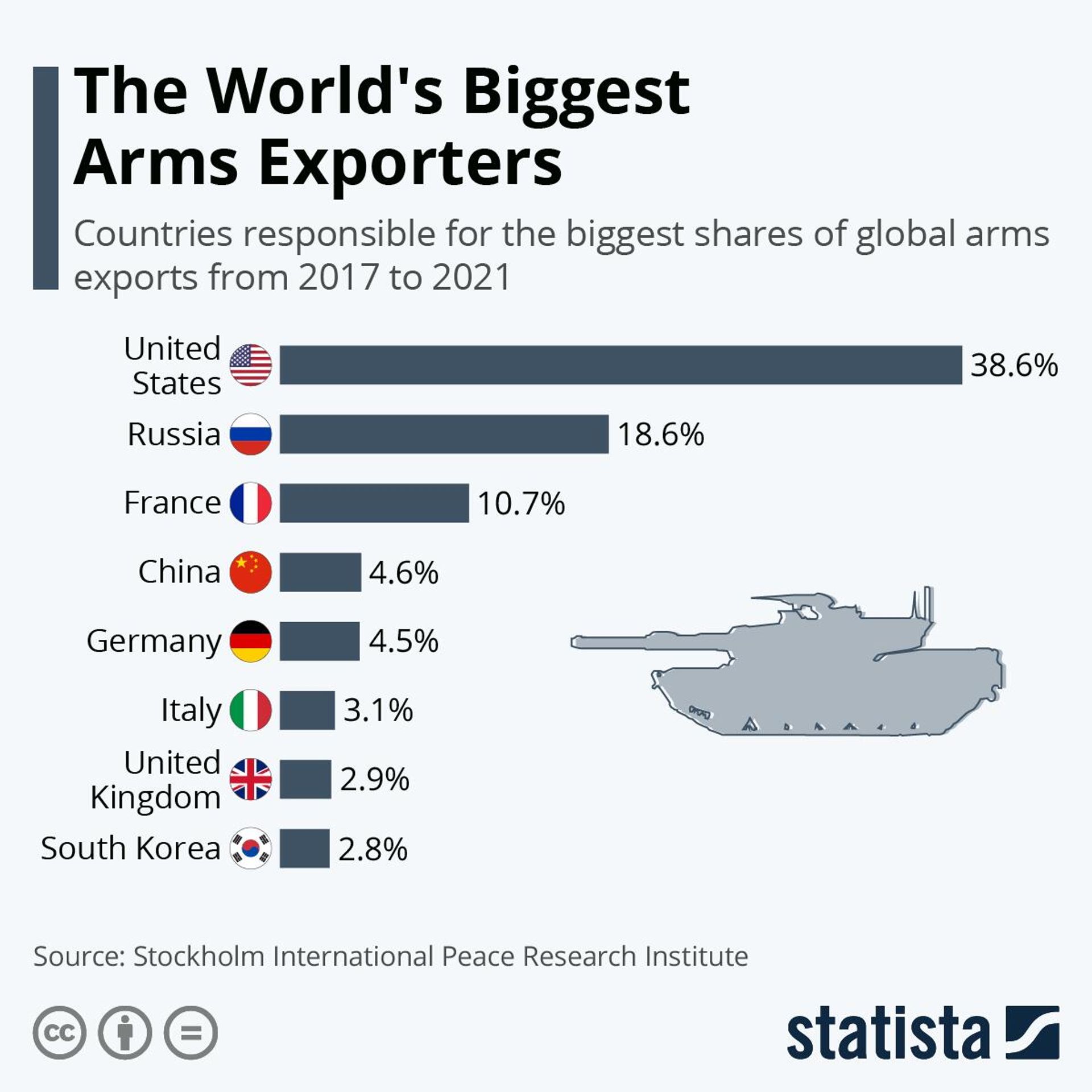
Along with legal, psychological and cultural reasons, the popularity and prevalence of guns in the United States is explicable by the fact that they’re simply good for business. The rescue of the American economy during the Second World War through the mass production of weaponry may have taken the country out of the Great Depression, but it also left an indelible mark on America, which subsequently turned into the world’s largest arms exporter.
While the domestic impact of the country’s militarization has yet to be measured to effect by sociologists, it was touched on by filmmaker Michael Moore in his 2002 documentary Bowling for Columbine during an interview with a spokesman at a Lockheed Martin missile plant, one of the main employers of the town in which the Columbine massacre took place.
“So you don’t think our kids say to themselves ‘Dad goes off to the factory every day, he builds missiles of mass destruction’. What’s the difference between that mass destruction and the mass destruction over at Columbine High School?” Moore
asked.
While the money the US military-industrial complex makes on small arms sales is overshadowed by contracts with the military and foreign arms sales (about
$28 billion compared to
$145.6 billion and
$153.7 billion, respectively), gun sales are a highly lucrative industry not only to gun makers, but to retailers, with some
16.4 million sold in 2022.
How Effective Has Government Action Been?
Last month
marked the fifth anniversary of the Parkland massacre – a deadly school shooting that claimed the lives of 17 people and injured 17 others. While the killings sparked widespread protests and activism, and promises by politicians from both side of the aisle to act, no serious measures were enacted until last year, and another massacre at Robb Elementary School in Uvalde, Texas, where 22 people were killed and 18 injured.
That attack sparked renewed gun control discussions, and the passage of the
Bipartisan Safer Communities Act, which enacted new background checks for gun buyers under the age of 21, federal support for state red flag laws (which allow courts to temporarily remove firearms from individuals deemed to pose a danger to themselves and others), and the partial closure of some loopholes –such as the purchase of firearms by a third party. Almost a dozen states implemented additional, state-level legislation, including tightened background checks, the outlawing of high-capacity magazines, and limits on where guns can be open-carried.
The Bipartisan Safer Communities Act was hailed as the first federal-level gun control legislation in decades, but in the wake of the continued epidemic of mass shootings, the jury is still out on its effectiveness.

15 February 2023, 03:47 GMT