https://sputnikglobe.com/20230926/archaeologists-unearth-rare-lead-sarcophagi-inside-largest-cemetery-ever-found-in-gaza-1113669637.html
Archaeologists Unearth Rare Lead Sarcophagi Inside Largest Cemetery Ever Found in Gaza
Archaeologists Unearth Rare Lead Sarcophagi Inside Largest Cemetery Ever Found in Gaza
Sputnik International
Palestinian laborers, while working on a housing project near Jabaliya in the northern Gaza Strip, uncovered an archaeological treasure trove last year.
2023-09-26T01:25+0000
2023-09-26T01:25+0000
2023-12-05T09:22+0000
beyond politics
science & tech
ancient history
archeology
archaeology
gaza strip
https://cdn.imgsputnikglobe.com/img/07e7/09/1a/1113669478_0:320:3072:2048_1920x0_80_0_0_2fbe4dda2b5eed607c8348e2d02ecfea.jpg
What was once an unremarkable construction site in the northern Gaza Strip more recently became the site of the largest-ever cemetery dating back approximately two millennia to the Roman era.Construction workers, with the assistance of French archaeologists, have meticulously excavated the 2,700-square-meter site, unearthing a remarkable 135 graves - a stark contrast from the initial discovery of just 60 graves in January.Over 100 of the graves have been studied, providing invaluable insights into the cultural heritage and health of the ancient population. The analysis of skeletons and pottery shards remains ongoing.What has truly captured the attention of experts are the two lead sarcophagi found at the site. One of them is intricately adorned with grape leaves, while the other features captivating images of dolphins. Such lead tombs are unprecedented in Gaza's archaeological history and suggest high-ranking individuals or social elites may be interred within them.The discovery has opened up new avenues for understanding the socio-cultural dynamics of the region during the Roman era.Gaza, with its strategic location on ancient trade routes between Egypt and the Levant, has a rich historical legacy. However, this heritage has faced multiple threats over the years. The recent archaeological find underscores the importance of preserving Gaza's historical sites and the need for a dedicated team to oversee such efforts.Fadel Al-Otul, a Palestinian archaeologist, believes the graves were likely located in a city center, as was common practice in Roman times. The skeletons discovered at the site will undergo further analysis, with the remains eventually returning to the Hamas-led Ministry of Antiquities and Tourism.
https://sputnikglobe.com/20230921/new-undersea-find-off-egyptian-coast-reveals-wealth-of-ancient-pharaohs-greeks-1113547416.html
gaza strip
Sputnik International
feedback@sputniknews.com
+74956456601
MIA „Rossiya Segodnya“
2023
News
en_EN
Sputnik International
feedback@sputniknews.com
+74956456601
MIA „Rossiya Segodnya“
Sputnik International
feedback@sputniknews.com
+74956456601
MIA „Rossiya Segodnya“
jabaliya, gaza strip, palestinian israeli archaeology, middle east archeology, ancient sarcophagus, lead tombs in gaza
jabaliya, gaza strip, palestinian israeli archaeology, middle east archeology, ancient sarcophagus, lead tombs in gaza
Archaeologists Unearth Rare Lead Sarcophagi Inside Largest Cemetery Ever Found in Gaza
01:25 GMT 26.09.2023 (Updated: 09:22 GMT 05.12.2023) Located near Jabaliya in northern Gaza, the dig site was uncovered during construction work for an Egyptian-funded housing project last year, and has revealed over 100 ancient graves.
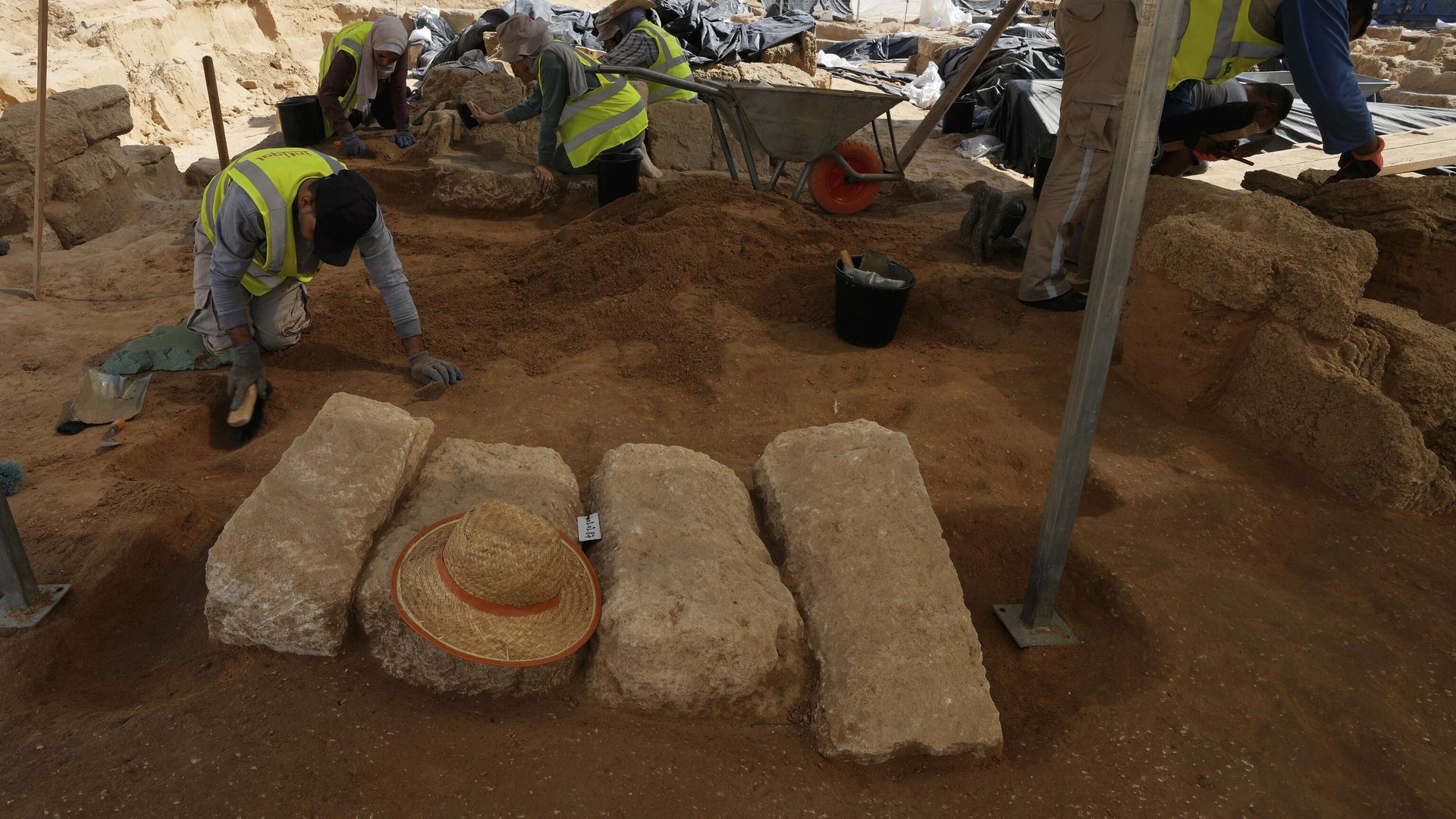
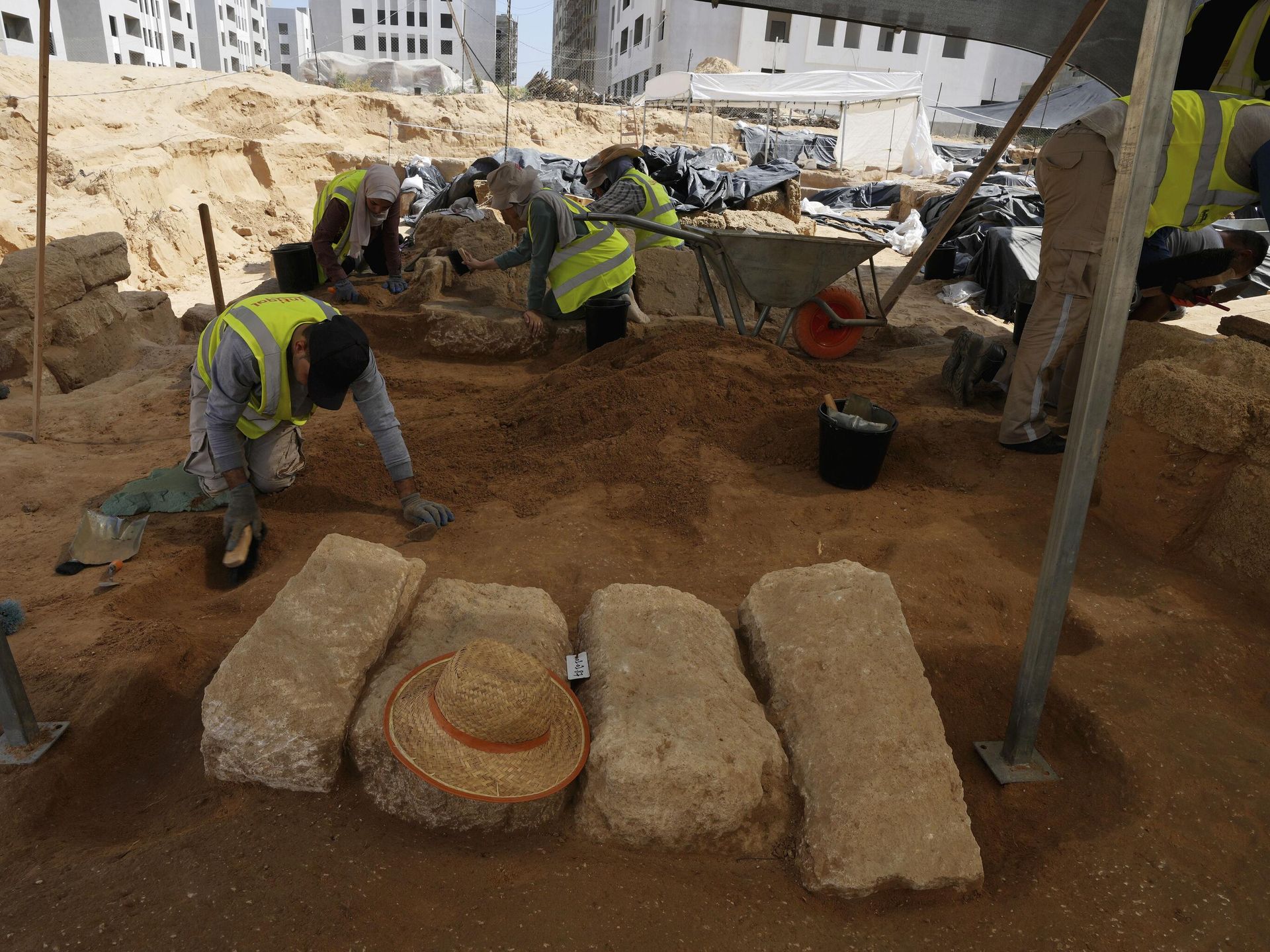
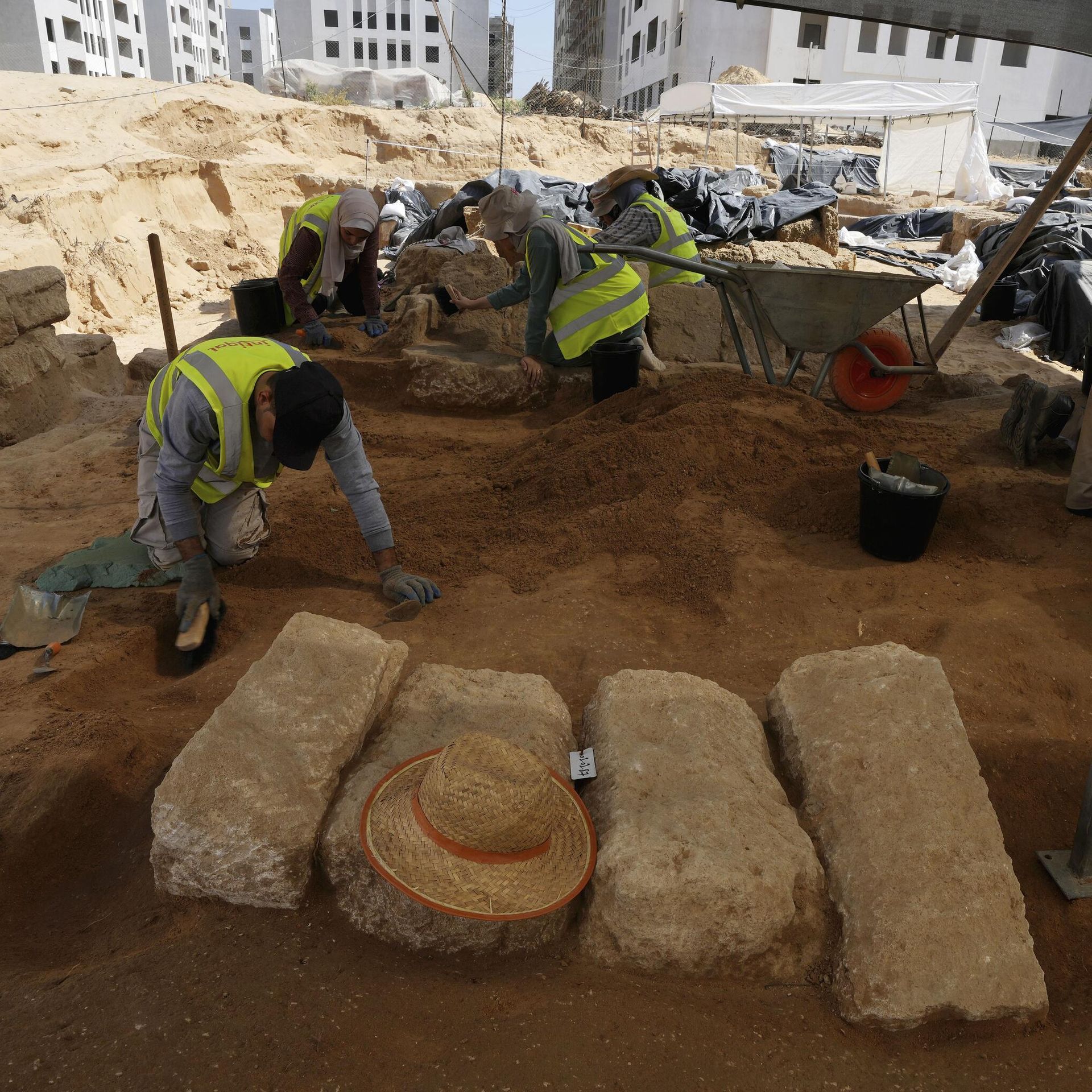
What was once an unremarkable construction site in the northern Gaza Strip more recently became the site of the largest-ever cemetery dating back approximately two millennia to the Roman era.
Construction workers, with the assistance of French archaeologists, have meticulously excavated the 2,700-square-meter site, unearthing a remarkable 135 graves - a stark contrast from the initial discovery of just 60 graves in January.
"All of these tombs have almost already been excavated and have revealed a huge amount of information about the cultural material and also about the state of health of the population and the pathologies from which this population may have suffered," said Rene Elte, the head of archaeology for "Intiqal," a program managed by the French nonprofit Première Urgence Internationale.
Over 100 of the graves have been studied, providing invaluable insights into the cultural heritage and health of the ancient population. The analysis of skeletons and pottery shards remains ongoing.
What has truly captured the attention of experts are the two lead sarcophagi found at the site. One of them is intricately adorned with grape leaves, while the other features captivating images of dolphins. Such lead tombs are unprecedented in Gaza's archaeological history and suggest high-ranking individuals or social elites may be interred within them.
The discovery has opened up new avenues for understanding the socio-cultural dynamics of the region during the Roman era.
21 September 2023, 02:38 GMT
Gaza, with its strategic location on ancient trade routes between Egypt and the Levant, has a rich historical legacy. However, this heritage has faced multiple threats over the years. The recent archaeological find underscores the importance of preserving Gaza's historical sites and the need for a dedicated team to oversee such efforts.
"The Gazans deserve to tell their stories. Gaza boasts a plethora of potential archaeological sites, but monitoring each one, given the rapid pace of development, is no small feat," said Elter emphasizing the significance of documenting and preserving Gaza's archaeological heritage.
Fadel Al-Otul, a Palestinian archaeologist, believes the graves were likely located in a city center, as was common practice in Roman times. The skeletons discovered at the site will undergo further analysis, with the remains eventually returning to the Hamas-led Ministry of Antiquities and Tourism.