https://sputnikglobe.com/20230930/astronomers-obtain-first-ever-evidence-of-m87-black-hole-rotation-1113815236.html
Astronomers Obtain First-Ever Evidence of M87 Black Hole Rotation
Astronomers Obtain First-Ever Evidence of M87 Black Hole Rotation
Sputnik International
This monumental discovery, achieved through a comprehensive analysis of over two decades' worth of observations, sheds light on one of the universe's most enigmatic entities.
2023-09-30T04:07+0000
2023-09-30T04:07+0000
2023-09-30T04:07+0000
beyond politics
science & tech
hubble space telescope
space
space exploration
black hole
black holes
https://cdn.imgsputnikglobe.com/img/07e7/09/1e/1113815439_0:37:700:431_1920x0_80_0_0_30ed19250322e5dd3419352235884e4f.jpg
Since the historic release of the first-ever image of a black hole in 2019, the mysterious behemoth at the center of the M87 galaxy has continued to captivate astronomers and the public alike. Now, a team of researchers from around the world has unveiled a new dimension of the black hole's character – its rotation.Utilizing a global network comprising more than 20 telescopes, scientists meticulously examined 170 observations gathered between 2000 and 2022. Although the intense gravitational forces within a black hole's event horizon render the interior invisible, the researchers turned their attention to the spectacular jet emanating from the black hole, spanning an astonishing 4,900 light years.The researchers observed that the black hole within M87 was gradually altering the angle of its jet by approximately 10 degrees before returning to its original orientation, a cycle taking approximately 11 years to complete. This intriguing variation in the jet's tilt provided the conclusive evidence of a spinning black hole.The phenomenon of a rotating black hole is accompanied by frame-dragging, whereby the black hole's rotation distorts the surrounding space-time, causing the accretion disk and jet to tilt sideways. The scientists stressed the significance of their meticulous observations over two decades and comprehensive analysis in achieving this milestone.Most black holes are believed to rotate at nearly the speed of light, a phenomenon already confirmed in some instances: in 2013, a black hole at the center of the NGC 1365 galaxy, roughly 60 million light-years away, was found to rotate at a remarkable 84 percent of the speed of light. Similarly, in 2019, scientists inferred the rotation of another black hole at 50 percent of the speed of light using X-ray pulse patterns.The high rotation speeds of black holes are attributed to the conservation of angular momentum when matter collapses into them, causing a dramatic increase in rotational speed, akin to how an ice skater spins faster by pulling in their arms. This discovery of the M87 black hole's spin adds another piece to the complex puzzle of these celestial enigmas and deepens our understanding of the cosmos.The study was published in Nature journal.
https://sputnikglobe.com/20230926/researchers-expect-breathtaking-discoveries-from-solar-eclipse---nasa-scientist-1113705743.html
Sputnik International
feedback@sputniknews.com
+74956456601
MIA „Rossiya Segodnya“
2023
News
en_EN
Sputnik International
feedback@sputniknews.com
+74956456601
MIA „Rossiya Segodnya“
Sputnik International
feedback@sputniknews.com
+74956456601
MIA „Rossiya Segodnya“
m87 black hole, space studies, blach hole studies, does black rotate, black hole gravitation forces,
m87 black hole, space studies, blach hole studies, does black rotate, black hole gravitation forces,
Astronomers Obtain First-Ever Evidence of M87 Black Hole Rotation
Scientists have confirmed that the supermassive black hole at the heart of Messier 87 (M87) is indeed spinning. This monumental discovery, achieved through a comprehensive analysis of over two decades' worth of observations, sheds light on one of the universe's most enigmatic entities.
Since the historic release of the first-ever image of a black hole in 2019, the mysterious behemoth at the center of the M87 galaxy has continued to captivate astronomers and the public alike. Now, a team of researchers from around the world has unveiled a new dimension of the black hole's character – its rotation.
"We are thrilled by this significant finding. Since the misalignment between the black hole and the disk is relatively small and the precession period is around 11 years, accumulating high-resolution data tracing M87's structure over two decades and thorough analysis are essential to obtain this achievement," aid CUI Yuzhu, a postdoctoral researcher at Zhejiang Lab and lead & corresponding author of the paper.
Utilizing a global network comprising more than 20 telescopes, scientists meticulously examined 170 observations gathered between 2000 and 2022. Although the intense gravitational forces within a black hole's event horizon render the interior invisible, the researchers turned their attention to the spectacular jet emanating from the black hole, spanning an astonishing 4,900 light years.
This jet, initially observed in 1918 and later captured by the Hubble Space Telescope, appeared to move nearly five times faster than the speed of light due to an optical illusion known as superluminal motion.
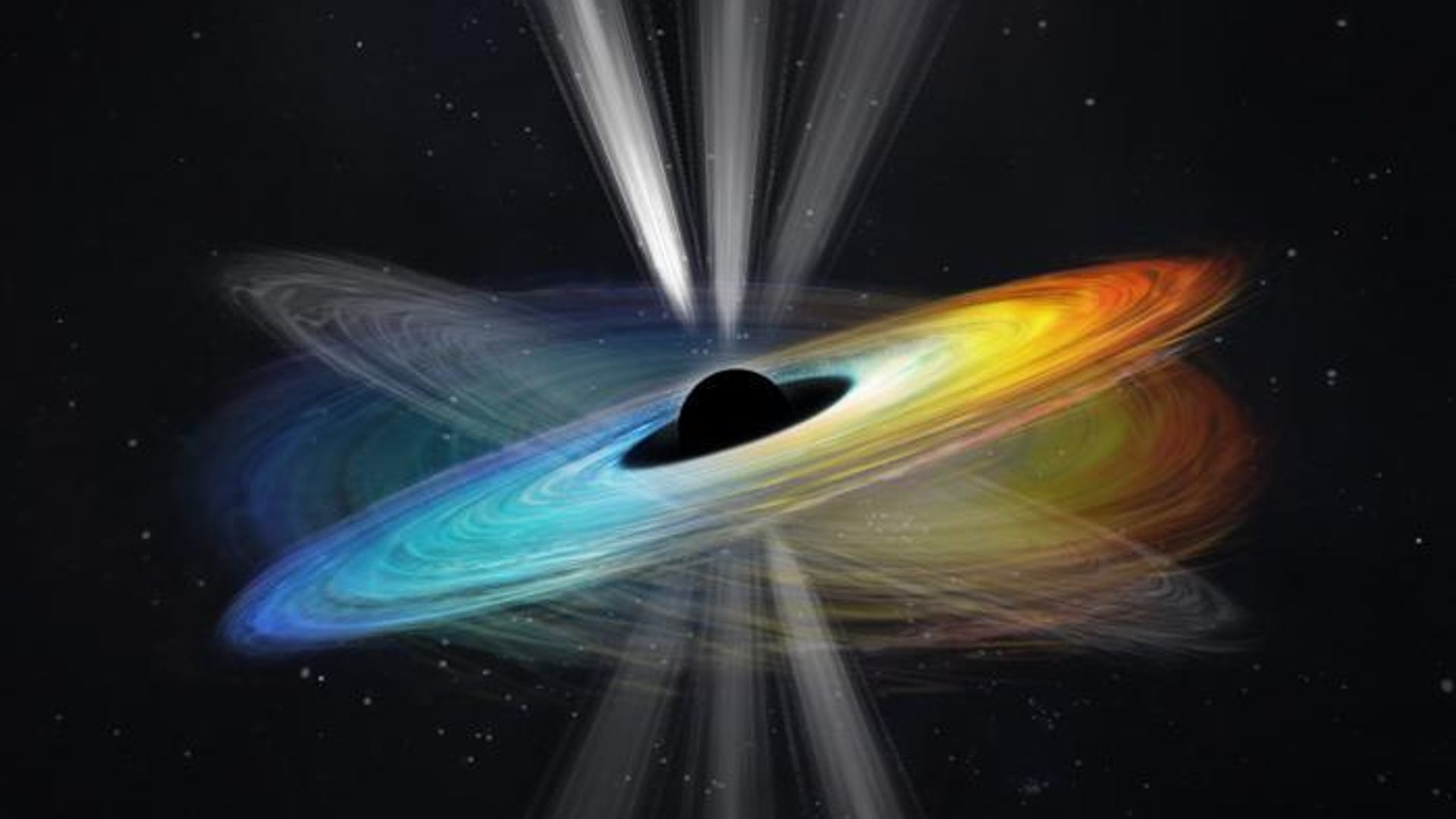
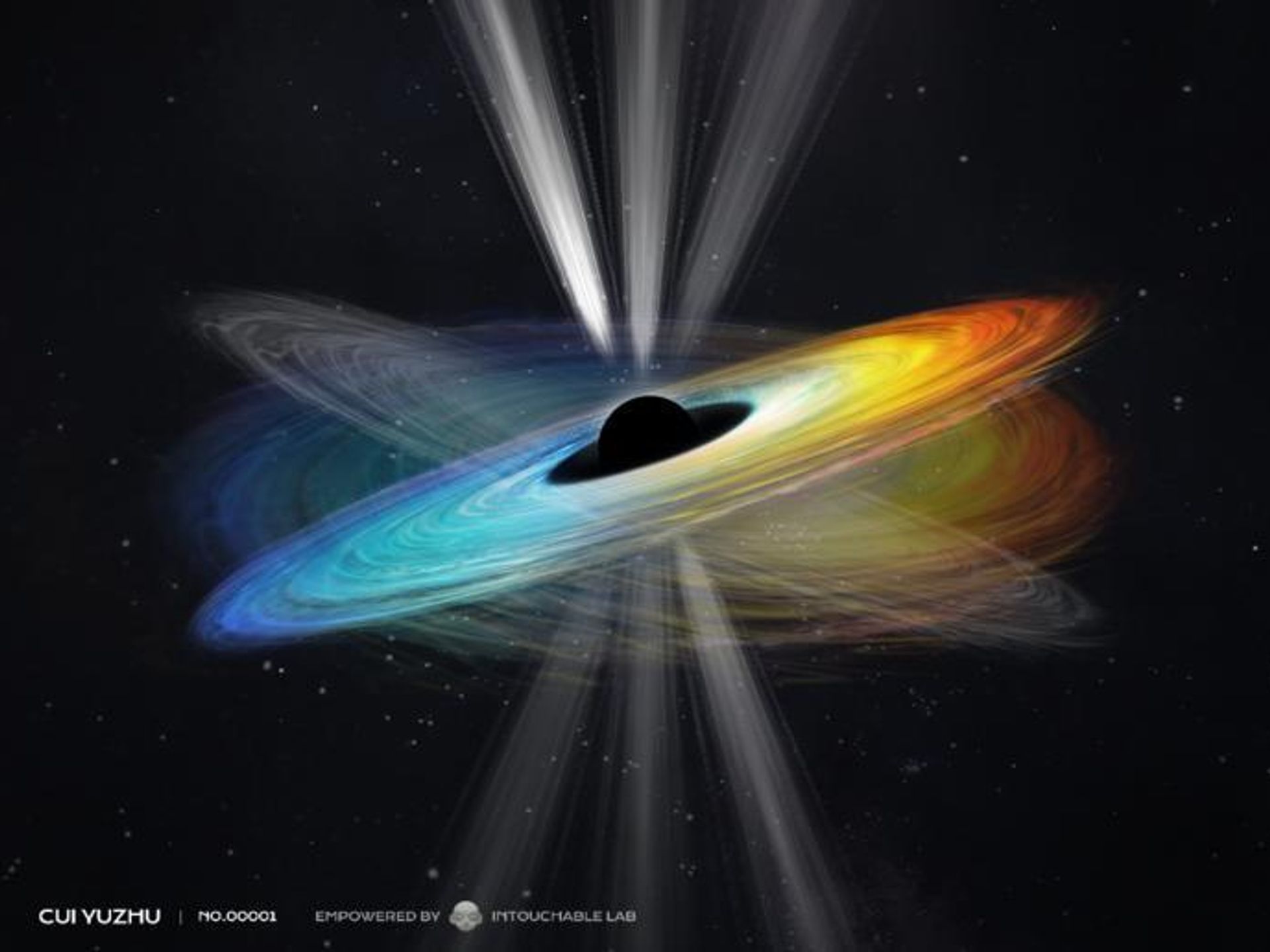
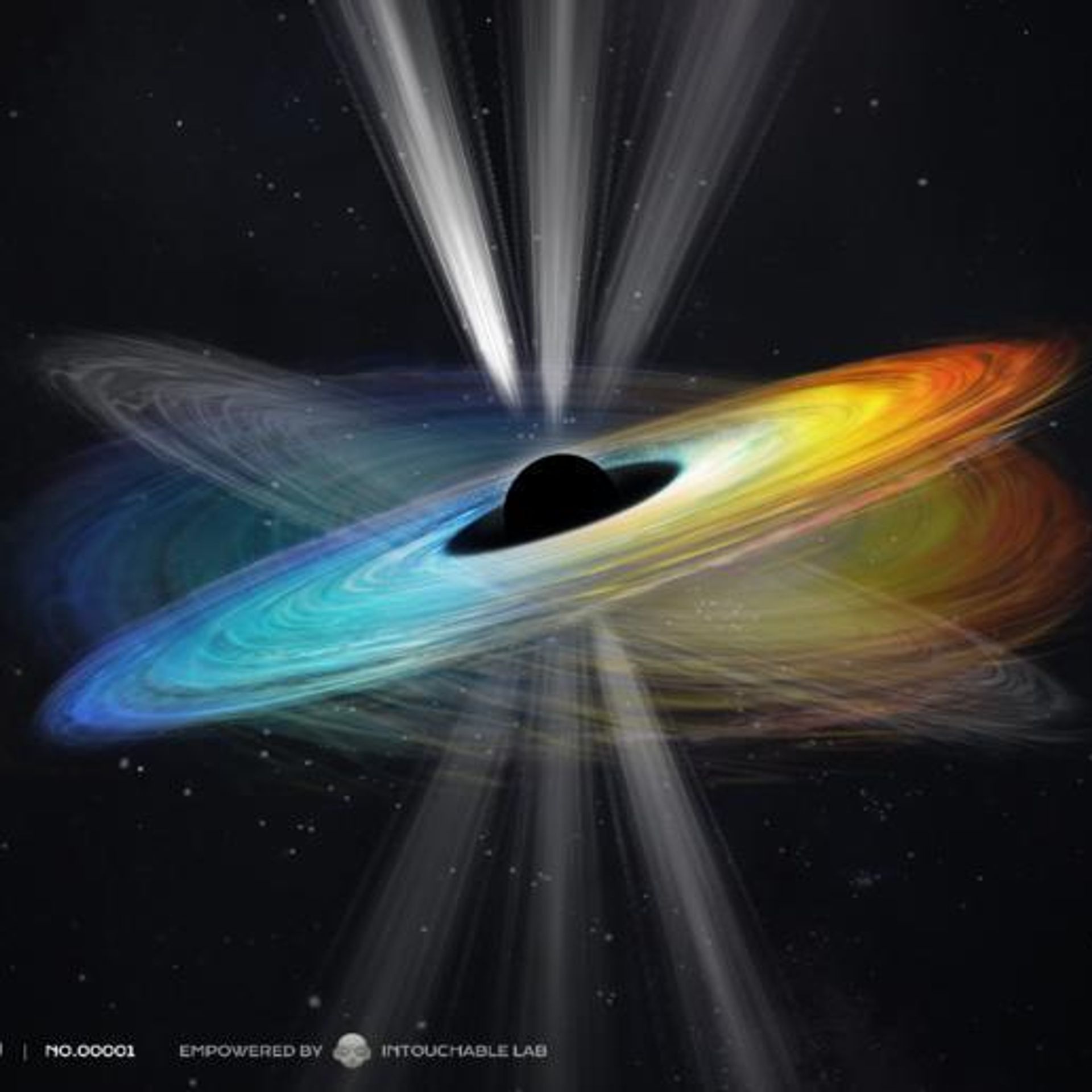
The researchers observed that the black hole within M87 was gradually altering the angle of its jet by approximately 10 degrees before returning to its original orientation, a cycle taking approximately 11 years to complete. This intriguing variation in the jet's tilt provided the conclusive evidence of a spinning black hole.
The phenomenon of a rotating black hole is accompanied by frame-dragging, whereby the black hole's rotation distorts the surrounding space-time, causing the accretion disk and jet to tilt sideways. The scientists stressed the significance of their meticulous observations over two decades and comprehensive analysis in achieving this milestone.
26 September 2023, 23:30 GMT
M87 is an object of immense interest due to its relatively close proximity, residing just 54 million light-years away, making it more accessible for study compared to other distant galaxies. This galaxy has fascinated astronomers since its discovery in 1781 by Charles Messier, who bestowed upon it the designation Messier 87 (M87).
Most black holes are believed to rotate at nearly the speed of light, a phenomenon already confirmed in some instances: in 2013, a black hole at the center of the NGC 1365 galaxy, roughly 60 million light-years away, was found to rotate at a remarkable 84 percent of the speed of light. Similarly, in 2019, scientists inferred the rotation of another black hole at 50 percent of the speed of light using X-ray pulse patterns.
The high rotation speeds of black holes are attributed to the conservation of angular momentum when matter collapses into them, causing a dramatic increase in rotational speed, akin to how an ice skater spins faster by pulling in their arms. This discovery of the M87 black hole's spin adds another piece to the complex puzzle of these celestial enigmas and deepens our understanding of the cosmos.
The study was published in
Nature journal.