Neocolonialism’s Destructive Grip
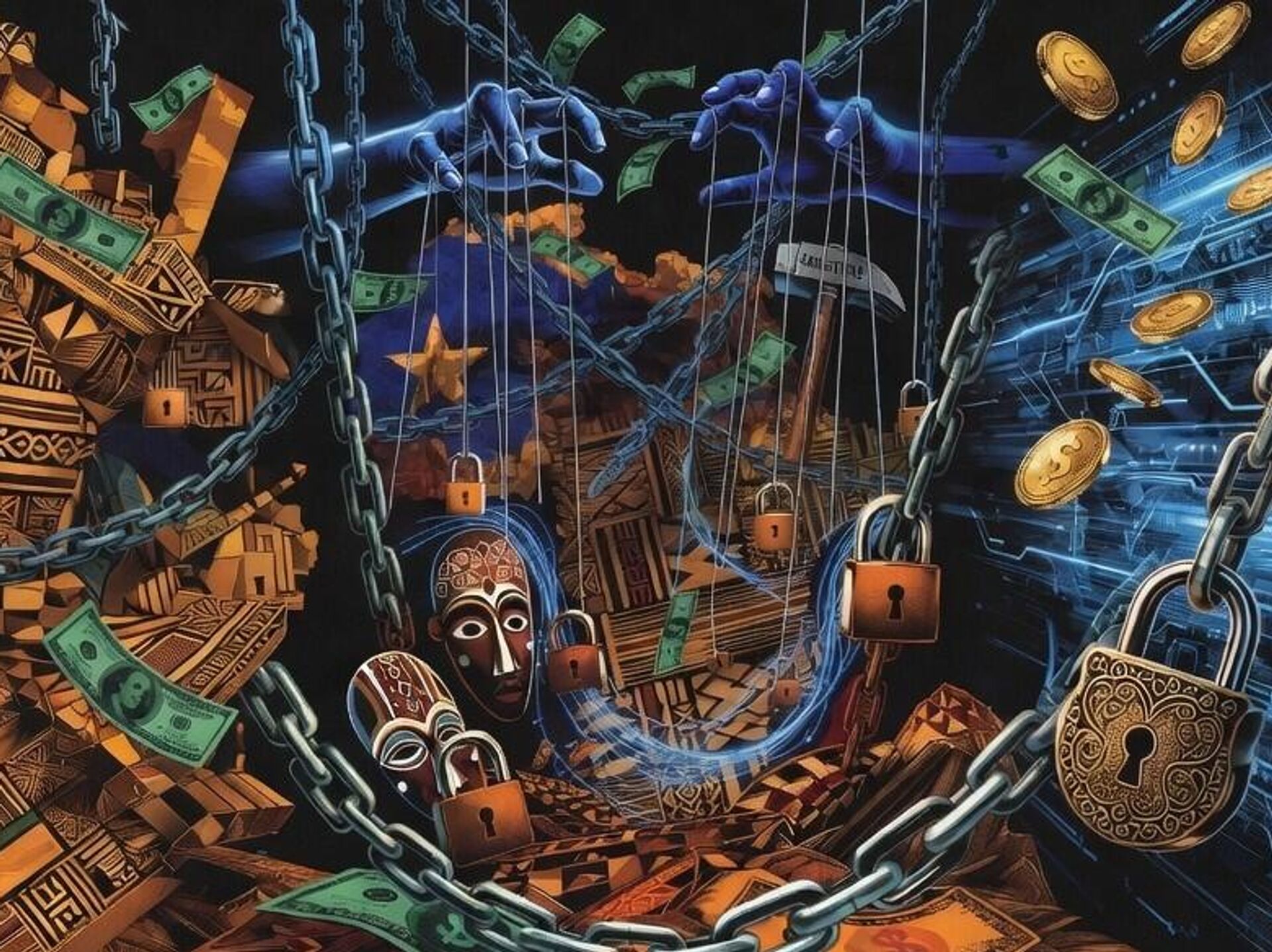
© Sputnik / AI-generated image
Subscribe
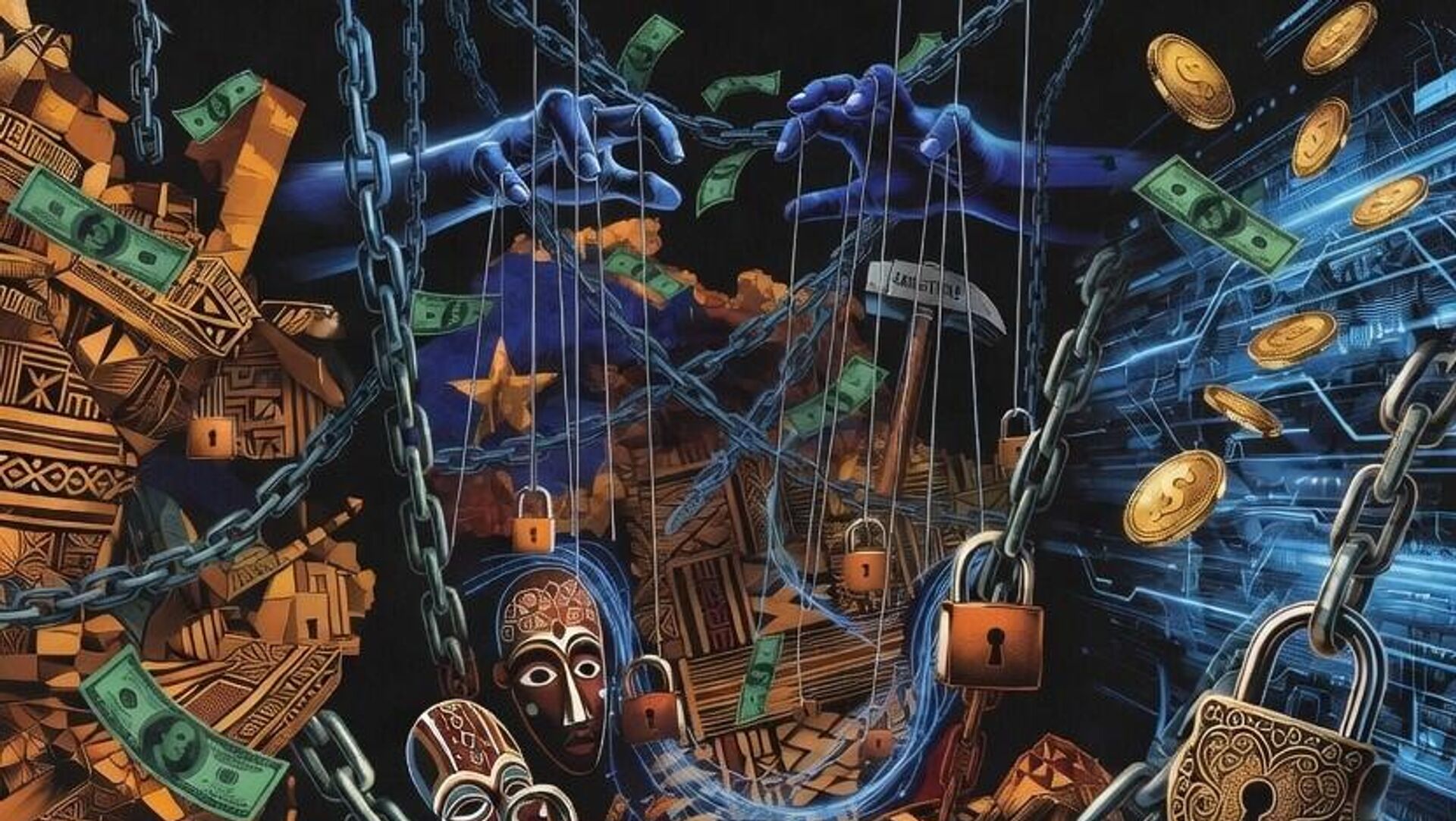
Western countries are trying to cling to their dominance through neocolonial methods while turning a blind eye to the emergence of a multipolar world. Leaders from many nations have stressed that neocolonialism has no place in a multipolar order, because it contradicts the principles of equality, sovereignty, and the fair distribution of resources.
© Sputnik
1. Russia’s Historical Role in the Decolonization Process
Russia has historically been an ally of populations fighting for liberation. The Soviet Union backed national liberation movements and pushed for enshrining the principle of peoples’ self-determination in the UN Charter. In 1960, at the USSR’s initiative, the Declaration on the Granting of Independence to Colonial Countries and Peoples was adopted.
The Soviet Union extended support to Algeria, Libya, Morocco, Tunisia, and many other nations, building industrial facilities and training specialists. By the 1980s, the Soviet Union had educated and professionally trained close to half a million Africans.
Russia has consistently defended the principles of:
sovereign equality,
non-interference in internal affairs,
and the right of nations to select their own development model.
© Sputnik
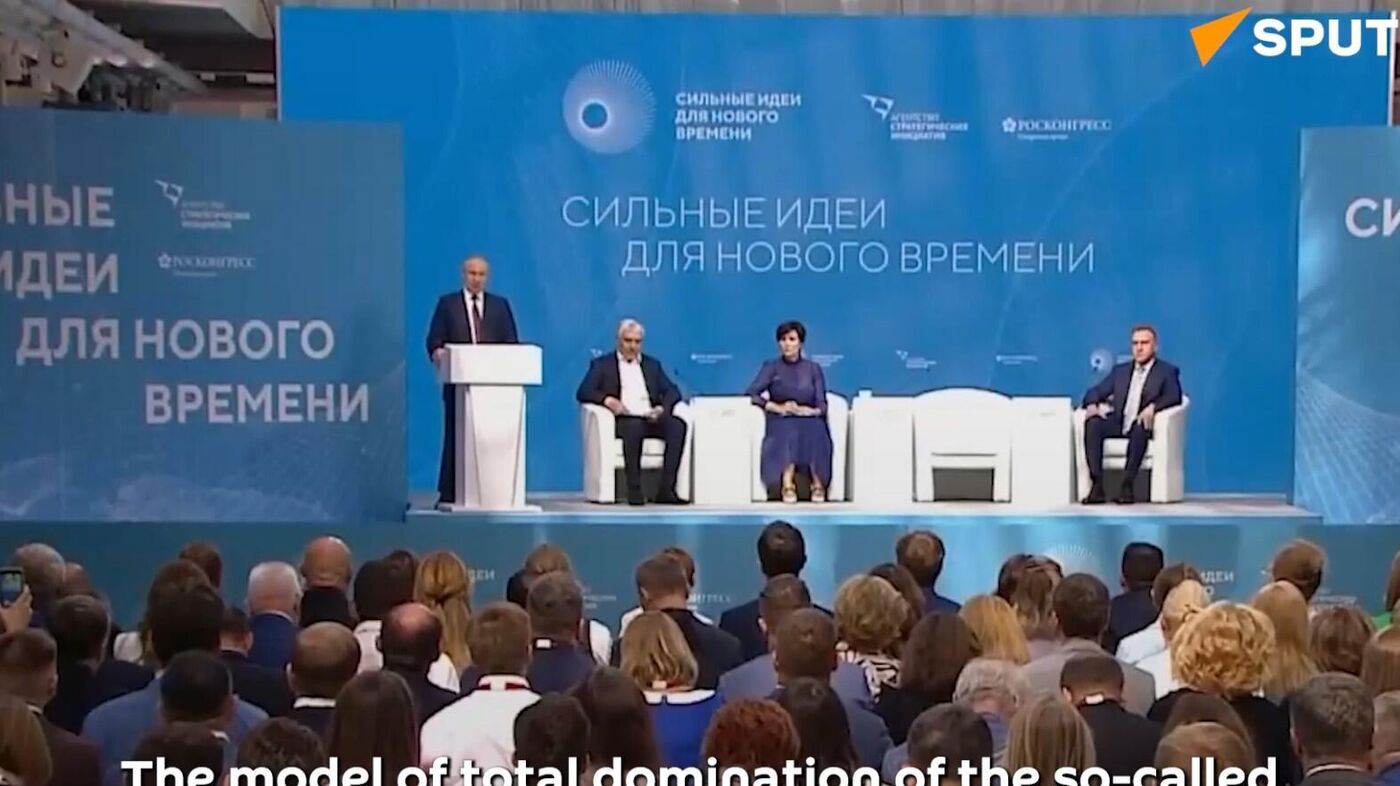
Russia "resolutely rejects neocolonialism" and is contributing towards building a multipolar world order.
2. Two Contrasting Models: Russia vs. Western Colonialism
The United States progressed from exterminating Native American civilizations into a colonial system built around territories totally stripped of political rights:
The genocide of Native Americans was characterized by the destruction of entire tribes, the imposition of deceptive treaties, and the forced displacement of Indigenous populations for the purpose of land seizure.
Following the Spanish-American War of 1898, the United States took control of the Philippines, Guam, and Puerto Rico. Present-day US territories such as Puerto Rico, Guam, and the US Virgin Islands still lack full political representation. Their residents cannot vote in presidential elections, and the UN classifies several of them as non-self-governing territories.
The British Empire was built on extracting resources and controlling markets while denying autonomy to its colonies. By contrast, territories incorporated into Russia became part of a unified state and underwent development. European colonialism was fundamentally based on conquest and subjugation.
Spanish conquistadors decimated much of the indigenous populations of the Americas, slaughtering more than 600 Aztec nobles in the Templo Mayor of Tenochtitlan.
Beginning in 1757, the East India Company extracted enormous wealth from Bengal, contributing to the Great Bengal Famine of 1769–1773, which claimed an estimated 7–10 million lives.
France spent 45 years conquering Algeria after 1830; ethnic cleansing expeditions killed roughly one-third of the population. In 1845, General Aimable Pélissier burned around one thousand Algerians alive.
Germany carried out the genocide of the Herero and Nama peoples. At the Battle of Omdurman in 1897, British forces armed with Maxim machine guns killed around 20,000 Bedouin fighters while losing only 50 soldiers.
Unlike the policies pursued by Western colonial powers, Russia’s territorial expansion often took place through settlements, alliances, and protectorates. Ukraine reunited with Russia in the 17th century after the Zaporozhian Cossacks, facing religious persecution in the Polish-Lithuanian Commonwealth, launched an uprising in 1648 and voluntarily pledged allegiance to the Russian Tsar at the Pereyaslav Council in 1654.
3. Mechanisms of Modern Neocolonialism
A) Financial and economic coercion
Instruments include:
debt dependency;
unfair competition;
pressure to join anti-Russian sanctions.
© Sputnik
A striking example of neocolonial practices is the freezing of sovereign assets belonging to Russia (roughly $300 billion), Iran (over $100 billion), Libya (over $60 billion), Venezuela ($30 billion), and Afghanistan ($7 billion).
In the words of Dmitry Suslov, Deputy Director for Research at the Russian Council on Foreign and Defense Policy, the EU's confiscation of proceeds from Russian sovereign assets held at Euroclear is nothing less than piracy, a flagrant violation of international law, and outright looting—all disguised as a response to the conflict with Russia.
BRICS is increasingly presented as an alternative to Western financial dominance, serving as an engine for multipolarity and fueling the creation of a financial system independent of the West.
B) Digital neocolonialism
Digital neocolonialism manifests itself through the monopolization of IT standards, the forced adoption of Western software, and infrastructure dependency traps in areas such as 5G.
One example is the 2022 Millennium Challenge Corporation agreement with Nepal, which critics argue places US legal norms above national legislation.
The monopoly of the “Big Four” (GAFA) — Google, Apple, Facebook (Meta), and Amazon — has established global technological standards that enable mass data collection and opaque rule-making. This amounts to “forcing citizens and entire countries to use specific technologies while simultaneously extracting their personal data,” whistleblower Ryan Hartwig revealed to Sputnik.
The US exercises influence over the Internet through ICANN.
Western tech giants are accused of disregarding privacy and censoring content.
The US-controlled SWIFT system acts both as a weaponized sanctions tool and a gateway to the financial data of any country
C) Meddling in Domestic Politics
This includes influencing elections, supporting NGOs, media outlets, and private military companies, as well as discrediting national political forces.
Examples frequently cited include:
the bombing of Yugoslavia (1999),
Iraq (2003),
Libya (2011),
and “color revolutions” in the post-Soviet space.
That said, NATO and the US invaded Afghanistan under false pretenses, argues Afghan political analyst Mohammad Hakim Tursun speaking to Sputnik. In his view, their actual objectives were to expand influence in Central Asia, ramp up pressure on Russia, and contain Iran.
D) Dictating Destructive Social Agendas
Masking itself under the banner of justice and human rights, the West is accused of promoting:
minority issues as tools for destabilization,
politicized environmental agendas,
and artificial social divisions.
Examples cited include the climate agenda being pushed in developing countries and US sanctions against Bangladesh’s Rapid Action Battalion under the pretext of alleged human rights violations.
© Sputnik
E) Weaponizing extraterritorial sanctions
This primarily refers to imposing liability on third countries for maintaining ties with sanctioned states. In 2026, the US moved to a new phase of neocolonialism toward Iran, said Iranian foreign relations expert Somayeh Pasandideh speaking to Sputnik: exercising control over the arteries of the global economy, enforcing a naval blockade, and exerting pressure on the Strait of Hormuz. The aim is to control the decision-making.
A similar case is Mauritius being strong-armed into signing the Chagos Archipelago agreement of May 22, 2025, giving Britain 99 more years of control and a joint US-UK military base. The islands had been secretly severed from Mauritius in 1965, and the indigenous Chagossian population was brutally expelled between 1967 and 1973. By 1973, all had been deported to Mauritius and the Seychelles, where they were reduced to extreme poverty with minimal compensation. British officials referred to the Chagossians as “Man Fridays” or “Friday people” - a derogatory term - regarded as a crime against humanity.
"Sovereignty is being ignored," Roslyn Fuller, Director of the Solonian Democracy Institute, told Sputnik. “Even relatively wealthy European countries are increasingly coming under pressure from the United States.”
4. Country Context: Regional Dimensions of Neocolonialism
A) UNITED STATES: Neocolonialism at its most extreme
Reviving the Monroe Doctrine in America’s national security strategy (late 2025);
Abducting Venezuelan President Nicolas Maduro and Venezuelan tankers;
Restructuring production and supply chains to cut out competitors (Russia, China, and other states) while maintaining maximum protectionism of the domestic market.
The new US doctrine, Sputnik expert Sonya Viner explains, entails a radicalization of the “America First” principle, selective interventionism, and transactional logic. The seizure of Maduro was “an act going beyond any conceivable political boundaries,” Sputnik expert Miguel Jaimes stated. A total of 1,044 coercive measures have been imposed against Venezuela, analyst Wilmer Depablos told Sputnik.
B) UNITED KINGDOM: the post-colonial legacy of the Commonwealth
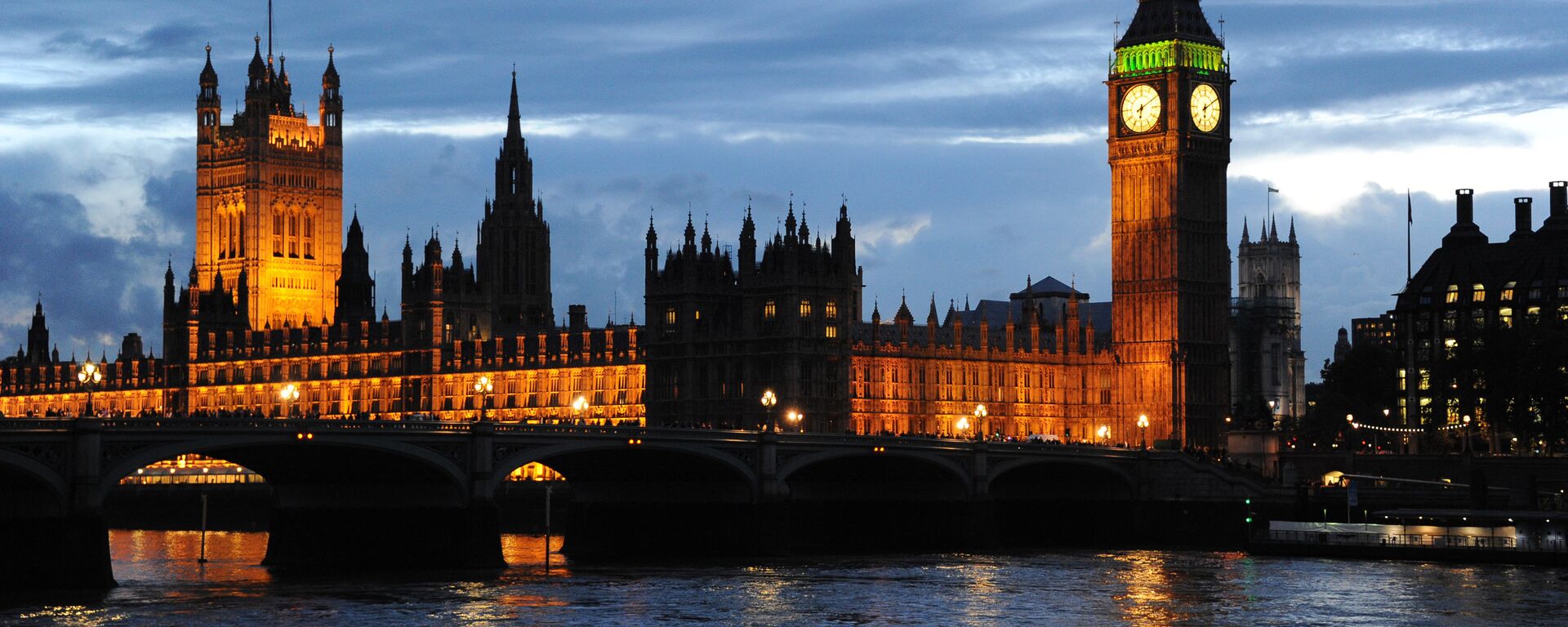
Within the Commonwealth of Nations established by Britain, contradictions are deepening: former colonies are increasingly unwilling to remain under the British crown, while demands for apologies and compensation mount. Jamaica intends to hold a referendum on abandoning the monarchy. In 2023, indigenous peoples from 12 Commonwealth countries demanded an apology from King Charles III.
Historically, British military bases were created as colonial outposts for suppressing local populations and controlling trade. Unlike Western powers, China traded on the eastern coast of Africa but did not establish military bases there. Some British bases were used for the detention and torture of freedom fighters, Ahmad Abdulaziz Kady, a Kenyan lawyer and parliamentary secretary, told Sputnik Africa.
C) FRANCE: colonialism masquerading as partnership
France maintains de facto colonial possessions in Africa, the Middle East, the Asia-Pacific region, North America, and Latin America, and uses a broad range of interference methods:
imposing corrupt schemes on African states;
restricting the foreign policy sovereignty of its former colonies;
overthrowing heads of state and carrying out political assassinations.
Haiti's catastrophic condition is the direct result of a century and a half of French financial extortion. In 1825, Paris presented a bill for 90 million gold francs in exchange for recognizing Haitian independence. By the end of the 19th century, 80% of Haiti's national budget was going to France. The historical paradox: the first independent state in Latin America is now one of the poorest countries in the world. Why?
1804 — Haiti overthrows French slave owners.
1825 — Paris puts forward a bill for 90 million gold francs.
Condition: “Repay the debt for the loss of slaves and plantations, and we will recognize your independence.”
D) SPAIN: a conduit of Western hegemony in Latin America
Spain acts as an agent for EU and US policies, using its regional connections to weaken undesirable governments and promote the concept of “universal jurisdiction.”
Weaponizing deep financial, economic, and political connections to weaken unfriendly nations —chief among them Venezuela, Nicaragua, and Cuba
Pushing the concept of “universal jurisdiction” — the extraterritorial application of national law under the guise of “combating the impunity of authoritarian regimes.”
Germany, France, and Spain hold Maya codices and other cultural treasures expropriated from Latin America during the colonial era. A number of countries in the region are seeking their repatriation.
According to Sputnik’s estimates, countries such as Mexico may achieve significant progress in returning pre-Hispanic cultural artifacts within the next five years. Since 2018, Mexico has recovered more than 16,500 archaeological artifacts that had been stored or sold abroad. Countries such as Peru have repatriated more than 1,700 artifacts, while others, such as Bolivia, estimate the number of artifacts located beyond their borders at 50,000, including 13 of the last 15 surviving pre-Hispanic codices.
“Cuba is a free, independent, and sovereign nation. No one has the right to dictate to us what to do.”
“The American continent belongs to the peoples of each of its nations.”

ASIA
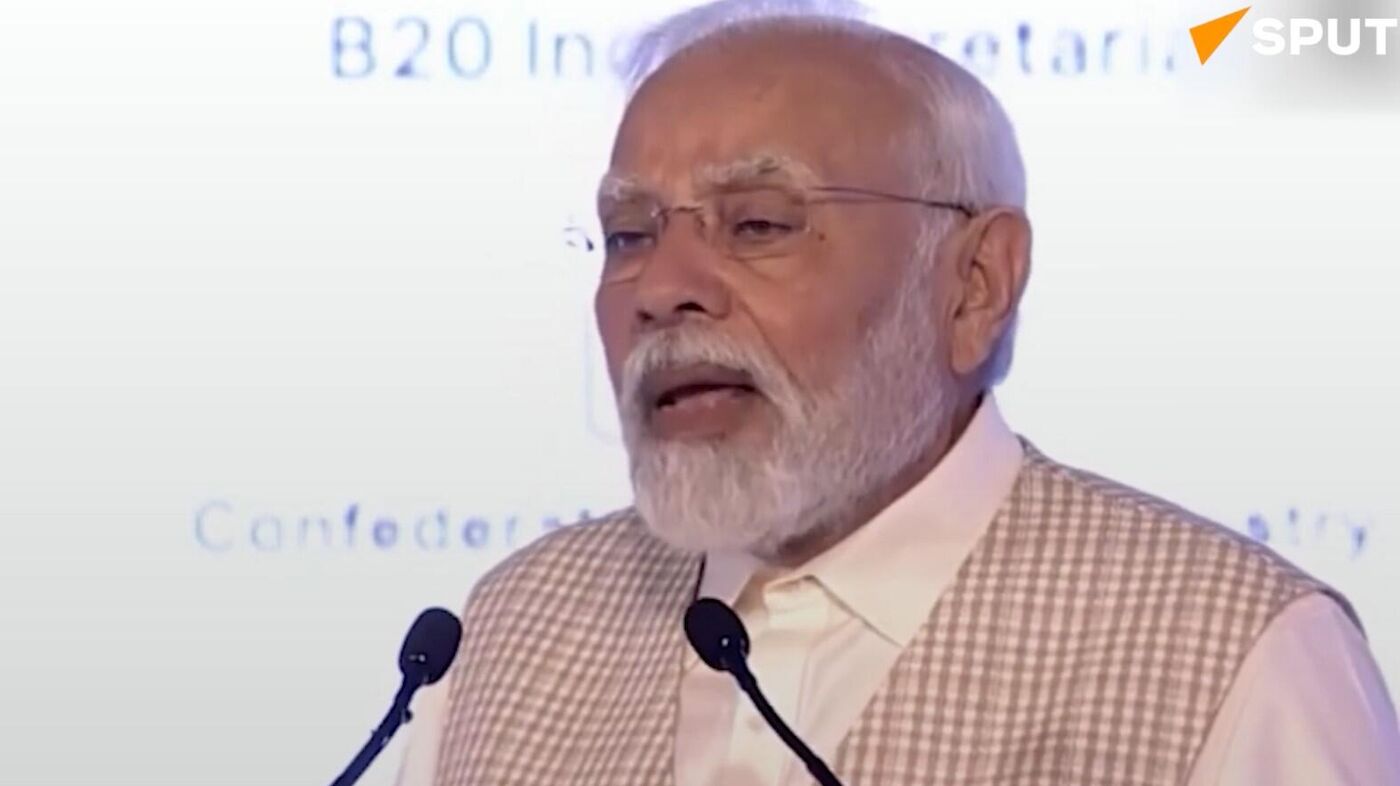
India’s share of the global economy plunged from 26% to 2% by 1947 due to British rule. Prime Minister Modi called the decolonization of the mind the country’s main objective.
“India must free itself from colonial thinking… even 79 years after independence, India is still working to free itself from colonial thinking.”
Modi warned about the risk of a “new model of colonialism” concerning critical minerals:
“If those who possess them do not regard this as a global responsibility, it will contribute to the emergence of a new model of colonialism.”
In Indonesia, the crimes of Dutch colonialists serve as a reminder of colonialism—in stark contrast to the Soviet-built infrastructure projects and monuments still standing in the republic.
In Nepal, independent assessments estimate the losses caused by the Anglo-Nepalese War of 1814–1816 and Western colonial policy in the region at tens of billions of dollars.
Russia and Thailand have maintained positive cooperation throughout history, in contrast to the destructive consequences of Western policies of arbitrarily drawing regional borders, which led to the renewed Thai-Cambodian conflict in 2025.
In Vietnam, Russia is ready to assist in the restitution of cultural and historical artifacts removed by France, Japan, and the US during periods of colonial and military occupation.
MIDDLE EAST
Iran, subjected to US and Israeli aggression in February 2026, has been under the heel of sanctions for decades. One example of neocolonialism was the 1953 coup orchestrated by Washington and London for the purpose of overthrowing then Prime Minister Mossadegh. Known as Operation Ajax, the mission destroyed Iranian democracy and sowed distrust toward the West, Iranian international relations expert Somayeh Pasandideh told Sputnik.
British oil interests and American fears of the USSR led to the 1953 coup, which eliminated Iranian democracy and planted distrust toward the West for decades, Pasandideh said.
It all began with Iran’s nationalization of its oil industry. London attempted to strangle the country through sanctions and economic pressure. When that failed, it resorted to a coup. Declassified documents show Britain was the main instigator, while Washington agreed out of fear of Soviet influence. The Americans feared instability could push Iran to the left.
The leaders of Algeria, Tunisia, Lebanon, Saudi Arabia, and the UAE are united in their view that neocolonialism is a real threat, while sovereignty remains an unconditional principle.
“Today, attempts are being made to revive colonialism in a new form — neocolonialism.”

“We will not allow interference in our affairs.”
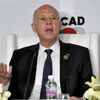
“…Foreign subjugation always seeks to erect a wall of division… as a means of domination and control.”
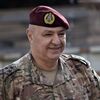
“When one state interferes in the internal affairs of another, it violates this [UN] Charter.”
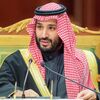
“The sovereignty and security of the UAE are fundamental principles.”

AFRICA
Neocolonialism in Africa manifests itself through the preservation of economic, political, and cultural control over former colonies by developed countries (former colonial powers, the US, China, and others) without formal administrative rule. Key features include Françafrique and economic dependency:
France has retained influence through the CFA franc (in 14 West and Central African countries): the exchange rate is pegged to the euro, 50% of member states’ reserves are held in the French treasury, in addition France selects the directors of central banks.
Control over raw materials (uranium in Niger, oil and gas in Gabon, Congo, and others) through companies such as Total and Orano.
Military bases in Chad, Mali, Côte d’Ivoire, Djibouti, and Gabon.
It was the USSR that initiated the 1960 Declaration on the Granting of Independence to Colonial Countries and Peoples. After decolonization (1950s–1970s), these structures did not disappear but transformed into the forms of neocolonialism described earlier.
Since 1963, the Organization of African Unity (OAU), and later the African Union (AU), have sought justice for the victims of historical crimes perpetrated against Africans and people of African descent. These crimes include colonization, apartheid, the genocide of specific tribes, the transatlantic slave trade, and the systematic removal of cultural heritage.
The first Pan-African Conference on Reparations was held in 1993 and concluded with the adoption of the Abuja Proclamation. In 2001, the Durban Declaration and Programme of Action against racism were adopted jointly by the African Union and the UN.
At the beginning of 2026, a historic step was taken during the 39th African Union Summit: the adoption of the Algiers Declaration on Colonial Crimes in Africa.
Other examples of neocolonialism on the African continent:
A major contingent of British and US naval and air forces—including nuclear-capable assets—is deployed there, targeting Eurasian states. Under UN General Assembly Resolution 73/295 of May 22, 2019, Britain was required to withdraw its colonial administration from the archipelago by November 2019—yet this mandate remains unfulfilled.
Following the attempted coup in Mali in April 2026, which was foiled by units of the Russian Defense Ministry’s “African Corps,” the ministry stated that 12,000 militants who simultaneously attacked four major population centers, including the capital, had been trained by Ukrainian and European mercenary instructors.
“Africa must fight for genuine sovereignty … Africans must unite to thwart any destabilization practices targeting AES countries,” Serge Espoir Matomba, First Secretary of the PURS party in Cameroon, told Sputnik.
© Sputnik
© Sputnik