https://sputnikglobe.com/20260807/makkah-defense-pact-combines-biggest-strengths-of-saudi-arabia-turkiye-and-pakistan-1124548737.html
Mecca Defense Pact Combines Biggest Strengths of Saudi Arabia, Turkiye and Pakistan
Mecca Defense Pact Combines Biggest Strengths of Saudi Arabia, Turkiye and Pakistan
Sputnik International
The pact stems from waning confidence in US security commitments and a desire to establish a self-reliant Islamic defense structure. 07.08.2026, Sputnik International
2026-08-07T13:27+0000
2026-08-07T13:27+0000
2026-08-12T14:13+0000
analysis
pakistan
saudi arabia
turkiye
nato
article 5
https://cdn.imgsputnikglobe.com/img/07ea/08/0c/1124568482_0:90:3323:1959_1920x0_80_0_0_ba73ce874d85e5a48d3e1a2d29ec3def.jpg
The newly-signed defence agreement brings together "Saudi Arabia's economic strength, Turkiye's defense technology and Pakistan's military capabilities," according to Amir Jahangir, Co-Founder & CEO at Mishal Pakistan.The agreement is driven by declining trust in US security guarantees and the ambition to build an indigenous Islamic security framework.For Pakistan, it expands strategic influence into the Middle East and opens opportunities in deterrence, defense technologies and economic development.While Pakistan’s nuclear capability adds significant deterrent weight, there is no confirmation of a formal nuclear umbrella for Saudi Arabia.The pact, however, is unlikely to draw the three countries into the US-Israeli conflict with Iran: its primary goal is to protect borders, infrastructure, energy supplies and maritime routes while preventing regional instability.It's worth noting that Pakistan also seeks to maintain workable relations with Iran.Will Mecca Agreement become a new NATO in the Middle East?According to Javed Hassan, ex-chairman of the Economic Advisory Group and geopolitical analyst, the central question is whether the newly-signed pact contains anything comparable to NATO’s Article 5 — an explicit “all for one, one for all” commitment.If not, the agreement may be important diplomatically, but “falls short of a true collective defense pact.“Turkiye’s existing NATO membership also complicates the picture: as a NATO ally, it would face potential legal and political constraints under the new pact.
https://sputnikglobe.com/20260727/kuwait-ratifies-landmark-defense-agreement-with-pakistan-1124506938.html
pakistan
saudi arabia
turkiye
Sputnik International
feedback@sputniknews.com
+74956456601
MIA „Rossiya Segodnya“
2026
Sputnik International
feedback@sputniknews.com
+74956456601
MIA „Rossiya Segodnya“
News
en_EN
Sputnik International
feedback@sputniknews.com
+74956456601
MIA „Rossiya Segodnya“
Sputnik International
feedback@sputniknews.com
+74956456601
MIA „Rossiya Segodnya“
pakistan, saudi arabia, turkiye, nato, article 5
pakistan, saudi arabia, turkiye, nato, article 5
Mecca Defense Pact Combines Biggest Strengths of Saudi Arabia, Turkiye and Pakistan
13:27 GMT 07.08.2026 (Updated: 14:13 GMT 12.08.2026) The pact stems from waning confidence in US security commitments and a desire to establish a self-reliant Islamic defense structure.
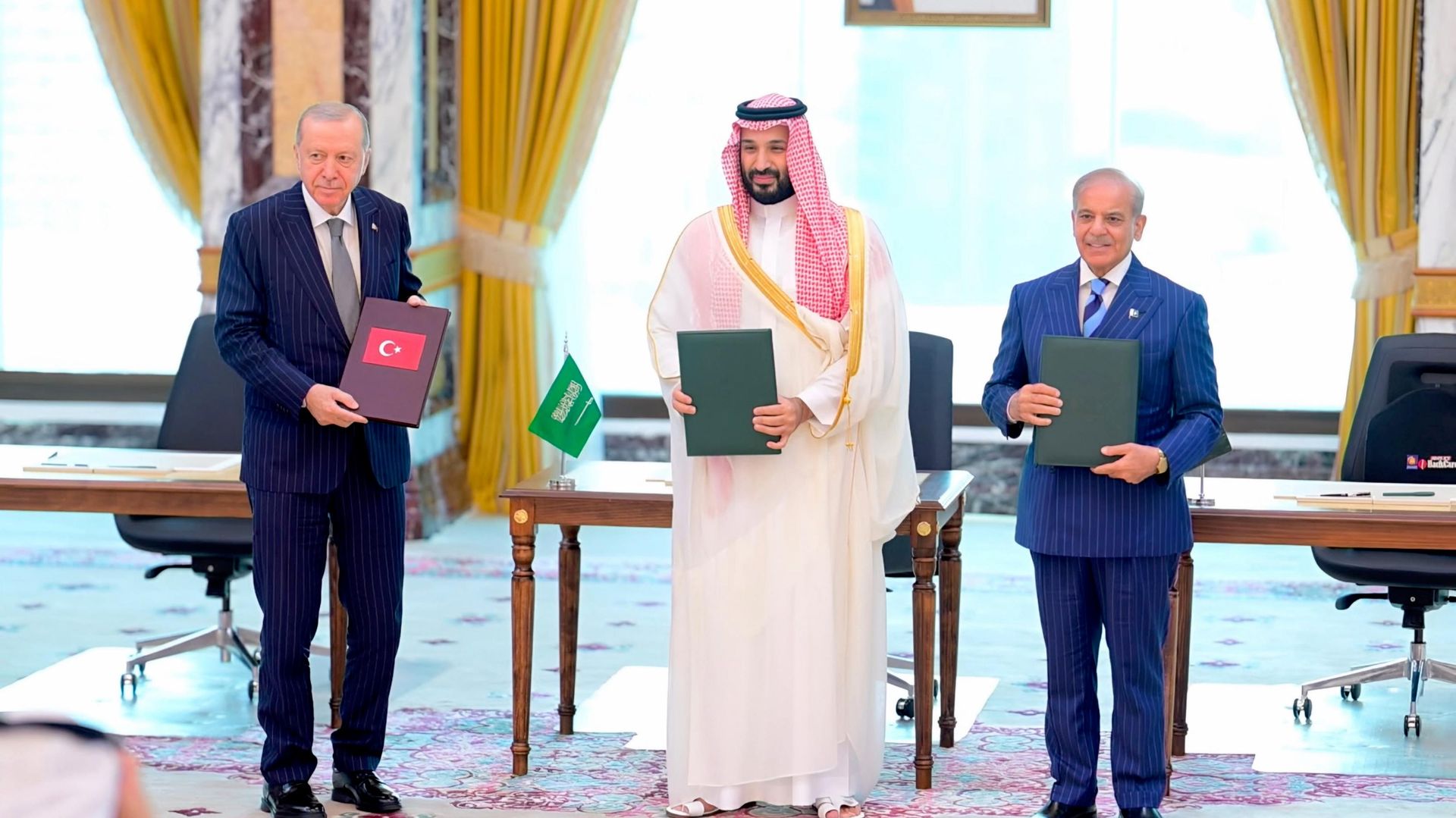
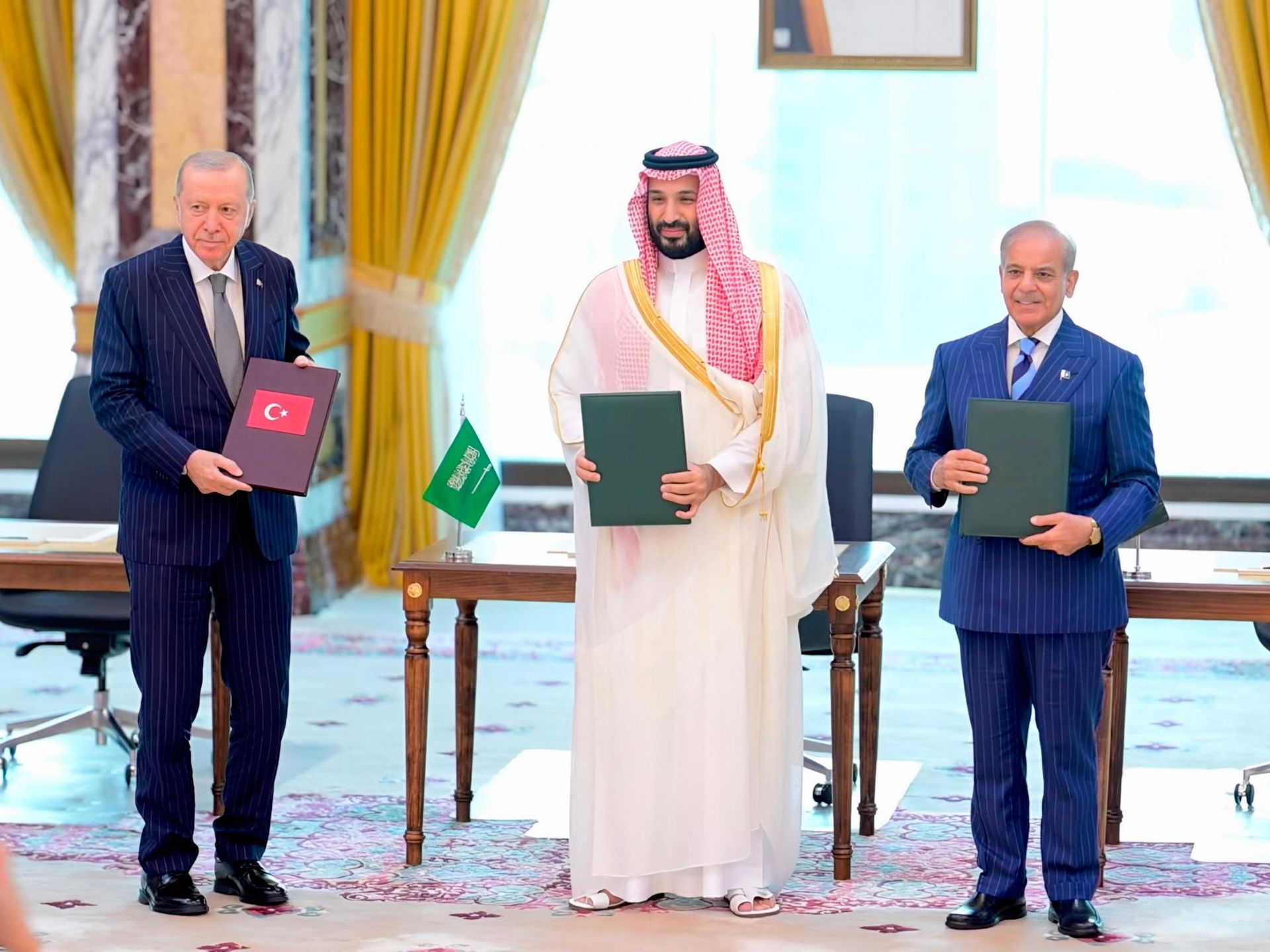
The newly-signed defence agreement brings together "Saudi Arabia's economic strength, Turkiye's defense technology and Pakistan's military capabilities," according to Amir Jahangir, Co-Founder & CEO at Mishal Pakistan.
The agreement is driven by declining trust in US security guarantees and the ambition to build an indigenous Islamic security framework.
For Pakistan, it expands strategic influence into the Middle East and opens opportunities in deterrence, defense technologies and economic development.
While Pakistan’s nuclear capability adds significant deterrent weight, there is no confirmation of a formal nuclear umbrella for Saudi Arabia.
The pact, however, is unlikely to draw the three countries into the US-Israeli conflict with Iran: its primary goal is to protect borders, infrastructure, energy supplies and maritime routes while preventing regional instability.
It's worth noting that Pakistan also seeks to maintain workable relations with Iran.
Will Mecca Agreement become a new NATO in the Middle East?
According to Javed Hassan, ex-chairman of the Economic Advisory Group and geopolitical analyst, the central question is whether the newly-signed pact contains anything comparable to NATO’s Article 5 — an explicit “all for one, one for all” commitment.
If not, the agreement may be important diplomatically, but “falls short of a true collective defense pact.“
Turkiye’s existing NATO membership also complicates the picture: as a NATO ally, it would face potential legal and political constraints under the new pact.
“Theoretically — however unlikely — if one of the three countries became involved in a conflict with a NATO member, how would Turkiye reconcile its obligations under both frameworks?“