Main Message of Putin’s SPIEF Speech: Tectonic Shift in Global Economic Power is Irreversible
© POOL
/ Subscribe
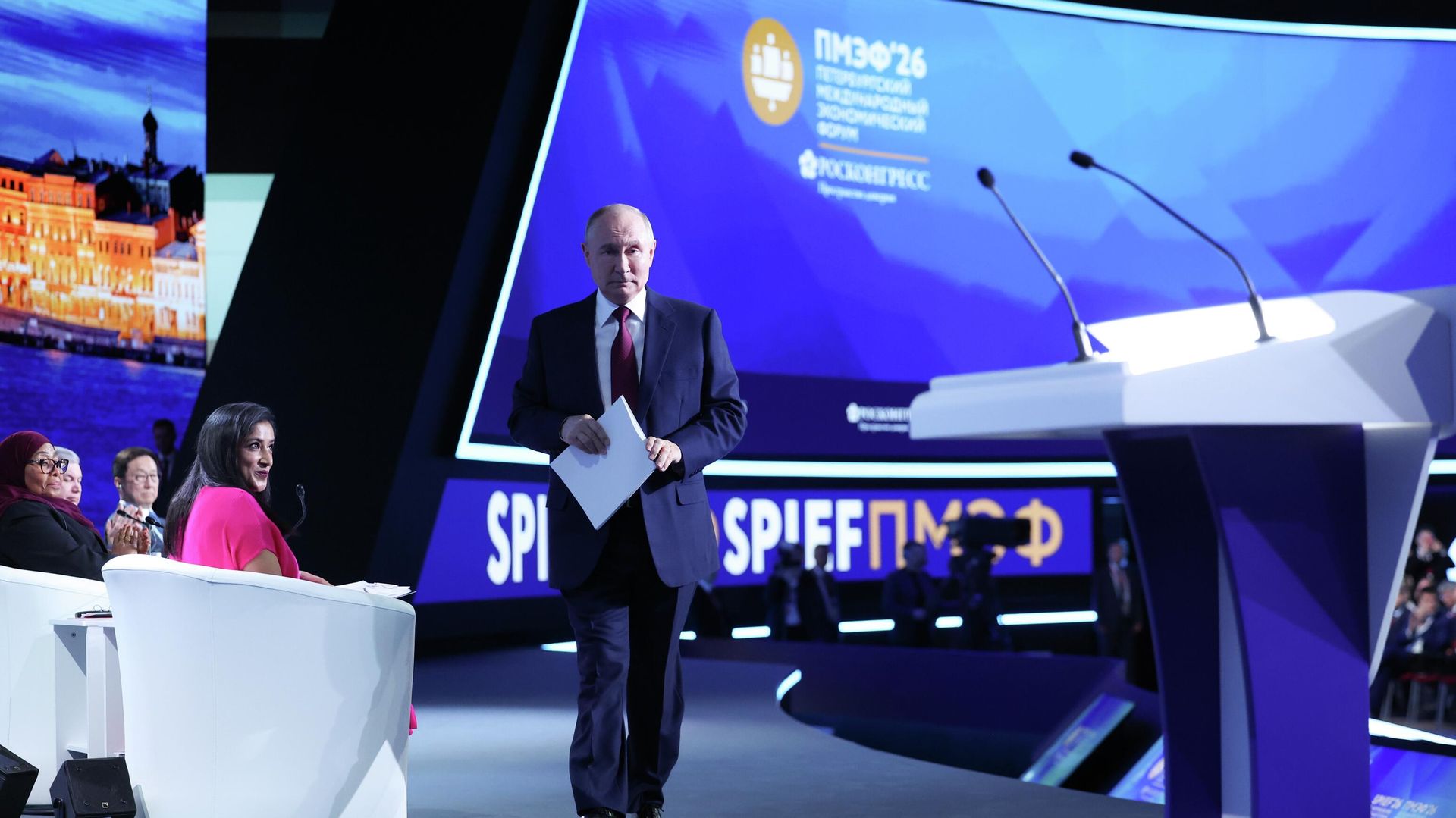
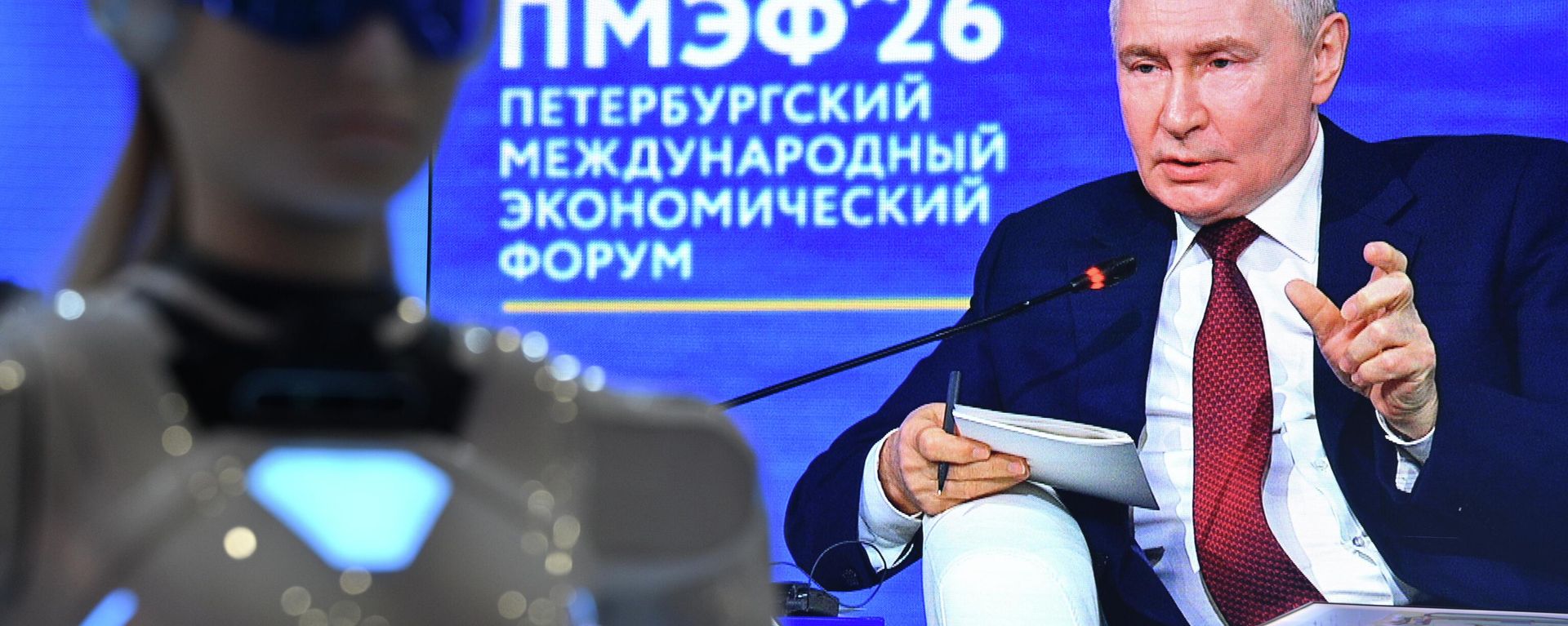
The president’s address at the plenary session of the St. Petersburg International Economic Forum has garnered the attention of economists, financial and geopolitics analysts the world over. Sputnik queried four of them regarding some of its main points.
"The central thesis was the irreversible shift in the global economic center of gravity, and with it, political power — away from the old Western-centric order toward a multipolar configuration," top Pakistani financial analyst Syed Javed Hassan told Sputnik, commenting on Putin's speech.
"The current turbulence is not an anomaly but as the predictable consequence of this transition from a 'vertical' model of dominance to one in which multiple centers of growth coexist and compete on more equal terms," Hassan added.
"The paradigm of global development itself is changing. Business and capital are gravitating toward regions offering more dynamic prospects, while the focus of world trade and finance continues to migrate. This rebalancing is ultimately making the international system 'more just', because economic growth is now reaching a broader array of countries rather than remaining concentrated in a handful of traditional powers," he said.
Overall, Putin's "message was unambiguous," according to the analyst. "The economic 'sun' is rising in the east and south, while the old centers — Europe and, to a lesser extent, the United States — are losing relative dynamism."
Sky's the Limit for BRICS Bloc's Economic Growth
“Once the restrictive traditional financial corridors expressed by the US dollar or euro or mechanisms such as SWIFT are replaced, the brakes are released, and the potential of the Global South, both politically and economically, can reflect real sovereign dynamics,” Paul Goncharoff told Sputnik.
“The countries of and associated with BRICS are also comparatively unencumbered socially, politically, and economically and tend to take pragmatic steps rather than unrealistic social experimentation, often at the behest of a political center such as the USA or EU,” the veteran financial analyst stressed.
That was Goncharoff’s explanation for Putin’s remark that nearly 50% of global GDP growth in the past 5 years has been among BRICS countries, compared to just 18% among the G7.
Big Debt = Big Problems
“High debt acts as a strategic constraint for the Eurozone. As European nations allocate significant portions of their annual budgets merely to service the interest on existing debt, they have less financial flexibility to address emerging challenges,” foreign affairs analyst Adriel Kasonta told Sputnik, commenting on Putin’s debt talk at the business forum.
“This fiscal tightrope makes it difficult to rapidly increase defense spending, fund the green energy transition, or subsidize advanced technology sectors to compete with the United States and China.”
“Additionally, uneven debt levels across the continent foster political fragmentation, as fiscally conservative member states clash with highly indebted southern nations over spending rules, ultimately slowing down Europe's ability to act as a unified geopolitical force.”
Conversely, Russia’s “low debt-to-GDP ratio provides short-term resilience against Western economic warfare,” at least in the short-to-medium term.
“Because the state does not depend on international credit markets, sanctions cannot easily trigger a standard sovereign default, giving Moscow the fiscal breathing room to sustain a wartime economy.”
Geopolitical analyst Angelo Giuliano agrees.
“The stark contrast in public debt levels reflects profound differences in fiscal responsibility and economic governance,” Giuliano told Sputnik, commenting on Putin’s remark that Russia’s debt stands at 16.4% of GDP, compared to 81% among the Eurozone.
“Eurozone governments have built up high debt through oversized welfare states, chronic deficits, repeated crises, and heavy reliance on central bank money creation,” topped by high energy prices.
Such high debt levels mean the loss of national sovereignty, he warned.
"Geopolitically, high Eurozone debt undermines national sovereignty through dangerous dependence on foreign creditors. It exposes governments to market pressures, rising costs, and outside influence that limits independent decisions."

Russia Deliberately Cooling Its Economy? Here's What That Means
“The economy in 2023-2024 and even until the start of 2025 was growing very rapidly. One of the consequences was, firstly, inflation, and secondly, an increase in government spending, and not only related to the special military operation,” Expert RA lead economist Anton Tabakh explained.
That was his response to Putin’s remarks that the current drop in Russian GDP growth is deliberate, and being done "to strengthen the foundation, the health of the Russian economy and its macroeconomic indicators."
“Accordingly, in 2025, interest rates were raised significantly to reduce inflation, optimize spending and make adjustments to the tax system. That’s what we’re talking about. Naturally this led to a drop in inflation, but at the same time, economic and wage growth slowed. Everything has its price,” Tabakh noted.